
Best Brokers in the EU
After hands-on tests, we’ve pinpointed the best brokers for traders across the European Union. These are firms authorised to serve clients in the EU, typically through a CySEC or other EEA-regulated entity, and they cater to Europe-based users with access to regional markets and support for euro (EUR) accounts or other currencies used by some European countries.
 Written By
Royston Wild
Royston is a seasoned investor and financial writer with over a decade of experience analyzing brokers and investment markets. With a background in stocks, commodities, and forex reporting - he brings a fresh perspective to broker evaluations.
Royston Wild Profile Page Fact Checked By
Tobias Robinson
Tobias is committed to helping traders find the right brokerage for their needs. He has tested 200+ brokers, spent 2,600+ hours using different platforms, and placed 2,100+ trades.
Tobias Robinson Profile Page Edited By
James Barra
James is an experienced broker analyst with a background in financial services. He has spent 2,500+ hours testing brokers, used 35+ different platforms and apps, audited 120+ broker T&Cs, and verified 300+ regulatory licenses.
James Barra Profile PageMarch 27, 2026
-
1Interactive Brokers (IBKR) is a top brokerage firm offering access to 150 markets in 33 countries and a range of investment services. With 40 years in the field, this company listed on Nasdaq strictly follows the rules set by authorities such as the SEC, FCA, CIRO, and SFC. It's recognized as one of the most reliable brokers for global trading.
-
2NinjaTrader is a US-based brokerage regulated for trading futures. It offers three different pricing plans for varied needs and budgets, along with extremely low margins on popular contracts. The company's renowned charting software and trading platform provides extensive customization options and excellent technical analysis features.
-
3eToro is a platform for social investing that provides options for both short and long-term trading on stocks, ETFs, options, and crypto. The platform is recognized for its easy-to-use, community-oriented interface and reasonable fees. With oversight from FINRA and SIPC, and used by millions globally, eToro is a reputed name in the industry. Trading on eToro is facilitated by eToro USA Securities, Inc.
-
4Plus500US, a reputable broker since 2021, is authorized by the CFTC and NFA. It offers futures trading on forex, indices, commodities, cryptocurrencies, and interest rates. With a quick 10-minute signup, a $100 minimum deposit, and an easy-to-use web platform, Plus500 is enhancing its services for traders in the US.
-
5OANDA is a well-known broker that excels in quick trade executions, a low deposit requirement, and impressive charting and trading platform functions. The highly-regarded brand has over 25 years of expertise and is overseen by reliable authorities like the NFA/CFTC. It provides 24/7 support for traders and offers flexible contract sizes with automated trade executions.
EU Suitability Comparison
See how the top brokers cater to EU traders with local accounts and regulatory oversight:
| Broker |  |
USD Account |
Regulated in the EU |
EUR Account |
DKK Account |
SEK Account |
PLN Account |
CZK Account |
HUF Account |
|---|---|---|---|---|---|---|---|---|---|
 |
✓ | ✗ | ✓ | ✓ | ✓ | ✗ | ✗ | ✓ | |
 |
✓ | ✗ | ✗ | ✗ | ✗ | ✗ | ✗ | ✗ | |
 |
✓ | ✗ | ✗ | ✗ | ✗ | ✗ | ✗ | ✗ | |
 |
✓ | ✗ | ✗ | ✗ | ✗ | ✗ | ✗ | ✗ | |
 |
✓ | ✗ | ✓ | ✗ | ✗ | ✗ | ✗ | ✗ | |
| Broker | |
USD Account |
Regulated in the EU |
EUR Account |
DKK Account |
SEK Account |
PLN Account |
CZK Account |
HUF Account |
Broker Details Comparison
| Broker | Demo Account |
Minimum Deposit |
Minimum Trade |
Leverage |
Assets |
Platforms |
|---|---|---|---|---|---|---|
|
✓ | $0 | $100 | 1:50 | Stocks, Options, Futures, Forex, Funds, Bonds, ETFs, Mutual Funds, Cryptocurrencies, CFDs Stocks, Options, Futures, Forex, Funds, Bonds, ETFs, Mutual Funds, Cryptocurrencies | Trader Workstation (TWS), IBKR Desktop, GlobalTrader, Mobile, Client Portal, AlgoTrader, OmniTrader, TradingView, eSignal, TradingCentral, ProRealTime, Quantower |
|
✓ | $0 | 0.01 Lots | 1:50 | Futures, Forex, Stocks, Options, Commodities, Futures, Crypto (non-futures depend on provider) | NinjaTrader Desktop, Web & Mobile, eSignal |
|
✓ | $100 | $10 | ✗ | Stocks, Options, ETFs, Crypto | eToro Trading Platform & CopyTrader |
|
✓ | $100 | Variable | Variable | Futures on Cryptocurrencies, Metals, Agriculture, Forex, Interest rates, Energy, Equity Index future contracts | WebTrader, App |
|
✓ | $0 | 0.01 Lots | 1:50 | Forex, Crypto with Paxos (Cryptocurrencies are offered through Paxos. Paxos is a separate legal entity from OANDA) | OANDA Trade, MT4, TradingView, AutoChartist |
| Broker | Demo Account |
Minimum Deposit |
Minimum Trade |
Leverage |
Assets |
Platforms |
How Safe Are The Best EU Brokers?
EU regulation is an important starting point, but we also looked at the practical safeguards and retail client protections available to traders in Europe:
| Broker | Trust Rating |
Guaranteed Stop Loss |
Negative Balance Protection |
Segregated Accounts |
|---|---|---|---|---|
|
✗ | ✓ | ✓ | |
|
✗ | ✗ | ✗ | |
|
✗ | ✗ | ✓ | |
|
✗ | ✗ | ✓ | |
|
✗ | ✗ | ✗ | |
| Broker | Trust Rating |
Guaranteed Stop Loss |
Negative Balance Protection |
Segregated Accounts |
Mobile Trading Comparison
Mobile investing and trading are now standard across Europe - here’s how our top EU brokers performed on smartphones and tablets:
| Broker | Mobile Apps |
iOS Rating |
Android Rating |
Smart Watch App |
|---|---|---|---|---|
|
iOS & Android | ✓ | ||
|
iOS & Android | ✗ | ||
|
iOS & Android | ✗ | ||
|
iOS & Android | ✗ | ||
|
iOS & Android | ✗ | ||
| Broker | Mobile Apps |
iOS Rating |
Android Rating |
Smart Watch App |
Comparison for Beginners
Compare how suitable the Best Brokers in the EU are for beginners.
| Broker | Demo Account |
Minimum Deposit |
Minimum Trade |
Education Rating |
Support Rating |
Fractional Shares |
Demo Competitions |
|---|---|---|---|---|---|---|---|
|
✓ | $0 | $100 | ✓ | ✗ | ||
|
✓ | $0 | 0.01 Lots | ✗ | ✗ | ||
|
✓ | $100 | $10 | ✓ | ✗ | ||
|
✓ | $100 | Variable | ✗ | ✗ | ||
|
✓ | $0 | 0.01 Lots | ✗ | ✗ | ||
| Broker | Demo Account |
Minimum Deposit |
Minimum Trade |
Education Rating |
Support Rating |
Fractional Shares |
Demo Competitions |
Comparison for Advanced Traders
Compare how suitable the Best Brokers in the EU are for advanced or professional traders.
| Broker | Automated Trading |
VPS |
API |
AI |
Pro Account |
Leverage |
Low Latency |
Extended Hours |
|---|---|---|---|---|---|---|---|---|
|
Capitalise.ai, TWS API | ✗ | ✗ | ✓ | ✗ | 1:50 | ✓ | ✓ |
|
NinjaScript or via Automated Trading Interface | ✗ | ✗ | ✗ | ✗ | 1:50 | ✓ | ✗ |
|
✗ | ✗ | ✗ | ✗ | ✗ | ✗ | ✓ | ✓ |
|
✗ | ✗ | ✗ | ✗ | ✗ | Variable | ✓ | ✗ |
|
Expert Advisors (EAs) on MetaTrader | ✗ | ✗ | ✓ | ✗ | 1:50 | ✓ | ✗ |
| Broker | Automated Trading |
VPS |
API |
AI |
Pro Account |
Leverage |
Low Latency |
Extended Hours |
Accounts Comparison
Compare the trading accounts offered by Best Brokers in the EU.
| Broker | Demo Account |
Interest on Cash |
Islamic Account |
Joint Account |
Managed Account |
PAMM |
MAM |
LAMM |
Pro Account |
|---|---|---|---|---|---|---|---|---|---|
|
✓ | USD: 4.8%, GBP: 4.7% | ✗ | ✓ | ✓ | ✗ | ✓ | ✗ | ✗ |
|
✓ | ✗ | ✗ | ✗ | ✗ | ✗ | ✗ | ✗ | ✗ |
|
✓ | USD: 4.9% | ✗ | ✗ | ✓ | ✗ | ✗ | ✗ | ✗ |
|
✓ | ✗ | ✗ | ✗ | ✗ | ✗ | ✗ | ✗ | ✗ |
|
✓ | ✗ | ✗ | ✗ | ✗ | ✗ | ✗ | ✗ | ✗ |
| Broker | Demo Account |
Interest on Cash |
Islamic Account |
Joint Account |
Managed Account |
PAMM |
MAM |
LAMM |
Pro Account |
Compare The Ratings Of Our Top EU Trading Brokers
See how our recommended brokers for EU traders scored across the core categories in our hands-on testing:
| Broker | Trust |
Platforms |
Assets |
Mobile |
Fees |
Accounts |
Research |
Education |
Support |
|---|---|---|---|---|---|---|---|---|---|
|
|||||||||
|
|||||||||
|
|||||||||
|
|||||||||
|
|||||||||
| Broker | Trust |
Platforms |
Assets |
Mobile |
Fees |
Accounts |
Research |
Education |
Support |
Fee and Cost Comparison
Compare the cost of trading with the Best Brokers in the EU.
| Broker | Cost Rating |
Fixed Spreads |
Inactivity Fee |
EUR/USD Spread |
Crypto Spread |
|---|---|---|---|---|---|
|
✗ | $0 | 0.08-0.20 bps x trade value | 0.12%-0.18% | |
|
✗ | $25 | 1.3 | Floating | |
|
✓ | $10 | ✗ | BTC 0.75% | |
|
✗ | $0 | 0.75 | ✗ | |
|
✗ | $0 | 1.6 | $100 | |
| Broker | Cost Rating |
Fixed Spreads |
Inactivity Fee |
EUR/USD Spread |
Crypto Spread |
Broker Popularity
Many traders in the EU gravitate toward brokers with a broad regional footprint and established client base. Here’s how our leading providers compare:
| Broker | Popularity |
|---|---|
| Plus500US |
|
| Interactive Brokers |
|
| eToro USA |
|
| NinjaTrader |
|
Why Trade With Interactive Brokers?
Interactive Brokers is ideal for seasoned traders due to its robust charting platforms, updated data, and adaptability, especially with the IBKR Desktop application. Its exceptional pricing and advanced order features appeal to traders, and its variety of stocks remains unmatched in the market.
Pros
- IBKR, primarily designed for skilled traders, has expanded its appeal recently by eliminating its initial $10,000 deposit requirement.
- The TWS platform is designed for intermediate to advanced traders. It includes over 100 order types and a dependable real-time market data feed that rarely experiences downtime.
- Interactive Brokers was named Best US Broker for 2025 by DayTrading.com for its dedication to US traders, ultra-low margin rates, and affordable global market access.
Cons
- Only one active session per account is allowed, which means you can't run the desktop version and mobile app at the same time. This can sometimes lead to a frustrating trading experience.
- Customer service may take time to respond, and there may be delays in fixing problems based on tests. It could be difficult to reach the customer service promptly.
- TWS's platform may be difficult for beginners to grasp because of its complexity - we were overwhelmed during our initial tests by the sheer volume of tools, features and widgets.
Why Trade With NinjaTrader?
NinjaTrader consistently satisfies active futures traders with its low-cost service and high-quality analysis tools. It offers superior charting features, including hundreds of indicators and over 10 chart types.
Pros
- You can access thousands of applications and add-ons from developers worldwide for trading.
- Traders can access a free platform and trade simulation capabilities with the unlimited demo.
- NinjaTrader provides detailed charting software for active traders, complete with custom technical indicators and widgets.
Cons
- You need to register with partner brokers to trade in securities other than forex and futures.
- Some payment methods require a withdrawal fee.
- The advanced trading tools require an additional fee.
Why Trade With eToro USA?
eToro is a top choice for traders due to its top-notch social investing and copy trading services. The broker caters well to new traders with its low deposit requirement, commission-free trading, and user-friendly platform.
Pros
- The low minimum deposit and simple account setup allow beginners to start trading quickly.
- eToro USA Securities is a reliable broker that's regulated by the SEC, part of FINRA, and a member of SIPC.
- A free demo account enables new users and potential traders to test the broker without risk.
Cons
- The exclusive terminal does not accommodate trading bots and lacks extra equity market analysis tools.
- Traders used to third-party charting tools won't find MetaTrader 4 platform integration.
- There are fewer trading options available, including only stocks, ETFs, and cryptos, compared to competitors.
Why Trade With Plus500US?
Plus500US is an excellent choice for beginners, offering a user-friendly platform, low trading margins, and access to the Futures Academy to improve trading skills. Its powerful tools and reliable service earned it second place in DayTrading.com's annual 'Best US Broker' award.
Pros
- Plus500 included prediction markets in its 'Plus500 Futures' platform in February 2026. This addition offers event-based trades in 10 categories, such as financials and politics, and includes short-term intraday contracts expiring in 15 minutes.
- The Futures Academy is a useful resource for beginner traders due to its captivating videos and simple articles. Its unrestricted demo account is also beneficial for practicing trading strategies.
- The trading app offers an excellent user interface with an updated design, straightforward layout, and charts optimized for mobile use.
Cons
- Plus500US offers competitive pricing but does not have a discount program for high-volume traders, unlike brokers like Interactive Brokers.
- Testing showed fast response times for support, but phone aid is not available.
- Plus500US is expanding its investment options, but it currently only offers around 50+ futures and no stocks.
Why Trade With OANDA US?
OANDA is a reputable broker for US traders. It offers user-friendly tools for analysis and a simple sign-up process. It is very trustworthy due to heavy regulation.
Pros
- OANDA is a credible and safe trading brand, approved by top regulators such as the CFTC.
- You can start trading as a beginner with no minimum initial deposit required.
- Experienced traders can use top-notch tools like an MT4 premium upgrade and advanced charting from MotiveWave.
Cons
- Customer support is not accessible during weekends.
- Few payment options are available and e-wallets are not supported.
- The trading markets are limited to only forex and cryptocurrencies.
Filters
How We Chose The Best Brokers For Traders In The EU
To make our shortlist of the best brokers for EU traders, every provider had to clear several important hurdles:
- Brokers had to be authorised to serve clients in the EU. This was the starting point. We focused on firms operating through recognised European regulatory frameworks because that is one of the clearest trust signals for traders based in the EU. We checked regulatory status through the relevant official registers rather than relying on sales copy on a broker’s website. For many of the firms considered, this meant verifying licensing through CySEC or another EEA regulator, and confirming they were set up to lawfully onboard clients from EU member states.
- Brokers had to offer a EUR trading account. For EU-based traders, being able to fund and manage an account in euros can make a practical difference. It simplifies transfers, makes balances easier to track, and can reduce unnecessary conversion charges on day-to-day account activity. We verified EUR account availability either during the signup process or directly with the broker. Currency conversion costs can still arise when trading assets priced in another denomination, such as US equities.
- Brokers had to provide access to markets relevant to EU traders. We prioritised firms offering products commonly traded by investors and short-term traders in Europe, including major European shares, euro-denominated instruments, DAX and Euro Stoxx-linked indices, EUR forex pairs, ETFs with European exposure, and broader global markets. We checked the platforms ourselves to confirm what EU clients can actually trade rather than taking product lists at face value.
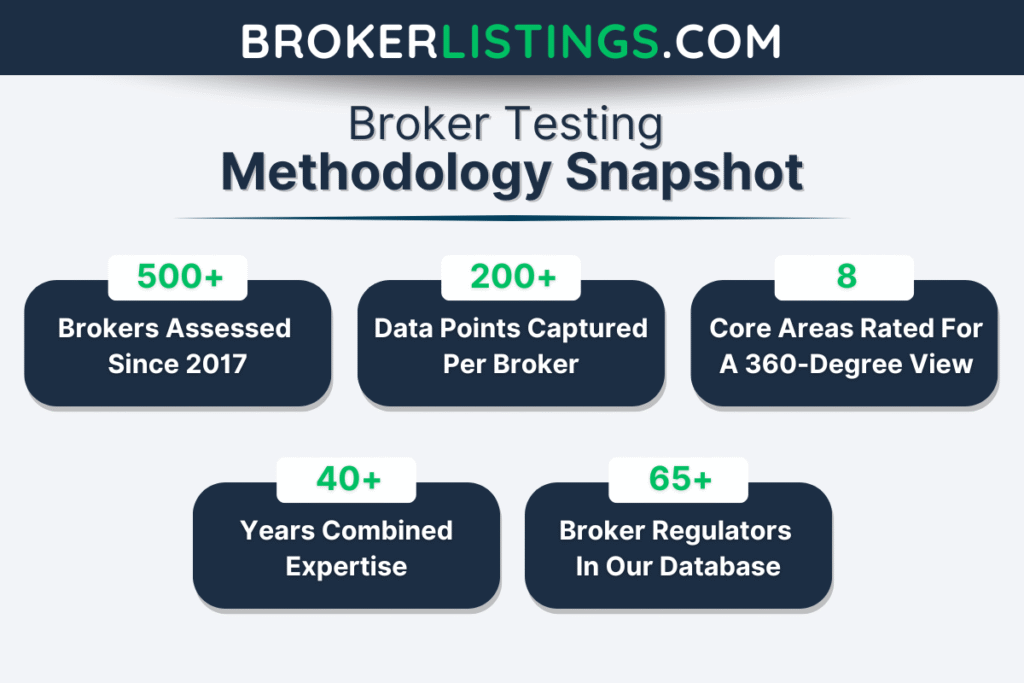
- We then applied our full hands-on testing process. Once a broker met the EU-specific filters above, it went through our standard review framework. Our team assessed each provider across eight core categories, collected more than 200 individual data points per broker, and documented the user experience in detail. Those results fed into the broker’s overall rating and final position in the rankings.
- We also examined retail client safeguards for EU residents. Where relevant, we looked at the protections available to clients under the broker’s European entity, including negative balance protection, complaint routes, compensation arrangements where applicable, and the wider consumer safeguards built into the EU regulatory framework. Not every European entity offers the same level of protection, so we considered the practical difference between them.
How To Choose A Broker In The EU
Citizens in the European Union (EU) are becoming increasingly active when it comes to investing in financial markets. Roughly 1 in 3 adults in the region regularly invest, and participation is rising sharply as the number of online trading platforms grows.
In late 2025, the European Parliament and the 27 EU member states signed off on the Retail Investment Strategy. The European Commission (EC) has also announced plans to improve financial literacy in the economic bloc. Both measures aim to improve financial market participation still further by boosting retail investors’ protections and knowledge.
EU investors have more choice than ever when choosing a brokerage to use. So what are the key things to consider? We’ve narrowed it down to the following factors:
Trustworthiness
The first step is to ensure the company you’re looking at is reputable and will offer you an excellent level of service. To this end, traders should only consider brokers that are authorized to trade by a respected global regulator.
Brokers aren’t regulated in the EU by a single authority, as each member state has its own dedicated regulator. However, the European Securities and Markets Authority (ESMA) co-ordinates regulation among national regulators across the bloc.
ESMA’s regulatory framework follows rules laid down in the Markets in Financial Instruments Directive II (MiFID II). This was introduced in 2018 to engender “a safer, sounder, more transparent and more responsible financial system.”
Some of the protections established under ESMA include ensuring brokers provide negative balance protection; limiting leverage up to 1:30 for retail investors on contracts for difference (CFDs); and banning the marketing, distribution and sale of binary options.
National regulators combine MiFID II regulations with their own, and only authorize financial services companies that pledge to follow these rules. Those that fail to adhere can be subject to sanctions, along with companies that operate without a license.
Pro tip: ESMA is ranked as a Category A regulator by BrokerListings.com’s Regulator Ranking System. Due to their compliance with MiFID II, EU national regulators like Germany’s Bundesanstalt für Finanzdienstleistungsaufsicht (BaFin) also share this high rating.
To find a broker authorized by a specific EU regulator:
- Cyprus – CySEC-regulated trading brokers
- Ireland – CBI-regulated trading brokers
- Germany – BaFin-regulated brokers
- France – AMF-regulated brokers
- Poland – KNF-regulated brokers
- Italy – CONSOB-regulated brokers
- Spain – CNMV-regulated brokers
- Netherlands – AMF-regulated brokers
Regulators maintain online databases investors can use to check the broker they’re considering is authorized to deal. Many also publish a warning list of service providers that have been operating without a license.
Top broker for trustworthiness: XTB is a Polish brokerage licensed by the local regulator, the Komisja Nadzoru Finansowego (KNF). It has also been given the green light by the Cyprus Securities and Exchange Commission (CySEC) (registration number 296794), another Category A regulator under BrokerListings.com’s rating system.
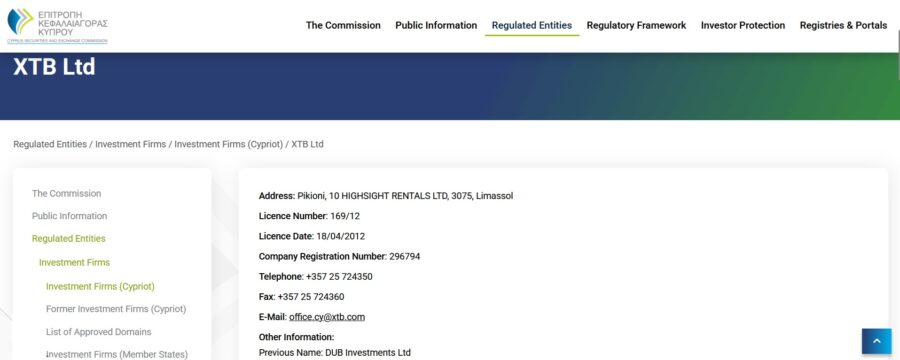
Source: CySEC
Pro tip: Under the Investor Compensation Schemes Directive (ICSD), investors can claim compensation of up to €20,000 if a brokerage that’s licensed with an EU regulator goes bust.
Trading Costs
MiFID II rules state that “appropriate information shall be provided in good time to clients or potential clients with regard to the investment firm and its services, the financial instruments and proposed investment strategies, execution venues and all costs and related charges.”
Under EU regulations, information on costs and fees must be aggregated so investors can more clearly understand what they are paying and the impact this can have on returns. This is critical, as high trading charges can eat into profits, and particularly for high-frequency traders and investors.
Key things to consider include:
- Transaction charges.
- Account management fees.
- Deposit charges.
- Withdrawal fees.
- Account inactivity charges.
- Additional costs for extra services (such as advanced market data and sophisticated charting tools).
It’s important, though, not to just consider the headline costs. Trading with one particular broker may incur higher transaction charges and account management fees, for instance. But if the service it offers boosts your profitability – for instance, by providing access to higher-quality research – this extra expense may well be worth it.
Top broker for trading costs: Interactive Brokers offers rock-bottom commissions regardless of whether you’re trading shares, forex, bonds, or derivatives like futures contracts. Inactivity fees aren’t present here, either, meaning customers aren’t penalized if they don’t see attractive investing opportunities.
Pro tip: If you’re worried about currency conversion fees, consider using a broker that offers trading accounts that are denominated in euros.
Trading Platform
Some things will be non-negotiables when you’re considering a broker. You’ll want a trading platform that offers rapid execution speeds, timely pricing, easy navigation and strong security features, to name a few important factors.
A platform’s other qualities and characteristics may differ significantly in terms of importance, depending on how you plan to trade. If you’re not looking to buy and sell securities over a short-term horizon, will advanced charting tools really be that important to you? A broker might offer a ‘best in class’ mobile app, but if you’re not planning to trade on the go, does it really matter?
Think about your trading style and objectives when deciding which trading platform to use, then. It can be a good idea to try a demo account first of all to get a flavour of whether it’s a good fit for you.
Pro tip: Many brokerages offer their own proprietary trading systems, but also allow customers to place trades with an external platform like TradingView or MetaTrader 5 (MT5). Some service providers only let investors trade financial markets with third-party software like this.
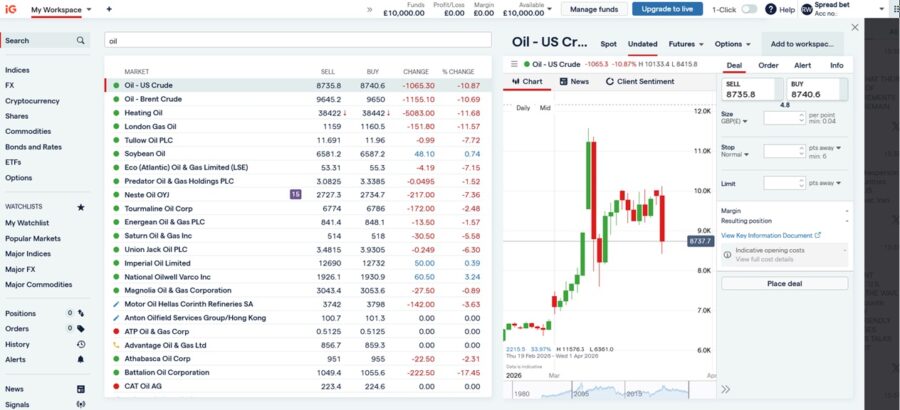
Best broker for trading platform: IG’s trading platform is one of the best in the business, whether you’re a beginner or an experienced investor. It also offers a demo account with a generous $10,000 worth of virtual money for clients to try out the software and get up to speed with the markets.
Though its software is excellent, IG also lets investors trade using a range of third-party platforms instead like TradingView, MetaTrader 4 (MT4) and Trading Central if they prefer.
Range of Markets
According to our tests, investors can buy and sell shares across all of the EU’s major stock exchanges. Stocks listed on the Euronext Paris and Borsa de Madrid are all widely available.
However, the range of equities on offer on both major and minor stock exchanges across the EU can differ substantially among brokerages. Want to trade shares in electricity producer ČEZ Group on the Prague Stock Exchange? You may have to hunt around.
We’ve also found that major currency pairings like the EUR/USD are widely available among brokers. But again, not all EUR pairs will be offered by every broker. The same divergences can occur across other asset classes including indices, bonds, exchange-traded funds (ETFs), cryptocurrencies and financial derivatives.
Top broker for markets: eToro has one of the largest asset class catalogues out there. For equity investors, it offers trading on more than 4,000 global shares, while fractional shares are also available. The latter group makes trading more expensive companies, like Rheinmetall, available even to those with less capital to invest. Other securities like forex, cryptocurrencies, commodities and ETFs are also well served by eToro.
Bottom Line
Traders in the EU can expect an excellent level of protection from bad business practices and scammers. Whatever country you’re based in, your national regulator will offer safeguards that are in line with regulations laid down by ESMA. Check that the brokerage you’re considering is licensed to trade by one of these watchdogs before you hand over any money or personal data.
Remember, though, that whether you use a reputable broker or not, trading and investing on financial markets is a high risk pursuit. Consider using a demo account before you put any of your actual hard-earned cash on the line.
FAQs
Who Regulates Brokerages In The EU?
Each of the 27 EU member states has their own national regulator. However, each must comply with overarching rules and directives laid down by supranational watchdog the European Securities and Markets Authority (ESMA). National regulators are responsible for issuing broker licenses, for supervising their conduct, and for imposing sanctions where rule breaking occurs.
Can I Open An Account In The EU With EUR As My Base Currency?
Yes, many brokers offer EUR-denominated accounts to their clients. The advantage? They can save investors a packet on currency conversion fees when they’re funding their accounts or making withdrawals. It also reduces traders’ exposure to exchange rate fluctuations.
Are Non-EU Brokerages Safe For EU Investors To Use?
Potentially, although it depends on the regulator that’s licensed the broker to trade. If it’s a top-tier watchdog like ESMA – say the UK’s Financial Conduct Authority (FCA), which also holds Category A status with BrokerListings.com – investors can expect a high level of protection.
That said, remember that the rules safeguarding individuals can differ in important ways between EU and non-EU regulators. For instance, Japan’s Financial Services Agency (FSA) does not offer negative balance protection on CFDs, which means investors can lose more than they deposit.
This is different to EU watchdogs, which require brokers to offer this protection under MiFID II regulations.