
Best Brokers In The UK
After extensive tests, we’ve listed the top brokers for traders in the UK. These are firms authorised by the Financial Conduct Authority (FCA) and cater to UK-based users with access to British markets, support for pound sterling (GBP) accounts, and features that make managing an account straightforward from the UK.
 Written By
Royston Wild
Royston is a seasoned investor and financial writer with over a decade of experience analyzing brokers and investment markets. With a background in stocks, commodities, and forex reporting - he brings a fresh perspective to broker evaluations.
Royston Wild Profile Page Fact Checked By
Tobias Robinson
Tobias is committed to helping traders find the right brokerage for their needs. He has tested 200+ brokers, spent 2,600+ hours using different platforms, and placed 2,100+ trades.
Tobias Robinson Profile Page Edited By
James Barra
James is an experienced broker analyst with a background in financial services. He has spent 2,500+ hours testing brokers, used 35+ different platforms and apps, audited 120+ broker T&Cs, and verified 300+ regulatory licenses.
James Barra Profile PageMarch 16, 2026
-
1Founded in Australia in 2010, Pepperstone is a highly-rated forex and CFD broker with over 830,000 global clients. It provides access to 1,400+ instruments on top platforms like MT4, MT5, cTrader, and TradingView, with low, clear fees. Pepperstone is regulated by reputable bodies such as the FCA, ASIC, and CySEC, ensuring a secure trading environment.✓ Supports GBP Accounts
-
2Founded in 2002 in Poland, XTB now serves over 1 million clients. This forex and CFD broker offers a regulated trading environment with a wide range of assets and a commitment to trader satisfaction, featuring an intuitive in-house platform with excellent tools for aspiring traders.✓ Supports GBP Accounts
-
3IG, established in 1974, is a branch of IG Group Holdings Plc, a publicly traded brokerage firm. IG provides spread betting, CFD, and forex trading across over 17,000 markets via easy-to-use platforms and investing apps. IG has remained a leading name in the trading industry for over five decades.✓ Supports GBP Accounts
-
4Trade Nation is a leading foreign exchange and contract for difference broker regulated in various areas including the UK and Australia. This company provides affordable fixed and variable spreads on over 1000 assets and strong trading platforms and educational resources. Traders could use the Signal Centre for trading ideas.✓ Supports GBP Accounts
-
5Interactive Brokers (IBKR) is a top brokerage firm offering access to 150 markets in 33 countries and a range of investment services. With 40 years in the field, this company listed on Nasdaq strictly follows the rules set by authorities such as the SEC, FCA, CIRO, and SFC. It's recognized as one of the most reliable brokers for global trading.✓ Supports GBP Accounts
UK Trading Suitability Comparison
See how our top-rated firms stack up for traders based in the UK:
| Broker |  |
GBP Account |
FCA Authorised |
ISA Account |
UK Pro Account |
|---|---|---|---|---|---|
 |
✓ | ✓ | ✗ | ✓ | |
 |
✓ | ✓ | ✓ | ✓ | |
 |
✓ | ✓ | ✓ | ✓ | |
 |
✓ | ✓ | ✗ | ✗ | |
 |
✓ | ✓ | ✓ | ✗ | |
| Broker | |
GBP Account |
FCA Authorised |
ISA Account |
UK Pro Account |
Broker Details Comparison
| Broker | Demo Account |
Minimum Deposit |
Minimum Trade |
Leverage |
Assets |
Platforms |
|---|---|---|---|---|---|---|
|
✓ | $0 | 0.01 Lots | 1:30 (Retail), 1:500 (Pro) | CFDs, Forex, Currency Indices, Stocks, Indices, Commodities, ETFs, Crypto (only Pro clients), Spread Betting | Pepperstone Trading Platform, MT4, MT5, cTrader, TradingView, AutoChartist |
|
✓ | $0 | 0.01 Lots | 1:30 | CFDs on shares, Indices, ETFs, Raw Materials, Forex currencies, cryptocurrencies, Real shares, Real ETFs | xStation |
|
✓ | $0 | 0.01 Lots | 1:30 (Retail), 1:222 (Pro) | CFDs, Forex, Stocks, Indices, Commodities, ETFs, Futures, Options, Crypto, Spread Betting | Web, L2 Dealer, MT4, TradingView, AutoChartist, TradingCentral, ProRealTime |
|
✓ | $0 | 0.1 Lots | 1:500 (entity dependent) | Forex, CFDs, Indices, Shares, Commodities, Futures, Bonds, Spread Betting, Cryptos (Bahamas Entity Only) | TN Trader, MT4 |
|
✓ | $0 | $100 | 1:50 | Stocks, Options, Futures, Forex, Funds, Bonds, ETFs, Mutual Funds, Cryptocurrencies, CFDs Stocks, Options, Futures, Forex, Funds, Bonds, ETFs, Mutual Funds, Cryptocurrencies | Trader Workstation (TWS), IBKR Desktop, GlobalTrader, Mobile, Client Portal, AlgoTrader, OmniTrader, TradingView, eSignal, TradingCentral, ProRealTime, Quantower |
| Broker | Demo Account |
Minimum Deposit |
Minimum Trade |
Leverage |
Assets |
Platforms |
How Safe Are The Best UK Brokers?
FCA authorisation is a strong starting point, but we also looked at the practical protections and account safeguards available to UK clients:
| Broker | Trust Rating |
Guaranteed Stop Loss |
Negative Balance Protection |
Segregated Accounts |
|---|---|---|---|---|
|
✗ | ✓ | ✓ | |
|
✓ | ✓ | ✓ | |
|
✓ | ✓ | ✓ | |
|
✗ | ✓ | ✓ | |
|
✗ | ✓ | ✓ | |
| Broker | Trust Rating |
Guaranteed Stop Loss |
Negative Balance Protection |
Segregated Accounts |
Mobile Trading Comparison
Mobile trading is now standard for many investors in Britain - here’s how our top UK brokers performed on smartphone and tablet:
| Broker | Mobile Apps |
iOS Rating |
Android Rating |
Smart Watch App |
|---|---|---|---|---|
|
iOS & Android | ✗ | ||
|
iOS & Android | ✓ | ||
|
iOS & Android | ✓ | ||
|
iOS & Android | ✗ | ||
|
iOS & Android | ✓ | ||
| Broker | Mobile Apps |
iOS Rating |
Android Rating |
Smart Watch App |
Comparison for Beginners
Compare how suitable the Best Brokers In The UK are for beginners.
| Broker | Demo Account |
Minimum Deposit |
Minimum Trade |
Education Rating |
Support Rating |
Fractional Shares |
Demo Competitions |
|---|---|---|---|---|---|---|---|
|
✓ | $0 | 0.01 Lots | ✗ | ✗ | ||
|
✓ | $0 | 0.01 Lots | ✓ | ✗ | ||
|
✓ | $0 | 0.01 Lots | ✗ | ✗ | ||
|
✓ | $0 | 0.1 Lots | ✗ | ✗ | ||
|
✓ | $0 | $100 | ✓ | ✗ | ||
| Broker | Demo Account |
Minimum Deposit |
Minimum Trade |
Education Rating |
Support Rating |
Fractional Shares |
Demo Competitions |
Comparison for Advanced Traders
Compare how suitable the Best Brokers In The UK are for advanced or professional traders.
| Broker | Automated Trading |
VPS |
API |
AI |
Pro Account |
Leverage |
Low Latency |
Extended Hours |
|---|---|---|---|---|---|---|---|---|
|
Expert Advisors (EAs) on MetaTrader | ✓ | ✓ | ✗ | ✓ | 1:30 (Retail), 1:500 (Pro) | ✓ | ✗ |
|
✗ | ✗ | ✗ | ✗ | ✓ | 1:30 | ✓ | ✗ |
|
Expert Advisors (EAs) on MetaTrader, build your own on ProRealTime | ✓ | ✓ | ✓ | ✓ | 1:30 (Retail), 1:222 (Pro) | ✓ | ✓ |
|
Expert Advisors (EAs) on MetaTrader | ✗ | ✗ | ✗ | ✗ | 1:500 (entity dependent) | ✗ | ✗ |
|
Capitalise.ai, TWS API | ✗ | ✗ | ✓ | ✗ | 1:50 | ✓ | ✓ |
| Broker | Automated Trading |
VPS |
API |
AI |
Pro Account |
Leverage |
Low Latency |
Extended Hours |
Accounts Comparison
Compare the trading accounts offered by Best Brokers In The UK.
| Broker | Demo Account |
Interest on Cash |
Islamic Account |
Joint Account |
Managed Account |
PAMM |
MAM |
LAMM |
Pro Account |
|---|---|---|---|---|---|---|---|---|---|
|
✓ | ✗ | ✓ | ✗ | ✓ | ✓ | ✓ | ✗ | ✓ |
|
✓ | USD: 2%, GBP: 4%, EUR: 1.25% | ✓ | ✗ | ✗ | ✗ | ✗ | ✗ | ✓ |
|
✓ | GBP: 3.75% | ✗ | ✓ | ✓ | ✗ | ✗ | ✗ | ✓ |
|
✓ | ✗ | ✓ | ✗ | ✓ | ✗ | ✗ | ✗ | ✗ |
|
✓ | USD: 4.8%, GBP: 4.7% | ✗ | ✓ | ✓ | ✗ | ✓ | ✗ | ✗ |
| Broker | Demo Account |
Interest on Cash |
Islamic Account |
Joint Account |
Managed Account |
PAMM |
MAM |
LAMM |
Pro Account |
Compare The Ratings Of Our Top UK Trading Brokers
See how our recommended brokers for UK traders scored across the core areas in our hands-on testing:
| Broker | Trust |
Platforms |
Assets |
Mobile |
Fees |
Accounts |
Research |
Education |
Support |
|---|---|---|---|---|---|---|---|---|---|
|
|||||||||
|
|||||||||
|
|||||||||
|
|||||||||
|
|||||||||
| Broker | Trust |
Platforms |
Assets |
Mobile |
Fees |
Accounts |
Research |
Education |
Support |
Fee and Cost Comparison
Compare the cost of trading with the Best Brokers In The UK.
| Broker | Cost Rating |
Fixed Spreads |
Inactivity Fee |
CFD Stocks Spread |
EUR/USD Spread |
Crypto Spread |
|---|---|---|---|---|---|---|
|
✓ | $0 | 0.02 | 0.1 | BTC 30, ETH 0 | |
|
✗ | €10 per 365 days | 0.2% | 1.0 | 0.22% | |
|
✗ | $12 | 0.02 | 0.8 | Variable | |
|
✓ | $0 | Variable | Variable | Fixed | |
|
✗ | $0 | 0.003 | 0.08-0.20 bps x trade value | 0.12%-0.18% | |
| Broker | Cost Rating |
Fixed Spreads |
Inactivity Fee |
CFD Stocks Spread |
EUR/USD Spread |
Crypto Spread |
Broker Popularity
Many UK traders prefer brokers with an established customer base and strong brand presence. Here’s how our leading providers compare:
| Broker | Popularity |
|---|---|
| Interactive Brokers |
|
| XTB |
|
| Pepperstone |
|
| IG |
|
Why Trade With Pepperstone?
Pepperstone is a leading trading option, providing low spreads, quick execution, and advanced chart tools for experienced traders. It also supports new traders with no minimum deposit, thorough learning resources, and exceptional 24/5 support (18 hours on weekends). Based under ASIC regulation, Pepperstone's comprehensive service earned it the 'Best Aus Broker' award for 2025 by DayTrading.com in Australia.
Pros
- Has a CopyTrading app for traders seeking a less active trading method.
- Pepperstone is a low-cost broker, ideal for serious traders. The Razor account offers spreads from 0.0, with rebates up to 30% for indices and commodities, and $3 per lot for forex through the Active Trader program.
- Pepperstone has simplified deposits and withdrawals, adding Apple Pay and Google Pay in 2025, and PIX and SPEI for Brazilian and Mexican clients in 2024.
Cons
- Overnight holding fees at Pepperstone are higher than some Market Maker brokers (often Benchmark + 2.5%). This is ideal for traders and forex scalpers but not great for swing traders who keep positions open overnight.
- Despite enhancing its market range, crypto offerings remain limited compared to brokers like Eightcap, and investing in real coins is not an option.
- Execution might be less reliable in fast markets than headline speeds indicate. Our tests showed fast execution at expected prices, but some community feedback mentions issues like slippage, stop-loss fills, and spread-sensitive order triggers during volatility.
Why Trade With XTB?
XTB is an excellent option for new traders due to its xStation platform, low trading costs, no minimum deposit, and outstanding educational tools, many of which are integrated into the platform.
Pros
- XTB provides an extensive set of educational resources such as training videos and articles on its platform, making it suitable for traders of all skill levels.
- XTB has increased the interest rate on uninvested funds and offers zero-fee ISAs (on ETFs and real shares, or 0.2% for transactions over €100k) for UK clients, providing access to a wide range of markets.
- The xStation platform stands out with its easy-to-use interface and intuitive features. These include personalized news feeds, sentiment heat maps, and a trading calculator, making it simpler for new traders.
Cons
- The demo account ends in four weeks. This is a limit for traders wanting to fully explore the xStation platform and try out strategies before using actual money.
- The inability to modify the default leverage on XTB products is disappointing. Manual adjustment can greatly reduce trading risks, especially in forex and CFD trading.
- XTB does not provide a raw spread account. This is often given by competitors such as Pepperstone. This can be of disadvantage to traders searching for the narrowest spreads.
Why Trade With IG?
IG offers a complete package with an easy-to-use web platform, top-notch education for beginners, advanced charting tools with TradingView integration, real-time data, and strong trade execution for experienced traders.
Pros
- As a reputable broker, IG follows strict regulations in various regions, ensuring strong trust.
- The proprietary web-based platform serves traders at all levels, offering advanced charting tools and real-time market data for trading. IG has also integrated TradingView.
- IG provides a wide range of professional and engaging educational resources, such as webinars, articles, and analysis.
Cons
- Beginners may find IG's fees confusing, as there are different charges for various trades and services, possibly resulting in unexpected costs.
- Stock and CFD spreads are still higher compared to the lowest-cost brokers like CMC Markets based on tests.
- In the UK and EU, there is negative balance protection, but US clients do not have account protection or guaranteed stop losses.
Why Trade With Trade Nation?
Trade Nation is a suitable platform for new traders, offering diverse financial markets in a user-friendly environment. It has no minimum deposit requirement, provides free funding options, and robust educational resources.
Pros
- Trade Nation, a widely recognized and regulated broker, formerly functioned as Core Spreads.
- Beginners can start trading with a small initial deposit.
- Trade a variety of investments using leveraged CFDs for buying and selling opportunities.
Cons
- Lower legal safeguards with overseas businesses.
Why Trade With Interactive Brokers?
Interactive Brokers is ideal for seasoned traders due to its robust charting platforms, updated data, and adaptability, especially with the IBKR Desktop application. Its exceptional pricing and advanced order features appeal to traders, and its variety of stocks remains unmatched in the market.
Pros
- IBKR provides a cost-effective platform for traders by offering low fees, narrow spreads, and clear pricing.
- The TWS platform is designed for intermediate to advanced traders. It includes over 100 order types and a dependable real-time market data feed that rarely experiences downtime.
- IBKR offers exceptional access to global stocks, with thousands of equities available from over 100 market centers in 24 countries, including the recent addition of the Saudi Stock Exchange.
Cons
- Customer service may take time to respond, and there may be delays in fixing problems based on tests. It could be difficult to reach the customer service promptly.
- TWS's platform may be difficult for beginners to grasp because of its complexity - we were overwhelmed during our initial tests by the sheer volume of tools, features and widgets.
- Only one active session per account is allowed, which means you can't run the desktop version and mobile app at the same time. This can sometimes lead to a frustrating trading experience.
Filters
How We Chose The Best Brokers For Traders In The UK
To make our shortlist of the best trading brokers for UK traders, each provider had to meet several key requirements:
- Brokers had to be authorised by the FCA. This was essential. We only included firms operating with UK regulatory permission because FCA authorisation is one of the clearest trust signals for traders in Britain. We checked each broker’s status using the Financial Services Register rather than relying on marketing claims on a broker’s website. The FCA says nearly all financial services in the UK must be authorised or registered, and dealing with unauthorised firms can leave consumers without important protections.
- Brokers had to offer a GBP trading account. For traders in the UK, being able to hold funds in pounds can make a real difference. It can simplify deposits and withdrawals, make account balances easier to manage, and help reduce avoidable currency conversion costs on everyday account activity. We confirmed GBP availability either during the application process or directly with the broker. That said, FX charges can still apply when you trade assets priced in another currency, such as US shares.
- Brokers had to provide access to markets relevant to UK traders. We prioritised firms that offer products commonly traded by UK residents, such as London-listed shares, ETFs with UK exposure, FTSE-linked indices, GBP forex pairs, and other instruments popular with traders in Britain. We tested broker platforms ourselves to verify what UK clients can actually access, while also taking into account whether the broker offers broader international market coverage.
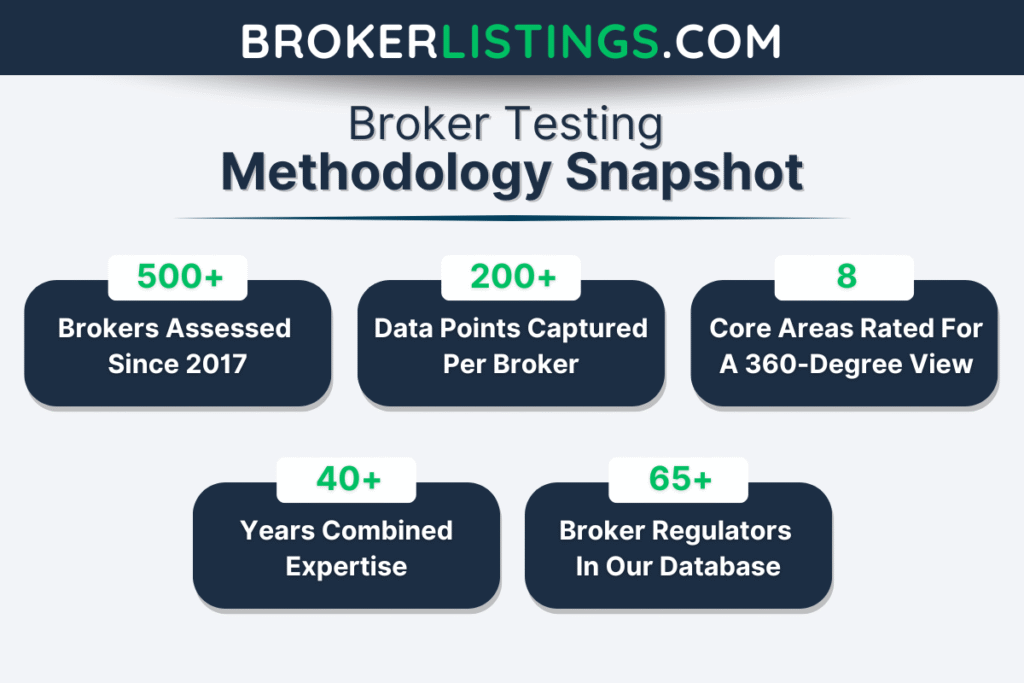
- We then applied our full hands-on testing process. Once brokers passed the UK-specific filters above, we scored them using our standard review framework. Our team assessed each provider across 8 core categories, gathered more than 200 individual data points per broker, and documented the platform experience in detail. Those results fed into each overall broker rating and helped determine the final rankings.
- We also considered client protection standards for UK users. Where relevant, we looked at the protections available to retail clients, including complaint routes and whether a firm falls within the wider UK consumer protection framework. Customers of authorised firms may have access to complaint mechanisms.
How To Choose A Broker In The UK
Investing activity in the UK has risen over the years. Participation has been boosted by the rising availability of tax-efficient products like the Stocks and Shares ISA and Self-Invested Personal Pension (SIPP), plus mobile-first trading platforms.
With annual allowances on the Cash ISA falling to £12,000 from £20,000 from April 2027, the number of Brits participating in the stock market is expected to balloon still further.
The good news is investors have greater choice than ever when deciding which broker to choose. However, what makes a service provider the best one for you depends on a number of factors:
Trustworthiness
Signing up to a broker means submitting a lot of sensitive personal information. It also requires depositing cash that you can use to build your portfolio. Needless to say, it’s important that you know you can trust the company you’re handing these over.
In the UK, fraudsters stole a whopping £1.2bn in 2024 through fraud of one kind or another, according to statistics. As you can see, then, it’s critical to check the broker you’re considering is approved by the Financial Conduct Authority (FCA).
Pro tip: The FCA is ranked as a Category A regulator under BrokerListings.com’s Regulator Ranking System, meaning retail investors can expect robust levels of protection, including leverage capped at 1:30 and negative balance protection so clients cannot lose more than they deposit to accounts.
The watchdog’s objective is to provide “a fair and thriving financial services market for the good of consumers and the economy.” To help people avoid fraud and identify reputable financial services providers, it maintains an online register of companies it has licensed to operate in the UK.
That’s not all, as the FCA also publishes a warning list on its website of companies found to be operating without a license, helping Brits to avoid these bad actors.
Pro tip: Using an FCA-registered broker has other advantages alongside helping investors avoid fraudsters. For instance, companies must maintain sufficient capital levels, segregate their funds from those of their clients, and provide clear risk disclosures when marketing and discussing products.
Brokerages must also sign up to the Financial Services Compensation Scheme (FSCS) under FCA rules. This means that, in the event of the business going bankrupt and not being able to return funds or assets, clients can receive up to £85,000 to offset any losses.
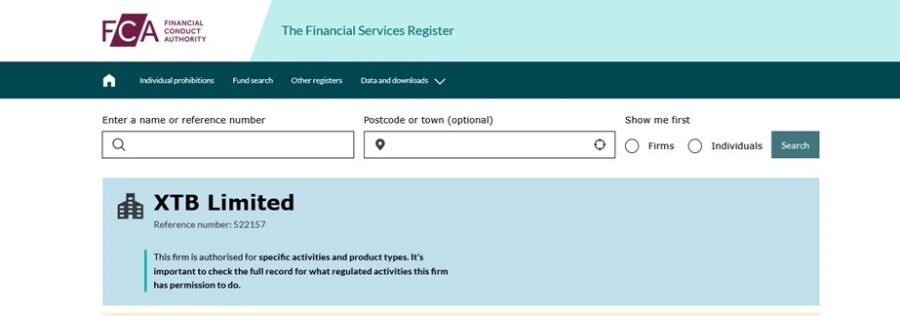
Top broker for trustworthiness: XTB is registered with several top-tier global regulators including the FCA, reference number 522157. We checked its databases and the FCA hasn’t fined or taken action against XTB – it’s just warned users about clone websites. XTB has also received over 4/5 on both the App Store and Google Play, with more than 10 million downloads, pointing to its reliability.
Source: FCA
Trading Costs
The FCA requires that brokerages “disclose costs and charges in a way that is clear, fair and not misleading.” However, the regulator’s remit does not extend to limiting the fees that companies can impose.
As a result, the types of fees charged as well as the size of those charges can vary significantly among service providers. Transaction costs, account management charges, and deposit and withdrawal fees are just a few to think about. If you’re a frequent investor, also consider how wide buy (bid) and sell (ask) prices are.
Pro tip: Certain cost models can benefit some investors more than others. For instance, those who invest 10 or more times a month may prefer a broker with tighter bid-ask spreads and lower transaction fees, even if their management fees are higher.
It’s also likely that brokers will charge more if they’re offering a better trading experience. Are features like a more advanced trading platform, a mobile app, and reams of educational material important to you? Consider whether you’re happy to pay more for these perks, and if so how much more.
Top broker for trading costs: Interactive Brokers offers extremely competitive charges, with share transaction charges as low as £1 and zero account management and inactivity charges. Spreads are also extremely tight across a number of markets.
Many brokers also offer trading accounts that are denominated in UK sterling. This means investors can avoid costly foreign exchange charges. What’s more, some brokerages allow customers to deposit using a variety of methods, including:
- Debit card
- Bank transfer
- Online payment providers (like PayPal)
- Digital wallets (such as Apple Pay)
Trading Platform
How important is having a highly customizable trading interface to you? What about the provision of economic calendars, analyst notes, detailed news feeds and advanced charting tools? And do you plan to trade when you’re on the train or in the bath?
The relevance of these factors will vary for different investors. What won’t be, however, are features like trade execution speeds, how quickly and easily assets can be bought and sold, and how secure the online platform is from hackers and fraudsters.
Some brokers operate their own in-house platforms, but their functionality and the experience they deliver may differ substantially in the view of different customers. It can be a good idea, therefore, to ‘road test’ the brokerage’s software without putting any cash on the line with the use of a demo account.
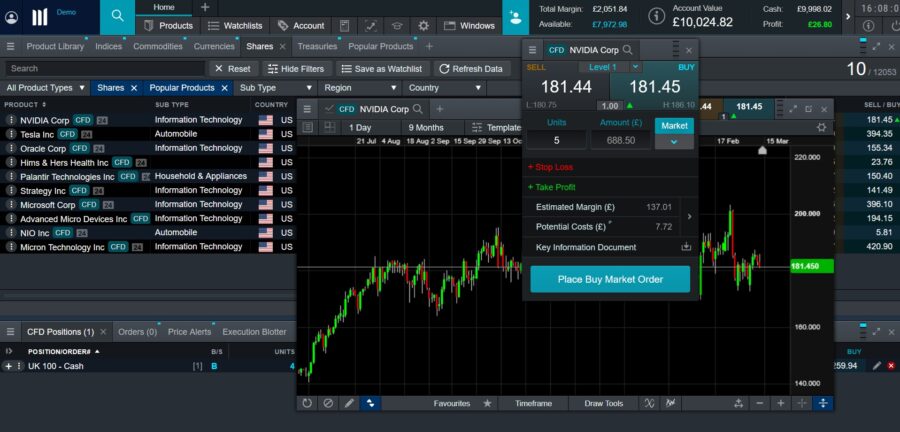
Top broker for trading platforms: CMC Markets offers an advanced proprietary system with high customizability and sophisticated charting tools that we enjoy using. Furthermore, investors can do business ‘on the go’ with the broker’s mobile app.
CMC Markets also allows traders to plug in third-party software MetaTrader 4 (MT4). So if you’re a trader who’s been using this platform for years, you don’t have to worry about learning a completely new trading platform. MT4 also offers additional features that CMC’s own software doesn’t, like automated trading and a huge library of custom technical indicators.
CMC Markets Web Platform
Markets
Each of the brokers we’ve included in our toplist allows investors to trade shares on the London Stock Exchange (LSE), either directly or through derivatives. This reflects the massive size and global popularity of the exchange – it’s one of the largest stock exchanges by market capitalization in the world.
US-listed stocks are also widely available, as are companies quoted on other major global exchanges. On the forex front, the GBP/USD major currency pairing – which pits the UK pound against the US dollar – is (perhaps unsurprisingly) heavily traded in Britain, too.
However, the range of stocks and forex pairs on offer won’t be the same among different brokers. British investors can also deal in other securities like bonds, exchange-traded funds (ETFs), indices, and derivatives like contracts for difference (CFDs) and futures contracts. But again, availability across these asset classes is variable.
Top broker for markets: IG offers thousands of shares listed on the LSE and global exchanges. That’s not all, as investors can trade forex, commodities, bonds and derivatives as well. In June 2025, it also began offering trading of dozens of cryptocurrencies too.
Bottom Line
The UK’s financial services industry is tightly regulated, so investors can expect strong protections when using as FCA-registered broker. The range of service providers out there is huge, and the number of tradeable markets, the level of dealing costs, and quality of trading platform can differ significantly among them. So take time to find the brokerage that best suits your needs.
FAQs
Who Regulates Brokers In The UK?
The Financial Conduct Authority (FCA) is responsible for licensing and supervising brokerages in Britain. Companies who fall short of industry standards or operate without authorization can be fined, barred from operating, or subject to other sanctions.
Can I Open An Account In The UK With GBP As My Base Currency?
Most brokers serving British traders and investors offer sterling-denominated accounts, which can make portfolio management simpler and eliminates the problem of expensive currency conversion costs.
Are International Brokerages Safe For UK Investors To Use?
If the broker is FCA-registered, investors can expect robust safeguards even if the company is headquartered overseas. It may also be safe to use a broker that’s authorized by another broker given Category A status by BrokerListings.com.
Be mindful, though, that other regulators may not offer exactly the same protections as the FCA.
For instance, firms that are registered with the Cyprus Securities & Exchange Commission (CySEC) must be signed up to the country’s Investor Compensation Fund (ICF), which offers maximum compensation of €20,000 if a broker fails.
When converted into sterling, this is far below the £85,000 that the UK’s Financial Services Compensation Scheme (FSCS) provides. The process of claiming under the ICF also tends to be slower and less certain for UK residents than with the FSCS.
What Is The Best Investing Account For Me?
No-frills accounts are widely available and easy to open. But they might not be the best option for you, depending on your personal circumstances and investing style.
Are you married, do you want to trade with borrowed funds (leverage), or is your plan to let a professional invest on your behalf? If you answer ‘yes’ to any of these questions, there may be better options for you.