
Best Brokers For Automated Trading 2026
After putting countless brokers through their paces, these automated trading platforms stood out as the absolute best.
 Written By
Paul Holmes
With over 15 years of trading experience, including developing algorithmic strategies on MetaTrader and evaluating brokers, he brings deep expertise in market analysis and trader education, helping traders choose the right platform for their requirements.
Paul Holmes Profile Page Fact Checked By
Tobias Robinson
Tobias is committed to helping traders find the right brokerage for their needs. He has tested 200+ brokers, spent 2,600+ hours using different platforms, and placed 2,100+ trades.
Tobias Robinson Profile Page Edited By
James Barra
James is an experienced broker analyst with a background in financial services. He has spent 2,500+ hours testing brokers, used 35+ different platforms and apps, audited 120+ broker T&Cs, and verified 300+ regulatory licenses. James has also been on US and UK TV, and been a guest on finance podcasts, discussing reports conducted by BrokerListings.com and sharing his expertise.
James Barra Profile PageFebruary 26, 2026
-
1
For automation, IBKR offers native APIs (TWS/IB Gateway, FIX, Python) for direct strategy integration and third-party VPS deployment. Tests show fast, consistent fills for stocks, FX, and futures.
Automated Trading
TWS API -
2
NinjaTrader performed well in our tests for custom builds. We could code and deploy strategies both natively and through its API, maintaining their operation continuously on a VPS. Order handling for futures, FX, and index products is accurate even under pressure.
Automated Trading
NinjaScript or via Automated Trading Interface -
3Established in 2024 in Saint Lucia, Plexytrade is an ECN/STP broker for active traders. It offers four account types, crypto deposits and withdrawals, and leverage up to 1:2000.
Automated Trading
Expert Advisors (EAs) on MetaTrader -
4OKX, established in 2017, is a respected cryptocurrency firm offering a wide range of products, including trading and NFTs. Traders have access to over 400 crypto tokens through OTC trading and derivatives. With a strong web platform, developer tools, and advanced charts, OKX is a popular choice for technical traders.
Automated Trading
Yes -
5Moomoo is a regulated trading platform overseen by trusted regulators like the SEC. It provides a simple, cost-effective method to trade in stocks, ETFs, and various assets from China, Hong Kong, Singapore, the US, and Australia. They provide the option for margin trading, along with no minimum deposit requirement, and several bonus options.
Automated Trading
Moomoo OpenAPI
Top Algo Trading Brokers Comparison
| Broker |  |
USD Account |
VPS Hosting |
API Access |
|---|---|---|---|---|
 |
✓ | ✗ | ✓ | |
 |
✓ | ✗ | ✗ | |
 |
✓ | ✓ | ✗ | |
 |
✓ | ✗ | ✓ | |
 |
✓ | ✗ | ✓ | |
| Broker | |
USD Account |
VPS Hosting |
API Access |
Broker Details Comparison
| Broker | Demo Account |
Minimum Deposit |
Minimum Trade |
Leverage |
Assets |
Platforms |
|---|---|---|---|---|---|---|
|
✓ | $0 | $1 | 1:50 (major forex pairs), 1:2-1:4 (equities) | Stocks, Options, Futures, Forex, Funds, Bonds, ETFs, Mutual Funds, Cryptocurrencies, CFDs Stocks, Options, Futures, Forex, Funds, Bonds, ETFs, Mutual Funds, Cryptocurrencies | Trader Workstation (TWS), IBKR Desktop, GlobalTrader, Mobile, Client Portal, AlgoTrader, OmniTrader, TradingView, eSignal, TradingCentral, ProRealTime, Quantower |
|
✓ | $0 (live trades must meet intraday margin minimums, e.g., $50 to trade micro contracts) | 1 contract | $50 intraday margins for Micro contracts and $500 for popular E-mini contracts | Futures, Forex, Stocks, Options, Commodities, Futures, Crypto (non-futures depend on provider) | NinjaTrader Desktop, Web & Mobile, eSignal |
|
✓ | $50 | 0.01 | 1:2000 | CFDs, Forex, Indices, Stocks, Commodities, Crypto | MT4, MT5, TradeLocker |
|
✓ | 10 USDT | Variable | ✗ | Spot, Futures, Swaps, Options, X-Perps | AlgoTrader, Quantower |
|
✓ | $0 | $0 | 1:2 | Stocks, Options, ETFs, ADRs, OTCs ,Futures | Desktop Platform, Mobile App |
| Broker | Demo Account |
Minimum Deposit |
Minimum Trade |
Leverage |
Assets |
Platforms |
Safety Comparison
Compare how safe the Best Brokers For Automated Trading 2026 are.
| Broker | Trust Rating |
Guaranteed Stop Loss |
Negative Balance Protection |
Segregated Accounts |
|---|---|---|---|---|
|
✗ | ✗ | ✓ | |
|
✗ | ✗ | ✓ | |
|
✗ | ✓ | ✓ | |
|
✗ | ✗ | ✗ | |
|
✗ | ✗ | ✓ | |
| Broker | Trust Rating |
Guaranteed Stop Loss |
Negative Balance Protection |
Segregated Accounts |
Mobile Trading Comparison
Compare the mobile trading features of the Best Brokers For Automated Trading 2026.
| Broker | Mobile Apps |
iOS Rating |
Android Rating |
Smart Watch App |
|---|---|---|---|---|
|
iOS & Android | ✓ | ||
|
iOS & Android | ✗ | ||
|
iOS & Android | ✗ | ||
|
Android & iOS | ✗ | ||
|
Yes (iOS & Android) | ✗ | ||
| Broker | Mobile Apps |
iOS Rating |
Android Rating |
Smart Watch App |
Comparison for Beginners
Compare how suitable the Best Brokers For Automated Trading 2026 are for beginners.
| Broker | Demo Account |
Minimum Deposit |
Minimum Trade |
Education Rating |
Support Rating |
Fractional Shares |
Demo Competitions |
|---|---|---|---|---|---|---|---|
|
✓ | $0 | $1 | ✓ | ✗ | ||
|
✓ | $0 (live trades must meet intraday margin minimums, e.g., $50 to trade micro contracts) | 1 contract | ✗ | ✗ | ||
|
✓ | $50 | 0.01 | ✗ | ✗ | ||
|
✓ | 10 USDT | Variable | ✗ | ✗ | ||
|
✓ | $0 | $0 | ✓ | ✗ | ||
| Broker | Demo Account |
Minimum Deposit |
Minimum Trade |
Education Rating |
Support Rating |
Fractional Shares |
Demo Competitions |
Comparison for Advanced Traders
Compare how suitable the Best Brokers For Automated Trading 2026 are for advanced or professional traders.
| Broker | Automated Trading |
VPS |
API |
AI |
Pro Account |
Leverage |
Low Latency |
Extended Hours |
|---|---|---|---|---|---|---|---|---|
|
TWS API | ✗ | ✓ | ✓ | ✗ | 1:50 (major forex pairs), 1:2-1:4 (equities) | ✓ | ✓ |
|
NinjaScript or via Automated Trading Interface | ✗ | ✗ | ✗ | ✗ | $50 intraday margins for Micro contracts and $500 for popular E-mini contracts | ✓ | ✗ |
|
Expert Advisors (EAs) on MetaTrader | ✓ | ✗ | ✗ | ✗ | 1:2000 | ✓ | ✗ |
|
✓ | ✗ | ✓ | ✓ | ✗ | ✗ | ✓ | ✗ |
|
Moomoo OpenAPI | ✗ | ✓ | ✓ | ✗ | 1:2 | ✓ | ✓ |
| Broker | Automated Trading |
VPS |
API |
AI |
Pro Account |
Leverage |
Low Latency |
Extended Hours |
Accounts Comparison
Compare the trading accounts offered by Best Brokers For Automated Trading 2026.
| Broker | Demo Account |
Interest on Cash |
Islamic Account |
Joint Account |
Managed Account |
PAMM |
MAM |
LAMM |
Pro Account |
|---|---|---|---|---|---|---|---|---|---|
|
✓ | USD: 3.14%, GBP: 3.24% | ✗ | ✓ | ✓ | ✗ | ✓ | ✗ | ✗ |
|
✓ | ✗ | ✗ | ✓ | ✗ | ✗ | ✗ | ✗ | ✗ |
|
✓ | ✗ | ✓ | ✗ | ✗ | ✗ | ✗ | ✗ | ✗ |
|
✓ | ✗ | ✗ | ✗ | ✗ | ✗ | ✗ | ✗ | ✗ |
|
✓ | USD: 3.35% | ✗ | ✗ | ✗ | ✗ | ✗ | ✗ | ✗ |
| Broker | Demo Account |
Interest on Cash |
Islamic Account |
Joint Account |
Managed Account |
PAMM |
MAM |
LAMM |
Pro Account |
Detailed Rating Comparison
Compare how we rated the Best Brokers For Automated Trading 2026 in key areas.
| Broker | Trust |
Platforms |
Assets |
Mobile |
Fees |
Accounts |
Research |
Education |
Support |
|---|---|---|---|---|---|---|---|---|---|
|
|||||||||
|
|||||||||
|
|||||||||
|
|||||||||
|
|||||||||
| Broker | Trust |
Platforms |
Assets |
Mobile |
Fees |
Accounts |
Research |
Education |
Support |
Fee and Cost Comparison
Compare the cost of trading with the Best Brokers For Automated Trading 2026.
| Broker | Cost Rating |
Fixed Spreads |
Inactivity Fee |
EUR/USD Spread |
Crypto Spread |
|---|---|---|---|---|---|
|
✗ | $0 | 0.08-0.20 bps x trade value | 0.12%-0.18% | |
|
✗ | $35 | 1.3 | Floating | |
|
✗ | ✗ | 0.7 | 1.1 | |
|
✗ | $0 | ✗ | Variable | |
|
✗ | $0 | ✗ | 0.49% per spot Bitcoin trade (US), 0.3% to 0.39% (Singapore) | |
| Broker | Cost Rating |
Fixed Spreads |
Inactivity Fee |
EUR/USD Spread |
Crypto Spread |
Customer Ratings
Compare how customers of these brokers feel about them, with real user ratings from Trustpilot, the Apple App Store and Google Play.
| Broker | Customers |
Trustpilot Score |
Trustpilot Reviews |
Android App Rating |
iOS App Rating |
|---|---|---|---|---|---|
|
4,300,000 | 5,511 | |||
|
1,800,000 | 1,240 | |||
|
✗ | 95 | |||
|
50,000,000 | 1,792 | |||
|
24,000,000 | 569 | |||
| Broker | Customers |
Trustpilot Score |
Trustpilot Reviews |
Android App Rating |
iOS App Rating |
Broker Popularity
See how popular the Best Brokers For Automated Trading 2026 are in terms of number of clients.
| Broker | Popularity |
|---|---|
| OKX |
|
| Moomoo |
|
| Interactive Brokers |
|
| NinjaTrader |
|
Why Trade With Interactive Brokers?
Interactive Brokers is ideal for seasoned traders due to its robust charting platforms, updated data, and adaptability, especially with the IBKR Desktop application. Its exceptional pricing and advanced order features appeal to traders, and its variety of stocks remains unmatched in the market.
Pros
- The TWS platform is designed for intermediate to advanced traders. It includes over 100 order types and a dependable real-time market data feed that rarely experiences downtime.
- IBKR offers exceptional access to global stocks, with thousands of equities available from over 100 market centers in 24 countries, including the recent addition of the Saudi Stock Exchange.
- IBKR is a highly regarded brokerage, regulated by prime authorities. This ensures the safety and reliability of your trading account.
Cons
- Only one active session per account is allowed, which means you can't run the desktop version and mobile app at the same time. This can sometimes lead to a frustrating trading experience.
- IBKR offers many research tools. However, the tools are not uniformly distributed across trading platforms and the web-based 'Account Management' page, causing confusion for the users.
- Customer service may take time to respond, and there may be delays in fixing problems based on tests. It could be difficult to reach the customer service promptly.
Why Trade With NinjaTrader?
NinjaTrader consistently satisfies active futures traders with its low-cost service and high-quality analysis tools. It offers superior charting features, including hundreds of indicators and over 10 chart types.
Pros
- In July 2026, NinjaTrader introduced CME Group Single Stock futures. This allows traders to take directional positions in major U.S. companies such as Nvidia and Amazon without using options.
's ecosystem offers traders access to thousands of add-ons and applications from developers in over 150 countries. These include indicators, strategies, and custom tools that extend the platform's native features. - Nano contracts, which are one-hundredth the size of standard contracts, let traders adjust positions precisely and manage risks on a smaller scale. This is beneficial for those who build positions gradually.
Cons
- Intraday margin requirements can rise up to four times in the 15 minutes before major economic news and remain high for several minutes after volatility decreases.
- NinjaTrader was fined $250,000 in 2025 for not implementing a sufficient anti-money laundering program and for supervisory failures.
- NinjaTrader was bought by Kraken in May 2025. Although it still operates independently, traders concerned about long-term stability may worry about changes in the platform's direction and pricing under new ownership.
Why Trade With Plexytrade?
Plexytrade is a new trading platform offering attractive features such as a 1:2000 leverage, zero spreads on certain instruments, and quick execution speeds of less than 46 milliseconds. However, the company is not regulated which is a substantial issue, and the lack of research and educational tools puts it behind other leading platforms.
Pros
- The account options cater to different trading styles, with Gold Raw attracting traders due to its spreads starting at 0.0 pips.
- Different VPS packages start at $50 monthly, but they are free after reaching certain deposit amounts.
- Plexytrade supports various trading tactics such as quick buying and selling, risk management, and computer-based trading.
Cons
- Plexytrade only accepts deposits and withdrawals through cryptocurrencies. It does not support bank cards, wire transfers, or e-wallets.
- Plexytrade isn't regulated in key regions, which raises the risk for traders who open an account or deposit money.
- Plexytrade, offering about 100 instruments, limits the options for traders interested in a variety of assets. This is particularly noticeable when compared to Blackbull, which has 26,000 securities.
Why Trade With OKX?
OKX is a preferred choice for traders seeking new cryptocurrencies and projects for investment. Traders can benefit from its copy trading feature and automated bots.
Pros
- A wide range of blockchain products, including DeFi services, NFTs, games, and 400+ established and emerging coins
- In 2025, OKX obtained a MiFID II license, allowing it to offer regulated derivatives products in Europe, ensuring confidence.
- Active traders will experience competitive maker and taker fees, at 0.02% and 0.05% respectively.
Cons
- Customer support quality varied during testing.
- The firm has limited regulatory oversight, which is common for crypto exchanges.
- In 2025, OKX agreed to pay over $500 million for violating U.S. AML laws.
Why Trade With Moomoo?
Moomoo is a great option for beginner and intermediate traders aiming to diversify their investment portfolio. The brokerage's app is easily navigable and the trading fees are significantly low.
Pros
- Moomoo offers detailed analytics and insights compared to other brands.
- The Moomoo AI assistant, available on the desktop software and app, offers valuable market insights for active traders.
- The broker provides early access to trading hours before the market opens.
Cons
- The account options are limited compared to similar brokerages, with no managed portfolios or robo-advisor solutions.
- No negative balance protection, a standard safety feature at top-tier regulated brokers.
- Moomoo has received several regulatory penalties lately, including fines and orders in 2026 that temporarily halted the acceptance of some Japanese and Chinese clients.
Filters
Methodology
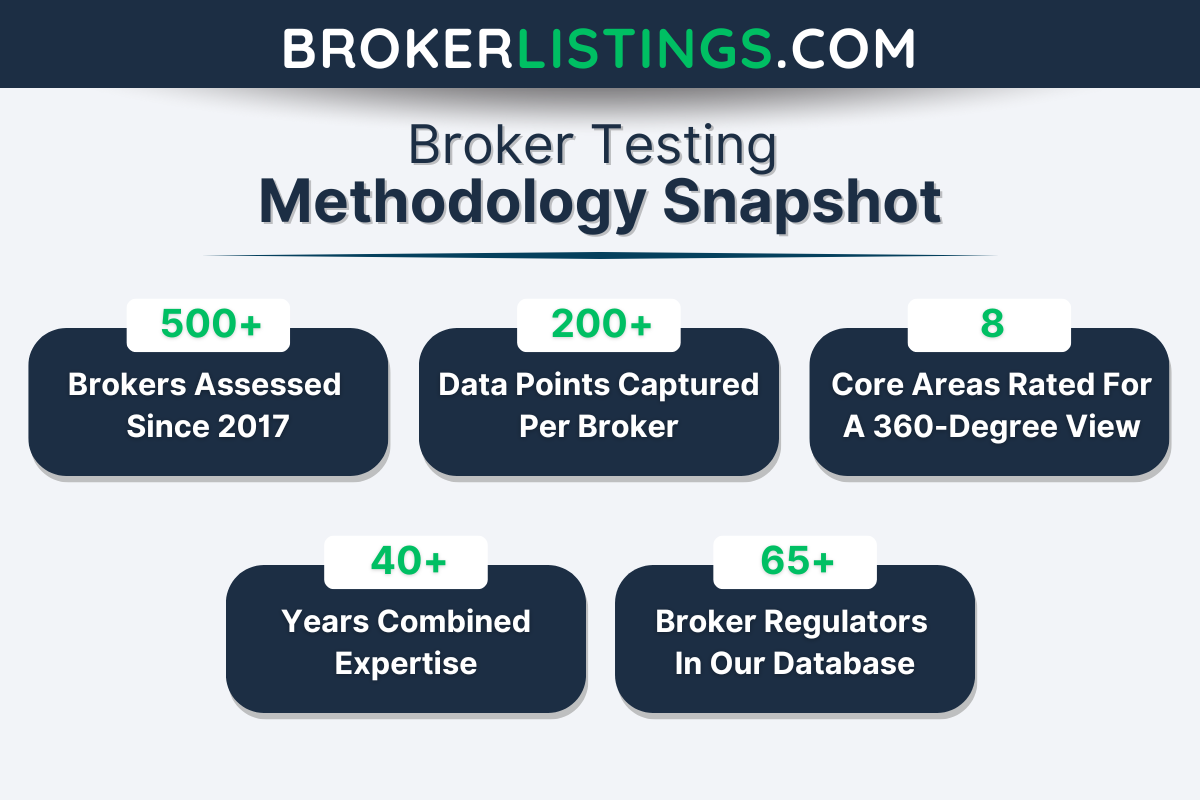
We analyzed a wide range of brokers supporting automated trading, assessed their features and performance, and assigned each a total score. Based on these evaluations, we compiled a definitive ranking of the top options.
What To Look For in a Broker For Automated Trading
Not all brokers are created equal when it comes to supporting automated trading. To ensure you make the most of your strategies and tools, consider these key factors before choosing a broker:
Platform Compatibility
The broker’s platform must support your preferred automated trading tools. Whether you’re using MetaTrader 5, cTrader or custom APIs, seamless integration is essential for uninterrupted trading.
I know this because I’ve personally developed algorithmic trading models using the MetaTrader platforms.
Some brokers like Interactive Brokers‘ Trader Workstation (TWS) also offer proprietary platforms optimized for automation.
Range of Tradable Assets
Automated trading isn’t just for forex. From stocks to cryptocurrencies and commodities, ensure the broker provides access to the markets you’re interested in.
A diverse range can expand your strategy’s potential.
Execution Speed and Reliability
In automated trading, milliseconds can make a difference.
Look for brokers with fast execution times and reliable systems to minimize slippage and downtime, ensuring your strategies perform as expected.
Fees and Costs
Evaluate the broker’s pricing model. High spreads, commissions, or hidden fees can eat into your profits, especially for high-frequency strategies.
Choose a broker with competitive and transparent pricing.
Customizability and Technical Features
Advanced traders may need customizable APIs, support for scripting languages like Python or MQL, or access to backtesting tools.
Ensure the broker provides the technical features you require to fine-tune your strategies.
Regulation and Security
A regulated broker ensures the security of your funds and data.
Look for brokers licensed by reputable regulatory bodies, such as the UK’s Financial Conduct Authority (FCA) and the Australian Securities & Investments Commission (ASIC), to trade with peace of mind.
Customer Support
Technical issues can arise, even with the best systems.
Choose a broker with responsive and knowledgeable customer support, available 24/7 to address your concerns.
Educational Resources
Some brokers provide tutorials, webinars, and guides tailored to automated trading.
If you’re new to the process, this can help you get started or refine your skills.
Scalability
If you plan to grow your trading activities, look for brokers that can accommodate increased trading volumes, advanced features, and evolving needs without significant limitations.
Free Trials or Demo Accounts
Before committing, test the broker’s platforms and tools with a demo account.
This allows you to evaluate performance, ease of use, and compatibility without risking your capital.
Tips for Choosing the Right Broker for Automated Trading
Define Your Trading Goals
Are you aiming for high-frequency trading, long-term portfolio automation, or something in between?
Your goals will influence the type of platform, tools, and market access you need.
Test Platforms Before Committing
Pay attention to the ease of setting up algorithms, the availability of pre-built bots, and how well the system integrates with your strategies.
Research Platform Stability
Automation relies heavily on the broker’s technology. Look for brokers with low downtime and a proven track record of handling high trade volumes.
Check for Developer-Friendly Features
Advanced automation often requires coding or integrating third-party software. Ensure the broker supports APIs, scripting (eg Python, MQL), and custom indicators.
Some brokers even provide sample code or SDKs to jump-start development.
Look for Backtesting and Forward Testing
It is crucial to test your strategy on historical and live market conditions.
Brokers offering robust backtesting tools with accurate market data will save you time and money.
Assess Latency and Execution Speed
Automation requires rapid execution, especially for high-frequency trading.
Low latency is essential to minimize slippage and ensure your algorithms execute trades as intended.
Look for VPS Hosting Options
Some brokers offer Virtual Private Server (VPS) hosting to run your automated trading systems.
VPS ensures your bots stay active 24/7, even if your local system shuts down.
Seek Built-in Automation Tools
Some brokers provide platforms with built-in automation capabilities, such as strategy builders or pre-configured bots.
These are perfect for traders who want automation without extensive coding.
Integration with Data Feeds
Real-time data feeds are critical for algorithmic decision-making.
Ensure the broker provides high-quality market data with minimal delays.
Support for Social or Copy Trading Automation
If you’re new to automation, some brokers offer social trading platforms where you can automate copying successful traders’ strategies.
This is an excellent way to ease into automated trading.
Ensure Transparent Reporting Tool
Automation generates a lot of data.
Look for brokers that provide clear performance reports and analytics to track the effectiveness of your strategies.
Mobile Compatibility for Automation
Many brokers now support mobile apps that allow you to monitor or tweak your automated trading strategies on the go.
Customizable Risk Management Features
Automated trading requires robust risk management.
Look for brokers with advanced stop-loss, take-profit, and trailing stop features that integrate seamlessly with your algorithms.
FAQ
What is Automated Trading?
Automated trading, also known as algorithmic trading, involves using software to execute trades on your behalf.
These programmes rely on pre-defined rules, ranging from basic strategies, such as buying or selling at specific price levels, to complex algorithms analysing market data in real-time.
The benefits for traders are clear: Automated trading eliminates emotional decision-making, ensures precision, and operates 24/7, making it especially appealing for those targeting fast-moving or international markets.
Whether you’re using bots, scripts, or advanced platforms like MetaTrader or TradingView, automated trading empowers you to trade smarter – not harder.