
Best Brokers in Canada
After tests, we’ve ranked the top brokers for traders in Canada. These are providers authorized by the Canadian Investment Regulatory Organizations (CIRO) and tailored to Canadians with support for CAD accounts, and features that make for a smooth trading experience for residents.
 Written By
Royston Wild
Royston is a seasoned investor and financial writer with over a decade of experience analyzing brokers and investment markets. With a background in stocks, commodities, and forex reporting - he brings a fresh perspective to broker evaluations.
Royston Wild Profile Page Fact Checked By
Tobias Robinson
Tobias is committed to helping traders find the right brokerage for their needs. He has tested 200+ brokers, spent 2,600+ hours using different platforms, and placed 2,100+ trades.
Tobias Robinson Profile Page Edited By
James Barra
James is an experienced broker analyst with a background in financial services. He has spent 2,500+ hours testing brokers, used 35+ different platforms and apps, audited 120+ broker T&Cs, and verified 300+ regulatory licenses. James has also been on US and UK TV, and been a guest on finance podcasts, discussing reports conducted by BrokerListings.com and sharing his expertise.
James Barra Profile PageApril 1, 2026
-
1Qtrade is a respected Canadian financial firm offering investment accounts with zero-commission stocks, mutual funds, and ETFs. Many Canadians choose Qtrade for savings or retirement accounts. Qtrade is trusted and regulated by the Canadian Investment Regulatory Organization (CIRO).✓ Supports CAD Accounts
-
2Founded in 2001, FOREX.com is part of StoneX, a global financial services firm with over a million customers. Regulated in the US, UK, EU, Australia, and other regions, it offers thousands of markets, not just forex, with competitive pricing on advanced platforms.✓ Supports CAD Accounts
-
3Moomoo is a regulated trading platform overseen by trusted regulators like the SEC. It provides a simple, cost-effective method to trade in stocks, ETFs, and various assets from China, Hong Kong, Singapore, the US, and Australia. They provide the option for margin trading, along with no minimum deposit requirement, and several bonus options.✓ Supports CAD Accounts
-
4Founded in 1989, CMC Markets is a London Stock Exchange-listed broker regulated by the FCA, ASIC, and CIRO. Over 1 million traders worldwide use its award-winning services.✓ Supports CAD Accounts
Canadian Trading Suitability Comparison
See how our top-rated brokers measure up for traders in Canada:
| Broker |  |
CAD Account |
CIRO Authorized |
|---|---|---|---|
 |
✓ | ✓ | |
 |
✓ | ✓ | |
 |
✓ | ✓ | |
 |
✓ | ✓ | |
| Broker | |
CAD Account |
CIRO Authorized |
Broker Details Comparison
| Broker | Demo Account |
Minimum Deposit |
Minimum Trade |
Leverage |
Assets |
Platforms |
|---|---|---|---|---|---|---|
|
✓ | $0 | Variable | ✗ | Stocks, ETFs, Bonds, Mutual Funds, Options, GICs | TradingCentral |
|
✓ | $100 | 0.01 Lots | 1:50 | Forex, Futures and Options on Metals, Energies, Commodities, Indices, Bonds Forex, CFDs, Stock CFDs, Indices, Commodities, Futures, Options, Crypto | WebTrader, Mobile, MT4, MT5, TradingView |
|
✓ | $0 | $0 | 1:2 | Stocks, Options, ETFs, ADRs, OTCs ,Futures | Desktop Platform, Mobile App |
|
✓ | $0 | 0.01 Lots | 1:30 (Retail), 1:500 (Pro) | CFDs, Forex, Stocks, Indices, Commodities, ETFs, Treasuries, Custom Indices, Spread Betting, Certificates and Warrants (Germany and Austria) | Web, MT4, MT5, TradingView |
| Broker | Demo Account |
Minimum Deposit |
Minimum Trade |
Leverage |
Assets |
Platforms |
How Safe Are The Best Canadian Brokers?
CIRO authorization is an essential starting point, but we also looked at the day-to-day protections and safeguards available to Canadian clients:
| Broker | Trust Rating |
Guaranteed Stop Loss |
Negative Balance Protection |
Segregated Accounts |
|---|---|---|---|---|
|
✗ | ✗ | ✓ | |
|
✗ | ✓ | ✓ | |
|
✗ | ✗ | ✓ | |
|
✓ | ✓ | ✓ | |
| Broker | Trust Rating |
Guaranteed Stop Loss |
Negative Balance Protection |
Segregated Accounts |
Mobile Trading Comparison
Mobile trading is now the preferred route for many investors in Canada - here’s how our top brokers performed on our smartphone and tablet tests:
| Broker | Mobile Apps |
iOS Rating |
Android Rating |
Smart Watch App |
|---|---|---|---|---|
|
iOS & Android | ✗ | ||
|
iOS & Android | ✗ | ||
|
Yes (iOS & Android) | ✗ | ||
|
iOS & Android | ✗ | ||
| Broker | Mobile Apps |
iOS Rating |
Android Rating |
Smart Watch App |
Comparison for Beginners
Compare how suitable the Best Brokers in Canada are for beginners.
| Broker | Demo Account |
Minimum Deposit |
Minimum Trade |
Education Rating |
Support Rating |
Fractional Shares |
Demo Competitions |
|---|---|---|---|---|---|---|---|
|
✓ | $0 | Variable | ✗ | ✗ | ||
|
✓ | $100 | 0.01 Lots | ✗ | ✗ | ||
|
✓ | $0 | $0 | ✓ | ✗ | ||
|
✓ | $0 | 0.01 Lots | ✓ | ✓ | ||
| Broker | Demo Account |
Minimum Deposit |
Minimum Trade |
Education Rating |
Support Rating |
Fractional Shares |
Demo Competitions |
Comparison for Advanced Traders
Compare how suitable the Best Brokers in Canada are for advanced or professional traders.
| Broker | Automated Trading |
VPS |
API |
AI |
Pro Account |
Leverage |
Low Latency |
Extended Hours |
|---|---|---|---|---|---|---|---|---|
|
✗ | ✗ | ✗ | ✗ | ✗ | ✗ | ✗ | ✗ |
|
Expert Advisors (EAs) on MetaTrader | ✓ | ✓ | ✓ | ✗ | 1:50 | ✓ | ✗ |
|
Moomoo OpenAPI | ✗ | ✓ | ✓ | ✗ | 1:2 | ✓ | ✓ |
|
Expert Advisors (EAs) on MetaTrader | ✓ | ✗ | ✗ | ✓ | 1:30 (Retail), 1:500 (Pro) | ✓ | ✓ |
| Broker | Automated Trading |
VPS |
API |
AI |
Pro Account |
Leverage |
Low Latency |
Extended Hours |
Accounts Comparison
Compare the trading accounts offered by Best Brokers in Canada.
| Broker | Demo Account |
Interest on Cash |
Islamic Account |
Joint Account |
Managed Account |
PAMM |
MAM |
LAMM |
Pro Account |
|---|---|---|---|---|---|---|---|---|---|
|
✓ | ✗ | ✗ | ✗ | ✗ | ✗ | ✗ | ✗ | ✗ |
|
✓ | ✗ | ✓ | ✗ | ✗ | ✗ | ✗ | ✗ | ✗ |
|
✓ | USD: 3.35% | ✗ | ✗ | ✗ | ✗ | ✗ | ✗ | ✗ |
|
✓ | ✗ | ✓ | ✗ | ✗ | ✗ | ✗ | ✗ | ✓ |
| Broker | Demo Account |
Interest on Cash |
Islamic Account |
Joint Account |
Managed Account |
PAMM |
MAM |
LAMM |
Pro Account |
Compare The Ratings Of Our Top Canadian Trading Brokers
Check out how our recommended brokers for Canadian traders scored in every core areas of our tests:
| Broker | Trust |
Platforms |
Assets |
Mobile |
Fees |
Accounts |
Research |
Education |
Support |
|---|---|---|---|---|---|---|---|---|---|
|
|||||||||
|
|||||||||
|
|||||||||
|
|||||||||
| Broker | Trust |
Platforms |
Assets |
Mobile |
Fees |
Accounts |
Research |
Education |
Support |
Fee and Cost Comparison
Compare the cost of trading with the Best Brokers in Canada.
| Broker | Cost Rating |
Fixed Spreads |
Inactivity Fee |
CFD Stocks Spread |
EUR/USD Spread |
Crypto Spread |
|---|---|---|---|---|---|---|
|
✗ | $0 | ✗ | ✗ | ✗ | |
|
✗ | $15 | 0.14 | 1.2 | BTC 1.4%, ETH 2% | |
|
✗ | $0 | $0 per trade | ✗ | 0.49% per spot Bitcoin trade (US), 0.3% to 0.39% (Singapore) | |
|
✗ | $15 | 0.02 | 0.7 | From 1.3 | |
| Broker | Cost Rating |
Fixed Spreads |
Inactivity Fee |
CFD Stocks Spread |
EUR/USD Spread |
Crypto Spread |
Customer Ratings
Compare how customers of these brokers feel about them, with real user ratings from Trustpilot, the Apple App Store and Google Play.
| Broker | Customers |
Trustpilot Score |
Trustpilot Reviews |
Android App Rating |
iOS App Rating |
|---|---|---|---|---|---|
|
✗ | 72 | |||
|
450,000 | 2,514 | |||
|
24,000,000 | 569 | |||
|
300,000 | 3,489 | |||
| Broker | Customers |
Trustpilot Score |
Trustpilot Reviews |
Android App Rating |
iOS App Rating |
Broker Popularity
Lots of Canadian traders feel more comfortable signing up with brokers who have an established user base. Here’s how many clients our top firms have:
| Broker | Popularity |
|---|---|
| Moomoo |
|
| FOREX.com |
|
| CMC Markets |
|
Why Trade With Qtrade?
Qtrade is suitable for Canadian traders seeking a trustworthy, regulated broker for long-term and leveraged trading.
Pros
- Qtrade and PersonaFin have launched "My News," an AI-powered, personalized newsfeed based on your interests. Access timely insights from top sources, quickly discover trending topics, and explore more efficiently with AI-driven search.
- After years of testing, Qtrade is recognized as one of Canada's top trading platforms, offering user-friendly software and an expanding selection of US and Canadian stocks, funds, ETFs, and other assets.
- Qtrade's new Options Lab, designed with Trading Central, offers trading ideas tailored to your goals, risk level, and experience. Go to Investment Tools > Options Lab.
Cons
- Qtrade does not offer trading options in forex or crypto markets, which may limit its appeal for those wanting to diversify their portfolio.
- Qtrade supports Interac e-Transfer but still has limited funding options and does not accept credit or debit card deposits.
- The transfer out fee can be inconvenient, and traders should be cautious of the CAD to USD exchange charge.
Why Trade With FOREX.com?
FOREX.com is a top-tier brokerage suitable for forex traders of all skill levels. It offers more than 80 currency pairs, has small spreads starting from 0.0 pips, and features low fees. The platform provides powerful charting tools that include over 100 technical indicators and multiple research aids.
Pros
- FOREX.com has over 20 years of experience with strong regulatory oversight, and has received multiple awards, including second place in our 'Best Forex Broker' awards. As such, FOREX.com is globally reputed as a reliable trading brokerage.
- Educational resources include tutorials, webinars, and a YouTube channel to help you learn about financial markets.
- The in-house Web Trader is a top platform for new traders, featuring a sleek design and over 80 technical indicators for market analysis.
Cons
- Demo accounts have a limited time duration of 90 days, which may not be sufficient for thoroughly testing trading strategies.
- US clients do not have negative balance protection, so you can potentially owe more than your original account deposit.
- FOREX.com’s group, GAIN Capital Group LLC, paid a $700,000 NFA fine for improperly managing some client accounts.
Why Trade With Moomoo?
Moomoo is a great option for beginner and intermediate traders aiming to diversify their investment portfolio. The brokerage's app is easily navigable and the trading fees are significantly low.
Pros
- The Moomoo AI assistant, available on the desktop software and app, offers valuable market insights for active traders.
- The broker provides early access to trading hours before the market opens.
- Moomoo is a member of FINRA and SIPC, providing added protection for clients.
Cons
- Moomoo has received several regulatory penalties lately, including fines and orders in 2026 that temporarily halted the acceptance of some Japanese and Chinese clients.
- The account options are limited compared to similar brokerages, with no managed portfolios or robo-advisor solutions.
- No negative balance protection, a standard safety feature at top-tier regulated brokers.
Why Trade With CMC Markets?
CMC Markets offers a great online platform for traders. It has advanced charting tools and a wide variety of CFDs to trade, including a large selection of currencies and customized indices. It caters to traders at all levels.
Pros
- CMC Funded launches in October 2026, offering up to a $100k simulated prop trading account for traders to demonstrate their skills on CMC’s platform, including prediction markets.
- We increased its 'Assets & Markets' rating after frequent product additions in 2025 and 2026, including extended hours trading for over 5,000 US stocks and ETFs, new share CFDs, certificates, warrants, and fractional shares in some areas.
- CMC provides great pricing, with narrow spreads and low fees for trading except for stock CFDs. The Alpha and Price+ programs also give benefits to active traders, including up to 40% spread discounts.
Cons
- While the web platform has improved, it still needs more enhancements to be as user-friendly for trading as competitor software such as IG.
- The CMC Markets app provides full trading services, but its design and user experience are not as good as leading competitors such as eToro.
- A $15 monthly inactivity fee starts after 12 months of no activity, which might discourage casual investors.
Filters
How We Chose The Best Brokers For Traders In Canada
To make our shortlist of the best trading brokers for Canadian traders, each provider had to meet several requirements:
- Brokers had to be licensed by the CIRO. This was non-negotiable. We checked each broker’s regulatory status using the CIRO’s database rather than relying on claims on a brokerage’s website.
- Brokers ideally offered a CAD trading account. This wasn’t a must-have but is provided by the majority of firms listed. Holding funds in CAD simplifies deposits and withdrawals, makes accounts easier to manage, and crucially it can help reduce currency conversion costs if dealing in Canadian securities like local stocks. We confirmed CAD availability either during the account sign-up process or directly with the broker’s support team. That said, FX charges may still apply if you trade securities priced in another currency, for example, US stocks.
- Brokers had to provide access to markets relevant to Canadian traders. We preferred firms with products often traded by Canadians, such as shares listed on the Toronto Stock Exchange, CAD currency pairs, or ETFs with Canadian exposure. We logged into each brokerage platform from a Canadian IP address to verify what Canadian clients can access, while also taking into account whether the broker provided access to global financial markets.
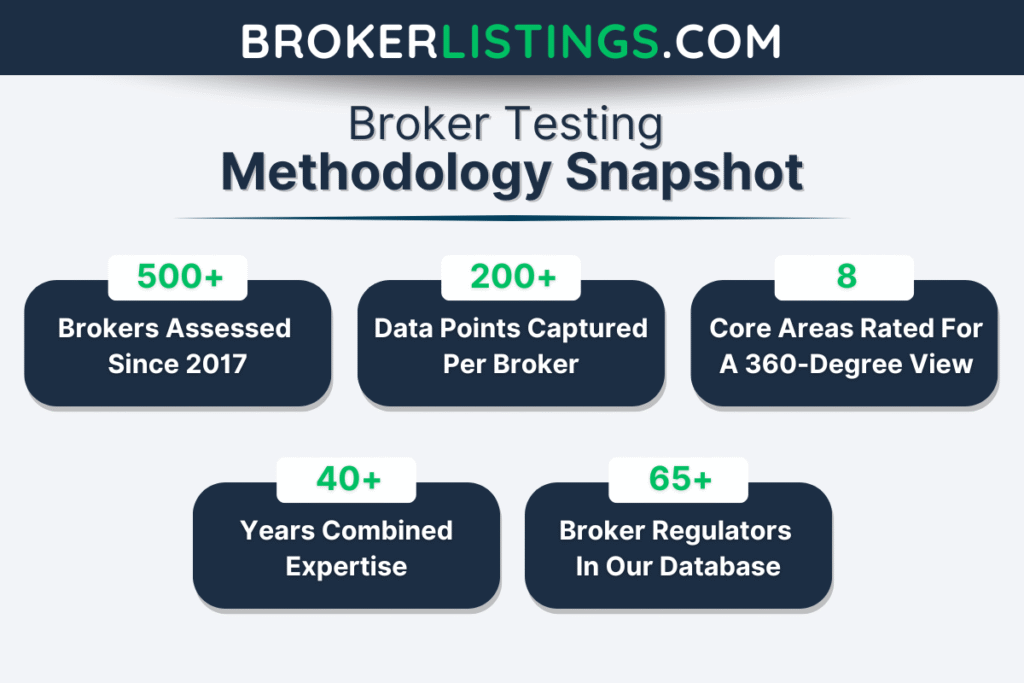
Once brokers passed the filters above, we scored them using our standard review process. Our team assessed each broker in core categories, gathered more than 200 individual data points per broker, and documented the trading experience. Those results fed into each overall broker rating and helped determine our final rankings.
How To Choose A Broker In Canada
Canada has one of the highest rates of financial market participation from retail investors in the world. Almost two-thirds of citizens invest outside of their retirement plans, with four in 10 of these people making their own investment decisions.
Engagement has been boosted by Canadians seeking better returns than traditional savings products. And with the number of online platforms operating in the country steadily rising, it’s never been easier to invest in shares, currencies, and other financial markets.
Service levels and trading costs can differ from broker to broker, however. So it pays to carefully research each service provider before you submit any personal information or deposit money – failing to do so can seriously dampen your trading enjoyment. Overlooking this stage could also see you fall into the trap of one of the growing number of scammers out there.
So what are the most important things to consider during the broker selection process? After testing dozens of operators who accept Canadian clients, we’ve narrowed it down to the following key questions:
Is The Broker Trustworthy?
The internet has been a happy hunting ground for fraudsters for decades. With financial market participation increasing, and technological innovations like artificial intelligence (AI) making scams more complex and tough to detect, the danger to investors is greater than ever before.
Illustrating the scale of the threat, Canadian Securities Administrators (CSA) data shows that lawmakers shut down an incredible 7,586 bogus investment platforms and cryptocurrency scam websites over an eight-month period.
It’s therefore critical to ensure the broker you’re considering is above board. The easiest way to do this is to check that they’re listed on the CSA’s National Registration Database.
Canada’s regulatory system is quite fragmented compared to those in other developed financial markets. However, that’s not to say that investor protections are any less robust. Brokers can be licensed by one or more of the country’s provincial regulators; there is no single national authority.
The Canadian Investment Regulatory Organization (CIRO) is responsible for the day-to-day supervision of service providers using a rulebook approved by local regulators like the Alberta Securities Commission (ASC) and Ontario Securities Commission (OSC). CIRO can impose sanctions including financial penalties and suspensions and permanent bans when it identifies misconduct.
Canada’s provincial regulators as well as CIRO are considered Category A watchdogs under BrokerListings.com’s Regulator Ranking System. This means traders can expect a strong level of protection under their rules and supervisory frameworks.
Top broker for trustworthiness: Qtrade is a division of Aviso Financial, which is registered with more than a dozen of Canada’s provincial regulators. It doesn’t hold multiple licenses with other regulators like some brokers, but this merely reflects the broker’s focus on its home market.
Qtrade’s regulated status within Canada (National Registration Database #6190) also means clients are protected under the Canadian Investor Protection Fund (CIPF). This insurance scheme protects client assets up to CAD$1 million if the company becomes insolvent.
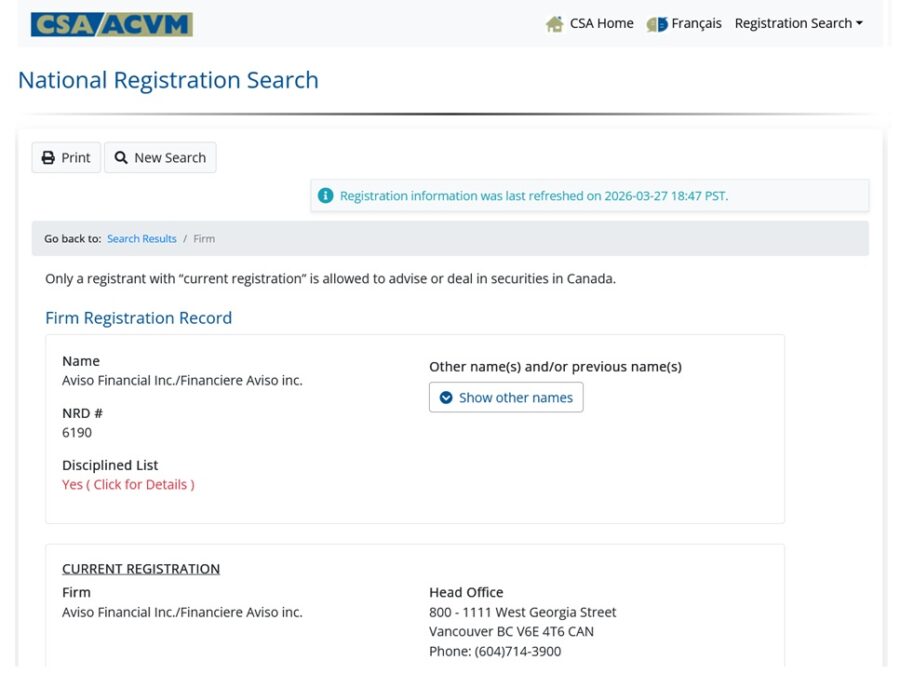
Source: CSA
What Does It Cost To Invest?
CIRO rules state that brokers must disclose all fees and charges:
- When clients open an account.
- Before accepting an order to buy or sell a financial product.
- After the customer makes a trade, in their monthly or quarterly account statements.
- Within 60 days of a fee change.
What’s more, the trading costs involved must meet the body’s requirements that brokers act fairly, honestly and in good faith. CIRO doesn’t place caps on trading costs, but it insists that items like transaction charges, account management fees, deposit and withdrawal charges and overnight fees are proportionate to the service being provided.
It’s critical to weigh all of these up when considering a broker on cost grounds. For instance, if you’re a regular investor – say, making 10 or more investments a month – you might be happier to pay a higher management fee if it means lower transaction charges.
Also think about how wide the company’s buy (bid) and sell (ask) spreads are. These reflect the broker’s markup between buy and sell prices, and they’re a particularly important thing to consider if you’re a high-frequency trader.
Pro tip: Some brokers also offer accounts denominated in Canadian dollars (CAD). The benefits of these are twofold: they protect investors from currency exchange costs, and they can make portfolio management simpler.
Once again, it’s important to think about the benefit of CAD-denominated accounts in the context of a service provider’s overall cost structure.
Top broker for trading costs: Fusion Markets is extremely competitive on charges, and offers benefits like zero fees if you’re not active trader. There’s also a $0 minimum deposit, tight spreads, and even accounts denominated in the ‘Loonie’ for clients to choose from.
What Markets Can I Trade?
Canada has several stock markets, though retail investors mostly trade on the Toronto Stock Exchange (TSX), home to the country’s blue-chip stocks. Traders also frequently deal in major currency pairings, such as the USD/CAD, which matches the national currency against the US dollar.
Trading platforms now also often offer a range of other markets including exchange-traded funds (ETFs), bonds, cryptocurrencies like Bitcoin and derivatives (such as futures and options contracts).
But beware: the range of securities on offer can differ considerably among brokers. Looking to buy a junior gold miner on the small-cap-focused TSX Venture Exchange (TSXV)? How about trading the CAD against the Chilean peso (CLP)? You may have to shop around to find a service provider offering those.
Top broker for market range: AvaTrade offers a large product range comprising shares, forex, indices, ETFs, commodities, digital currencies and derivatives. In total, more than 1,250 financial instruments can be bought and sold through its platform.
Does The Trading Platform Work For Me?
All investors require a platform that executes trades quickly, simply and reliably. They also want an interface that’s simple to navigate, provides detailed portfolio information and is safe from hackers.
Other factors may be critical to some individuals but not to others. Do you want a high level of platform customization, access to advanced charting tools, detailed trading guides for beginners, or sophisticated types of market orders (such as volume-based orders), for instance?
Consider what’s important to you, and whether the broker you’re looking at meets your needs or falls short. If you plan to trade on the go, for example, you’ll want a broker that offers an easy-to-use mobile app.
Pro tip: You might not know whether or not a broker’s the fit for you until you sign up and start trading. It’s therefore a good idea to begin by opening a demo account that lets you trade with virtual money.
Top broker for trading platform: CMC Markets offers a quality proprietary trading platform, with features like advanced charting tools and a facility to put through complex order types. There are also additional tools like news feeds and analyst notes that keep investors in the loop.
To top things off, traders can put the system through its paces before committing any cash with a demo account. CMC’s mobile trading app is also one of the best in the business.
But what about if you don’t like its in-house software? No sweat, as CMC Markets also lets customers plug in third-party platforms to trade. MetaTrader 4 (MT4) and TradingView are supported.
Bottom Line
Through its web of regional and national regulators, Canada is a safe place for individuals to trade online. The presence of fraud is still something traders need to be aware of, and even regulated brokers can be caught offering a poor level of service. There’s also always the risk you could lose any money you invest. But tight regulatory oversight and the possibility of thumping sanctions create a favorable landscape for retail investors.
After checking the company you’re considering is fully licensed, think carefully about trading costs – high expenses can take a big bite out of your profits, especially if you’re a frequent trader. Think about testing the broker out with the use of a demo account too.
FAQs
Who Regulates Brokerages In Canada?
The Canadian Investment Regulatory Organization (CIRO) is responsible for supervising the conduct of financial service providers and imposing sanctions when it deems wrongdoing has occurred. The licensing of the companies themselves, along with the rules they must abide by, is conducted by a network of separate provincial regulators.
Can I Open An Account In Canada with CAD As My Base Currency?
Many brokerages let Canadians trade in their local currency with CAD-denominated accounts. It can make deposits, withdrawals, and portfolio management far simpler, not to mention cheaper by removing currency conversion charges.