
Best Ethereum Brokers 2026
Dig into our selection of the best Ethereum brokers, standing out after our extensive tests for their secure platforms, competitive fees and excellent tools, helping you to make smarter decisions in the volatile Ether market.
 Written By
Royston Wild
Royston is a seasoned investor and financial writer with over a decade of experience analyzing brokers and investment markets. With a background in stocks, commodities, and forex reporting - he brings a fresh perspective to broker evaluations.
Royston Wild Profile Page Fact Checked By
Tobias Robinson
Tobias is committed to helping traders find the right brokerage for their needs. He has tested 200+ brokers, spent 2,600+ hours using different platforms, and placed 2,100+ trades.
Tobias Robinson Profile Page Edited By
James Barra
James is an experienced broker analyst with a background in financial services. He has spent 2,500+ hours testing brokers, used 35+ different platforms and apps, audited 120+ broker T&Cs, and verified 300+ regulatory licenses. James has also been on US and UK TV, and been a guest on finance podcasts, discussing reports conducted by BrokerListings.com and sharing his expertise.
James Barra Profile PageFebruary 18, 2026
-
1Interactive Brokers (IBKR) is a leading brokerage offering access to over 170 markets in 40 countries and a range of investment services. With 40+ years in the industry, this Nasdaq-listed company follows strict regulations by the SEC, FCA, CIRO, and SFC, making it a trusted global trading broker.
-
2eToro is a platform for social investing that provides options for both short and long-term trading on stocks, ETFs, options, and crypto. The platform is recognized for its easy-to-use, community-oriented interface and reasonable fees. With oversight from FINRA and SIPC, and used by millions globally, eToro is a reputed name in the industry. Trading on eToro is facilitated by eToro USA Securities, Inc.
-
3OKX, established in 2017, is a respected cryptocurrency firm offering a wide range of products, including trading and NFTs. Traders have access to over 400 crypto tokens through OTC trading and derivatives. With a strong web platform, developer tools, and advanced charts, OKX is a popular choice for technical traders.
-
4Moomoo is a regulated trading platform overseen by trusted regulators like the SEC. It provides a simple, cost-effective method to trade in stocks, ETFs, and various assets from China, Hong Kong, Singapore, the US, and Australia. They provide the option for margin trading, along with no minimum deposit requirement, and several bonus options.
-
5Firstrade is a US-based discount broker-dealer authorized by the SEC and a member of FINRA/SIPC. It offers welcome bonuses, advanced tools and apps, and commission-free trading. Firstrade Securities is a popular top online brokerage, and opening a new account is fast and simple.
Best Ethereum Brokers Comparison
| Broker |  |
USD Account |
Crypto Spread |
Segregated Accounts |
Negative Balance Protection |
|---|---|---|---|---|---|
 |
✓ | 0.12%-0.18% | ✓ | ✗ | |
 |
✓ | BTC 0.75% | ✓ | ✗ | |
 |
✓ | Variable | ✗ | ✗ | |
 |
✓ | 0.49% per spot Bitcoin trade (US), 0.3% to 0.39% (Singapore) | ✓ | ✗ | |
 |
✓ | Variable | ✓ | ✗ | |
| Broker | |
USD Account |
Crypto Spread |
Segregated Accounts |
Negative Balance Protection |
Broker Details Comparison
| Broker | Demo Account |
Minimum Deposit |
Minimum Trade |
Leverage |
Assets |
Platforms |
|---|---|---|---|---|---|---|
|
✓ | $0 | $0 | 1:50 (major forex pairs), 1:2-1:4 (equities) | Stocks, Options, Futures, Forex, Funds, Bonds, ETFs, Mutual Funds, Cryptocurrencies, CFDs Stocks, Options, Futures, Forex, Funds, Bonds, ETFs, Mutual Funds, Cryptocurrencies | Trader Workstation (TWS), IBKR Desktop, GlobalTrader, Mobile, Client Portal, AlgoTrader, OmniTrader, TradingView, eSignal, TradingCentral, ProRealTime, Quantower |
|
✓ | $50 | $10 | ✗ | Stocks, Options, ETFs, Crypto | eToro Trading Platform & CopyTrader |
|
✓ | 10 USDT | Variable | ✗ | Spot, Futures, Swaps, Options, X-Perps | AlgoTrader, Quantower |
|
✓ | $0 | $0 | 1:2 | Stocks, Options, ETFs, ADRs, OTCs ,Futures | Desktop Platform, Mobile App |
|
✗ | $0 | $5 | ✗ | Stocks, ETFs, Options, Mutual Funds, Bonds, Fixed | Firstrade Invest 3.0, TradingCentral |
| Broker | Demo Account |
Minimum Deposit |
Minimum Trade |
Leverage |
Assets |
Platforms |
Safety Comparison
Compare how safe the Best Ethereum Brokers 2026 are.
| Broker | Trust Rating |
Guaranteed Stop Loss |
Negative Balance Protection |
Segregated Accounts |
|---|---|---|---|---|
|
✗ | ✗ | ✓ | |
|
✗ | ✗ | ✓ | |
|
✗ | ✗ | ✗ | |
|
✗ | ✗ | ✓ | |
|
✗ | ✗ | ✓ | |
| Broker | Trust Rating |
Guaranteed Stop Loss |
Negative Balance Protection |
Segregated Accounts |
Mobile Trading Comparison
Compare the mobile trading features of the Best Ethereum Brokers 2026.
| Broker | Mobile Apps |
iOS Rating |
Android Rating |
Smart Watch App |
|---|---|---|---|---|
|
iOS & Android | ✓ | ||
|
iOS & Android | ✗ | ||
|
Android & iOS | ✗ | ||
|
Yes (iOS & Android) | ✗ | ||
|
iOS & Android | ✗ | ||
| Broker | Mobile Apps |
iOS Rating |
Android Rating |
Smart Watch App |
Comparison for Beginners
Compare how suitable the Best Ethereum Brokers 2026 are for beginners.
| Broker | Demo Account |
Minimum Deposit |
Minimum Trade |
Education Rating |
Support Rating |
Fractional Shares |
Demo Competitions |
|---|---|---|---|---|---|---|---|
|
✓ | $0 | $0 | ✓ | ✗ | ||
|
✓ | $50 | $10 | ✓ | ✗ | ||
|
✓ | 10 USDT | Variable | ✗ | ✗ | ||
|
✓ | $0 | $0 | ✓ | ✗ | ||
|
✗ | $0 | $5 | ✓ | ✗ | ||
| Broker | Demo Account |
Minimum Deposit |
Minimum Trade |
Education Rating |
Support Rating |
Fractional Shares |
Demo Competitions |
Comparison for Advanced Traders
Compare how suitable the Best Ethereum Brokers 2026 are for advanced or professional traders.
| Broker | Automated Trading |
VPS |
API |
AI |
Pro Account |
Leverage |
Low Latency |
Extended Hours |
|---|---|---|---|---|---|---|---|---|
|
Capitalise.ai, TWS API | ✗ | ✓ | ✓ | ✗ | 1:50 (major forex pairs), 1:2-1:4 (equities) | ✓ | ✓ |
|
✗ | ✗ | ✓ | ✓ | ✗ | ✗ | ✓ | ✓ |
|
✓ | ✗ | ✓ | ✓ | ✗ | ✗ | ✓ | ✗ |
|
Moomoo OpenAPI | ✗ | ✓ | ✓ | ✗ | 1:2 | ✓ | ✓ |
|
✗ | ✗ | ✗ | ✗ | ✗ | ✗ | ✗ | ✓ |
| Broker | Automated Trading |
VPS |
API |
AI |
Pro Account |
Leverage |
Low Latency |
Extended Hours |
Accounts Comparison
Compare the trading accounts offered by Best Ethereum Brokers 2026.
| Broker | Demo Account |
Interest on Cash |
Islamic Account |
Joint Account |
Managed Account |
PAMM |
MAM |
LAMM |
Pro Account |
|---|---|---|---|---|---|---|---|---|---|
|
✓ | USD: 3.14%, GBP: 3.24% | ✗ | ✓ | ✓ | ✗ | ✓ | ✗ | ✗ |
|
✓ | USD: 4.05% | ✗ | ✗ | ✓ | ✗ | ✗ | ✗ | ✗ |
|
✓ | ✗ | ✗ | ✗ | ✗ | ✗ | ✗ | ✗ | ✗ |
|
✓ | USD: 3.35% | ✗ | ✗ | ✗ | ✗ | ✗ | ✗ | ✗ |
|
✗ | ✗ | ✗ | ✓ | ✗ | ✗ | ✗ | ✗ | ✗ |
| Broker | Demo Account |
Interest on Cash |
Islamic Account |
Joint Account |
Managed Account |
PAMM |
MAM |
LAMM |
Pro Account |
Detailed Rating Comparison
Compare how we rated the Best Ethereum Brokers 2026 in key areas.
| Broker | Trust |
Platforms |
Assets |
Mobile |
Fees |
Accounts |
Research |
Education |
Support |
|---|---|---|---|---|---|---|---|---|---|
|
|||||||||
|
|||||||||
|
|||||||||
|
|||||||||
|
|||||||||
| Broker | Trust |
Platforms |
Assets |
Mobile |
Fees |
Accounts |
Research |
Education |
Support |
Fee and Cost Comparison
Compare the cost of trading with the Best Ethereum Brokers 2026.
| Broker | Cost Rating |
Fixed Spreads |
Inactivity Fee |
EUR/USD Spread |
Crypto Spread |
|---|---|---|---|---|---|
|
✗ | $0 | 0.08-0.20 bps x trade value | 0.12%-0.18% | |
|
✓ | $10 | ✗ | BTC 0.75% | |
|
✗ | $0 | ✗ | Variable | |
|
✗ | $0 | ✗ | 0.49% per spot Bitcoin trade (US), 0.3% to 0.39% (Singapore) | |
|
✗ | $0 | ✗ | Variable | |
| Broker | Cost Rating |
Fixed Spreads |
Inactivity Fee |
EUR/USD Spread |
Crypto Spread |
Customer Ratings
Compare how customers of these brokers feel about them, with real user ratings from Trustpilot, the Apple App Store and Google Play.
| Broker | Customers |
Trustpilot Score |
Trustpilot Reviews |
Android App Rating |
iOS App Rating |
|---|---|---|---|---|---|
|
4,300,000 | 5,497 | |||
|
3,200,000 | 32,078 | |||
|
50,000,000 | 1,788 | |||
|
24,000,000 | 506 | |||
|
✗ | 53 | |||
| Broker | Customers |
Trustpilot Score |
Trustpilot Reviews |
Android App Rating |
iOS App Rating |
Broker Popularity
See how popular the Best Ethereum Brokers 2026 are in terms of number of clients.
| Broker | Popularity |
|---|---|
| OKX |
|
| Moomoo |
|
| Interactive Brokers |
|
| eToro USA |
|
Why Trade With Interactive Brokers?
Interactive Brokers is ideal for seasoned traders due to its robust charting platforms, updated data, and adaptability, especially with the IBKR Desktop application. Its exceptional pricing and advanced order features appeal to traders, and its variety of stocks remains unmatched in the market.
Pros
- IBKR provides a cost-effective platform for traders by offering low fees, narrow spreads, and clear pricing.
- Interactive Brokers has introduced a single platform combining prediction markets from Kalshi, CME Group, and ForecastEx. Users can trade yes/no contracts on political, economic, and climate events, with a fixed $1 payout per contract, 24/6 market access, and interest on qualified positions.
- IBKR, primarily designed for skilled traders, has expanded its appeal recently by eliminating its initial $10,000 deposit requirement.
Cons
- IBKR offers many research tools. However, the tools are not uniformly distributed across trading platforms and the web-based 'Account Management' page, causing confusion for the users.
- TWS is complex, and beginners might find it difficult to use and understand all its features.
- Only one active session per account is allowed, which means you can't run the desktop version and mobile app at the same time. This can sometimes lead to a frustrating trading experience.
Why Trade With eToro USA?
eToro is a strong choice for traders seeking social and copy trading. Its low deposit, zero commissions, and easy-to-use platform suit new traders.
Pros
- eToro USA Securities is a reliable broker that's regulated by the SEC, part of FINRA, and a member of SIPC.
- The eToro App Store launched in 2026, offering algorithmic trading tools and social analytics. In July, it introduced an AI-powered app for autonomous trading.
- The low minimum deposit and simple account setup allow beginners to start trading quickly.
Cons
- eToro USA was fined $1.5 million by the SEC in 2024 for unregistered crypto offerings.
- The range of trading instruments is limited compared to some competitors, offering mainly stocks, ETFs, a large selection of options, and cryptocurrencies.
- Traders used to third-party charting tools won't find MetaTrader 4 platform integration.
Why Trade With OKX?
OKX is a preferred choice for traders seeking new cryptocurrencies and projects for investment. Traders can benefit from its copy trading feature and automated bots.
Pros
- Active traders will experience competitive maker and taker fees, at 0.02% and 0.05% respectively.
- OKX serves 50 million clients worldwide and is licensed by Dubai’s Virtual Assets Regulatory Authority.
- Traders can access past data for spot and futures markets, which includes open-high-low-close data, cumulative trades, and trading history.
Cons
- In 2025, OKX agreed to pay over $500 million for violating U.S. AML laws.
- Customer support quality varied during testing.
- The firm has limited regulatory oversight, which is common for crypto exchanges.
Why Trade With Moomoo?
Moomoo is a great option for beginner and intermediate traders aiming to diversify their investment portfolio. The brokerage's app is easily navigable and the trading fees are significantly low.
Pros
- Moomoo's insights and analytics are more comprehensive and detailed than other brands.
- The broker provides early access to trading hours before the market opens.
- Moomoo is a FINRA and SIPC member, providing additional security for potential clients interested in trading.
Cons
- No negative balance protection, a standard safety feature at top-tier regulated brokers.
- Moomoo has received several regulatory penalties lately, including fines and orders in 2026 that temporarily halted the acceptance of some Japanese and Chinese clients.
- The account options are limited compared to similar brokerages, with no managed portfolios or robo-advisor solutions.
Why Trade With Firstrade?
Firstrade is ideal for beginners wanting to trade US stocks without commission fees. It offers plenty of free educational resources and high-quality research, including its new FirstradeGPT tool. Users also get trading ideas from Morningstar, Briefing.com, Zacks, and Benzinga.
Pros
- Trusted US-regulated broker, member of SIPC
- Improved stock trading features now include overnight trading and fractional shares.
- Improved platform in 2025 with Firstrade Invest 3.0, featuring a cleaner interface and faster order entry for active traders in key areas like watchlists and options chains.
Cons
- Customer support needs improvement after testing, but 24/7 help is now available.
- Firstrade does not offer a demo or paper trading account, unlike over 90% of other options we've reviewed.
- Firstrade emphasizes stocks and lacks forex options, reducing diversification opportunities.
Filters
How We Chose the Best Ethereum Brokers
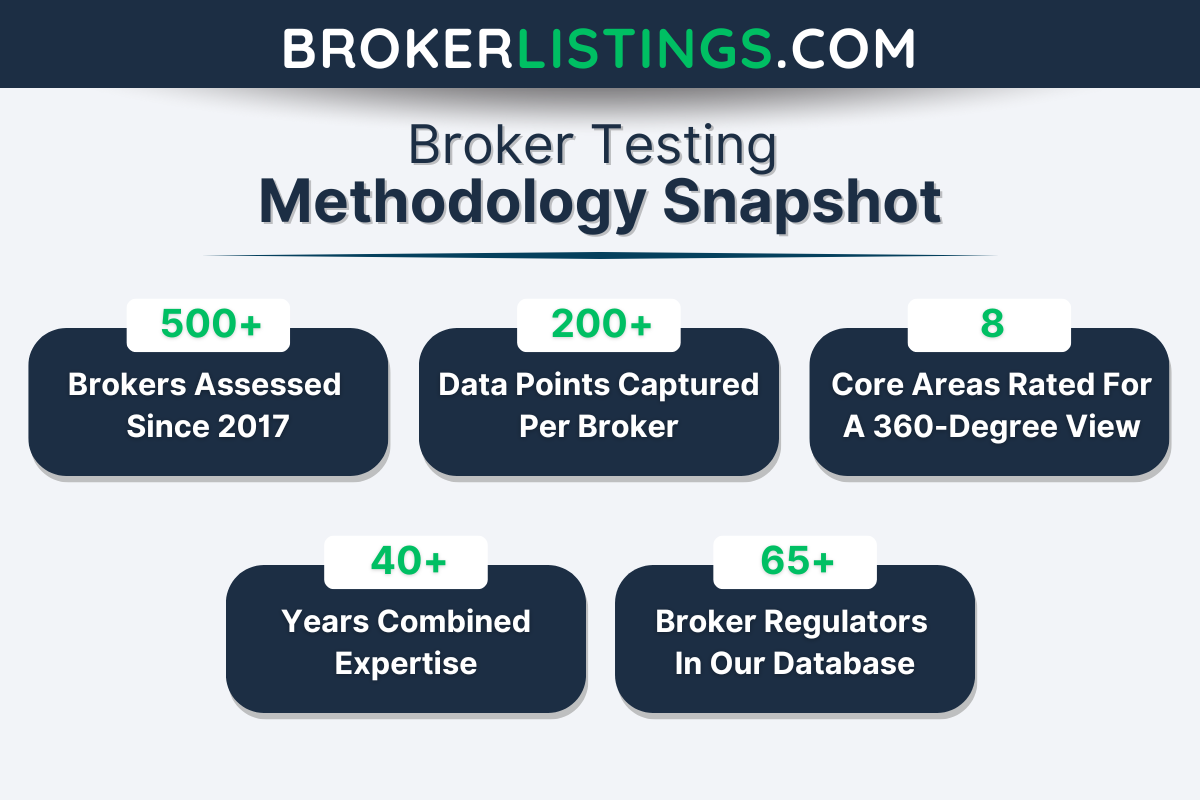
We analyzed a wide selection of Ethereum brokers, evaluating over 200 data points per provider – notably whether Ethereum was available for trading.
After a thorough assessment and hands-on tests of each platform’s features, trading options, and overall user experience, we assigned a total score. Using these scores, we compiled a ranking of the top brokers for trading Ethereum in 2026.
What To Look For in a Top Ethereum Broker
Ethereum is the world’s second-most-popular digital currency (after Bitcoin), so traders have a broad range of brokerages they can choose from. These intermediaries allow speculators to bet on the market using financial derivatives.
However, we know the quality of providers can vary, as some of our team personally hold Ether investments.
Here are the key factors to consider when choosing a broker to trade Ethereum:
Regulatory Status
This is the first (and most critical) thing to check, given the widescale prevalence of fraud in the cryptocurrency industry.
According to Action Fraud, more than $790.8 million was reported lost to investment fraud in the UK in 2023, of which 40% was due to crypto scams.
Before handing over any money or personal data, then, it’s essential to choose a broker whose Ethereum dealing activities are wholly (or at least partially) licensed by a reputable regulator.
Pro tip: Prominent regulators like the European Securities and Markets Authority (ESMA) and the US Securities and Exchange Commission (SEC) provide online resources for investors to check a company’s regulatory status.
Top pick for regulatory status: CMC Markets has earned our confidence as a highly trusted broker for trading Ethereum. It’s authorized by seven regulators (FCA, ASIC, MAS, CIRO, BaFin, FMA, DFSA) and it’s listed on the London Stock Exchange (CMCX) showing financial transparency.
Trading Software
There are two paths you can take when dealing Ethereum through a broker. You can use the intermediary’s own trading platform, or you can deploy the services of a third-party software platform (TradingView and MT4/MT5 are among the most popular today).
Our tests show there are advantages to both approaches. Third-party platforms can be more customizable than a broker’s in-house software, while charting tools may be more sophisticated.
On the other hand, a brokerage’s own trading platform can provide a smoother dealing experience, especially for beginners, as software tends to be tightly integrated with the intermediary’s back-end systems.
Other advantages include dedicated technical support, the availability of unique tools to help analyze the Ethereum market and educational resources on the second-largest crypto by market capitalization.
Top pick for trading software: IG’s clear interface and advanced charting tools make it an effective way for Ether traders to do business. We also love that you can see sentiment data, i.e. the percentage of clients buying and selling ETH on the broker’s software. Alternatively, you can plug in TradingView to place trades.
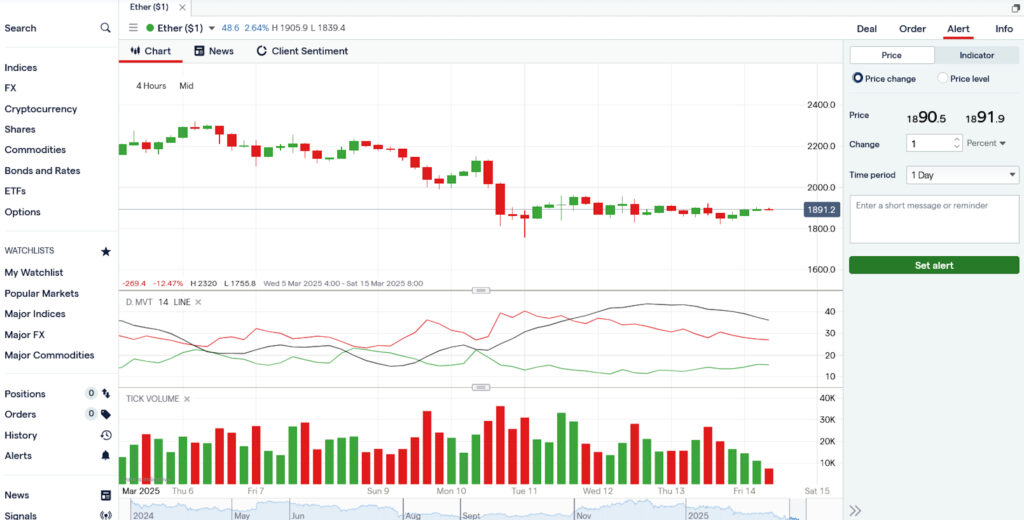
IG’s web platform and highly customizable charts are ideal for analyzing Ethereum price trends
Trading Costs
Ethereum traders already face higher costs when using a crypto broker instead of a crypto exchange. Deal commissions, for instance, tend to be greater than the maker-taker fees or flat trading charges on exchanges. Bid-offer spreads are also typically wider with brokerages.
It’s important to choose a brokerage, then, that minimizes this difference, especially if you trade frequently.
But while using a more cost-effective service may boost trading profits, we’ve learned this can come at the expense of a worse or less advanced service.
Top pick for trading costs: Fusion Markets stands out with its minimum spread of 0.09% on Ethereum, while testing shows it doesn’t compromise on service quality – it’s fast, reliable and has excellent market analysis features (Market Buzz and Analyst Views) conveniently integrated into the client area.
Leverage and Margin
Using leverage to amplify profits is a popular tactic with active traders. Given Ether’s status as one of the world’s biggest digital currencies, the level of lent funds traders can call upon tends to be higher than that available with most other digital tokens.
However, the exact quantity of leverage varies enormously from broker to broker, while the amount on offer can also differ depending on one’s location.
AvaTrade, for instance, offers leverage of 1:2 (2x profit or loss) for residents of the European Union and a significantly higher 1:25 (25x) in its other markets.
Stipulations on margin – in other words, the money you need to deposit to open and maintain a leveraged position – are also different among Ethereum brokers we’ve tested.
XTB‘s margin for Ether trades, for instance, is 5%. This means that to open a position worth $1,000 in Ethereum, I would need to deposit $50 as margin.
Pro tip: Using leverage to trade Ethereum is a high-risk strategy that should only be attempted by seasoned investors. Losses can accumulate rapidly if you don’t put in place proper risk management procedures.
Top pick for leverage: FXCC excels for its transparent leverage offering, allowing you to trade Ethereum with 1:5 leverage on the popular MT4 software.
FAQ
What Is An Ethereum Broker?
As with other cryptocurrencies, Ether can be traded via an exchange – where individuals trade directly with one another – or through a brokerage that acts as the middleman to any deal.
Using a broker instead of an exchange can have multiple advantages, including:
- Access to a user-friendly platform where trades can be made quickly and simply.
- Ether traders avoid complex order books by buying and selling at set prices.
- Margin trading (borrowed money) is more widely available with brokerages and often at greater levels.
- Brokers remove the need for physical cryptocurrency ownership by allowing Ethereum to be traded using derivatives contracts (like futures and contracts for difference (CFDs)).
- The Ethereum broker market is largely better regulated than the crypto exchange sector, providing better protection for traders.
However, there are drawbacks to selecting a broker over an exchange for dealing Ether, like the potential for greater trading costs.
Article Sources
More than £612mn lost through investment fraud in past year – FT Adviser
Public register of firms – European Securities and Markets Authority (ESMA)
Investment Adviser Public Disclosure – US Securities and Exchange Commission (SEC)