
Best Oil Brokers 2026
Dig into our ranking of the top brokers for oil trading, helping you find reliable and cost-effective providers to navigate the volatility of crude oil with confidence.



-
1NinjaTrader is a US-based brokerage regulated for trading futures. It offers three different pricing plans for varied needs and budgets, along with extremely low margins on popular contracts. The company's renowned charting software and trading platform provides extensive customization options and excellent technical analysis features.
-
2Plus500US, a reputable broker since 2021, is authorized by the CFTC and NFA. It offers futures trading on forex, indices, commodities, cryptocurrencies, and interest rates. With a quick 10-minute signup, a $100 minimum deposit, and an easy-to-use web platform, Plus500 is enhancing its services for traders in the US.
-
3Established in 1999, FOREX.com is part of StoneX, a global financial services company that serves over a million customers. It's regulated in the US, UK, EU, Australia, and other countries. The broker offers a wide range of markets beyond forex and provides competitive pricing on advanced platforms.
-
4InstaTrade, located in the British Virgin Islands, is an online broker that focuses on structured fixed income products and active trading via CFDs. Its no-spread accounts, outstanding research primarily from InstaTrade TV, and access to the well-known MT4 and InstaTrade Gear make it a good choice for traders of all levels.
-
5Established in 2008, Exness is a respected broker known for offering over 40 account currencies, a wide choice of CFD instruments, and an intuitive web platform with features like currency converters and trading calculators.
Comparison of Best Oil Brokers
| Broker |  |
USD Account |
Oil Spread |
Margin Trading |
|---|---|---|---|---|
 |
✓ | ✗ | ✓ | |
 |
✓ | ✗ | ✓ | |
 |
✓ | 2.5 | ✓ | |
 |
✓ | 0.0 | ✓ | |
 |
✓ | 0.0 | ✓ | |
| Broker | |
USD Account |
Oil Spread |
Margin Trading |
Broker Details Comparison
| Broker | Demo Account |
Minimum Deposit |
Minimum Trade |
Leverage |
Assets |
Platforms |
|---|---|---|---|---|---|---|
|
✓ | $0 | 0.01 Lots | 1:50 | Forex, Stocks, Options, Commodities, Futures, Crypto | NinjaTrader Desktop, Web & Mobile, eSignal |
|
✓ | $100 | Variable | Variable | Futures on Cryptocurrencies, Metals, Agriculture, Forex, Interest rates, Energy, Equity Index future contracts | WebTrader, App |
|
✓ | $100 | 0.01 Lots | 1:50 | Forex, Stock CFDs, Futures, Futures OptionsForex, CFDs, Stock CFDs, Indices, Commodities, Futures, Options, Crypto | WebTrader, Mobile, MT4, MT5, TradingView |
|
✓ | $1 | 0.01 | 1:1000 | FISP, CFDs, Forex, Stocks, Indices, Commodities, Cryptos, Futures | InstaTrade Gear, MT4 |
|
✓ | Varies based on the payment system | 0.01 Lots | 1:Unlimited | CFDs on Forex, Stocks, Indices, Commodities, Crypto | Exness Trade App, Exness Terminal, MT4, MT5, TradingCentral |
| Broker | Demo Account |
Minimum Deposit |
Minimum Trade |
Leverage |
Assets |
Platforms |
Safety Comparison
Compare how safe the Best Oil Brokers 2026 are.
| Broker | Trust Rating |
Guaranteed Stop Loss |
Negative Balance Protection |
Segregated Accounts |
|---|---|---|---|---|
|
✗ | ✗ | ✗ | |
|
✗ | ✗ | ✓ | |
|
✗ | ✓ | ✗ | |
|
✗ | ✓ | ✓ | |
|
✗ | ✓ | ✓ | |
| Broker | Trust Rating |
Guaranteed Stop Loss |
Negative Balance Protection |
Segregated Accounts |
Mobile Trading Comparison
Compare the mobile trading features of the Best Oil Brokers 2026.
| Broker | Mobile Apps |
iOS Rating |
Android Rating |
Smart Watch App |
|---|---|---|---|---|
|
iOS & Android | ✗ | ||
|
iOS & Android | ✗ | ||
|
iOS & Android | ✗ | ||
|
iOS & Android | ✗ | ||
|
iOS & Android | ✗ | ||
| Broker | Mobile Apps |
iOS Rating |
Android Rating |
Smart Watch App |
Comparison for Beginners
Compare how suitable the Best Oil Brokers 2026 are for beginners.
| Broker | Demo Account |
Minimum Deposit |
Minimum Trade |
Education Rating |
Support Rating |
Fractional Shares |
Demo Competitions |
|---|---|---|---|---|---|---|---|
|
✓ | $0 | 0.01 Lots | ✗ | ✗ | ||
|
✓ | $100 | Variable | ✗ | ✗ | ||
|
✓ | $100 | 0.01 Lots | ✗ | ✗ | ||
|
✓ | $1 | 0.01 | ✗ | ✗ | ||
|
✓ | Varies based on the payment system | 0.01 Lots | ✗ | ✗ | ||
| Broker | Demo Account |
Minimum Deposit |
Minimum Trade |
Education Rating |
Support Rating |
Fractional Shares |
Demo Competitions |
Comparison for Advanced Traders
Compare how suitable the Best Oil Brokers 2026 are for advanced or professional traders.
| Broker | Automated Trading |
VPS |
API |
AI |
Pro Account |
Leverage |
Low Latency |
Extended Hours |
|---|---|---|---|---|---|---|---|---|
|
NinjaScript or via Automated Trading Interface | ✗ | ✗ | ✗ | ✗ | 1:50 | ✓ | ✗ |
|
✗ | ✗ | ✗ | ✗ | ✗ | Variable | ✓ | ✗ |
|
Expert Advisors (EAs) on MetaTrader | ✓ | ✓ | ✓ | ✗ | 1:50 | ✓ | ✗ |
|
Experts Advisors (EAs) on MetaTrader | ✓ | ✗ | ✗ | ✗ | 1:1000 | ✗ | ✗ |
|
Expert Advisors (EAs) on MetaTrader | ✓ | ✗ | ✗ | ✓ | 1:Unlimited | ✓ | ✗ |
| Broker | Automated Trading |
VPS |
API |
AI |
Pro Account |
Leverage |
Low Latency |
Extended Hours |
Accounts Comparison
Compare the trading accounts offered by Best Oil Brokers 2026.
| Broker | Demo Account |
Interest on Cash |
Islamic Account |
Joint Account |
Managed Account |
PAMM |
MAM |
LAMM |
Pro Account |
|---|---|---|---|---|---|---|---|---|---|
|
✓ | ✗ | ✗ | ✗ | ✗ | ✗ | ✗ | ✗ | ✗ |
|
✓ | ✗ | ✗ | ✗ | ✗ | ✗ | ✗ | ✗ | ✗ |
|
✓ | ✗ | ✓ | ✗ | ✗ | ✗ | ✗ | ✗ | ✗ |
|
✓ | ✗ | ✗ | ✗ | ✓ | ✗ | ✗ | ✗ | ✗ |
|
✓ | ✗ | ✓ | ✗ | ✓ | ✗ | ✗ | ✗ | ✓ |
| Broker | Demo Account |
Interest on Cash |
Islamic Account |
Joint Account |
Managed Account |
PAMM |
MAM |
LAMM |
Pro Account |
Detailed Rating Comparison
Compare how we rated the Best Oil Brokers 2026 in key areas.
| Broker | Trust |
Platforms |
Assets |
Mobile |
Fees |
Accounts |
Research |
Education |
Support |
|---|---|---|---|---|---|---|---|---|---|
|
|||||||||
|
|||||||||
|
|||||||||
|
|||||||||
|
|||||||||
| Broker | Trust |
Platforms |
Assets |
Mobile |
Fees |
Accounts |
Research |
Education |
Support |
Fee and Cost Comparison
Compare the cost of trading with the Best Oil Brokers 2026.
| Broker | Cost Rating |
Fixed Spreads |
Inactivity Fee |
CFD Stocks Spread |
EUR/USD Spread |
Crypto Spread |
|---|---|---|---|---|---|---|
|
✗ | $25 | ✗ | 1.3 | Floating | |
|
✗ | $0 | ✗ | 0.75 | ✗ | |
|
✗ | $15 | 0.14 | 1.2 | BTC 1.4%, ETH 2% | |
|
✗ | ✗ | 8 (Apple Inc) | 0.0 | 0 | |
|
✗ | $0 | 0.5 (Apple Inc.) | 0.0 | Floating | |
| Broker | Cost Rating |
Fixed Spreads |
Inactivity Fee |
CFD Stocks Spread |
EUR/USD Spread |
Crypto Spread |
Broker Popularity
See how popular the Best Oil Brokers [year] are in terms of number of clients.
| Broker | Popularity |
|---|---|
| InstaTrade |
|
| NinjaTrader |
|
| Exness |
|
| FOREX.com |
|
Why Trade With NinjaTrader?
NinjaTrader consistently satisfies active futures traders with its low-cost service and high-quality analysis tools. It offers superior charting features, including hundreds of indicators and over 10 chart types.
Pros
- NinjaTrader is a well-regarded and acclaimed futures broker, approved by the NFA and CFTC.
- NinjaTrader provides detailed charting software for active traders, complete with custom technical indicators and widgets.
- Traders can access a free platform and trade simulation capabilities with the unlimited demo.
Cons
- You need to register with partner brokers to trade in securities other than forex and futures.
- Some payment methods require a withdrawal fee.
- The advanced trading tools require an additional fee.
Why Trade With Plus500US?
Plus500US is an excellent choice for beginners, offering a user-friendly platform, low trading margins, and access to the Futures Academy to improve trading skills. Its powerful tools and reliable service earned it second place in DayTrading.com's annual 'Best US Broker' award.
Pros
- Plus500 is a reputable publicly traded company with over 24 million traders and sponsors the Chicago Bulls.
- Plus500US stands out for its low fees, competitive trading margins, and no charges for inactivity, live data, routing, or platform use.
- The account setup, pricing structure, and web platform make futures trading simpler than competitors like NinjaTrader.
Cons
- The private trading platform is easy to use, but doesn't have the advanced analysis tools that platforms like MetaTrader 4 do.
- Plus500US offers competitive pricing but does not have a discount program for high-volume traders, unlike brokers like Interactive Brokers.
- Testing showed fast response times for support, but phone aid is not available.
Why Trade With FOREX.com?
FOREX.com is a top-tier brokerage suitable for forex traders of all skill levels. It offers more than 80 currency pairs, has small spreads starting from 0.0 pips, and features low fees. The platform provides powerful charting tools that include over 100 technical indicators and multiple research aids.
Pros
- Numerous educational materials such as tutorials, webinars, and a comprehensive YouTube channel are available to assist you in learning about the financial markets.
- FOREX.com provides top-tier forex pricing beginning at 0.0 pips. They also offer competitive cashback rebates up to 15% for dedicated traders.
- The Web Trader remains one of the top platforms for budding traders, boasting a sleek design and more than 80 technical indicators for market analysis.
Cons
- Demo accounts have a limited time duration of 90 days, which may not be sufficient for thoroughly testing trading strategies.
- The funding options are not as extensive as those of top competitors such as IC Markets and lack several widely-used e-wallets, particularly UnionPay and POLi.
- US clients do not have negative balance protection, so you can potentially owe more than your original account deposit.
Why Trade With InstaTrade?
InstaTrade provides active trading on an extensive platform. It has a unique offering known as Fixed Income Structured Product (FISP), which allows for passive investment. Investors can potentially earn up to a 50% return within 6 months, provided certain conditions are fulfilled.
Pros
- InstaTrade provides a high-quality range of charting tools for traders. Its web trader includes over 250 indicators, 11 types of charts and a design that's easy to use.
- InstaTrade provides approximately 300 assets for investment. It particularly shines in the area of currency pairs, making it an excellent platform for experienced traders interested in volatile exotics.
- InstaTrade TV provides video interviews and insightful market information about stocks, cryptocurrencies, and more. It assists in identifying opportunities for quick trading.
Cons
- InstaTrade's website and client interfaces are quite complex which can be confusing for new traders. On the other hand, XTB offers a more straightforward and user-friendly trading experience.
- The advertising of FISP, specifically about its "profit guarantee" and "risk-free trading," creates unease.
- InstaTrade's learning resources are helpful for new traders but are not as organized or comprehensive as those provided by top companies such as eToro.
Why Trade With Exness?
Exness is an excellent choice for active forex traders aiming to reduce costs after lowering spreads, enhancing execution speeds, and offering trading on over 100 currency pairs with more than 40 account currencies.
Pros
- Wide variety of account types for all experience levels, including Cent, Pro, and the new Raw Spread, ideal for traders.
- Fast and reliable 24/7 multilingual customer support through phone, email, and live chat, validated by practical tests.
- Exness Terminal provides an easy experience for beginners with interactive charts, and creating watchlists is simple.
Cons
- Retail trading services are not available in some areas, including the US, UK, and EU, making them less accessible compared to leading brokers like Interactive Brokers.
- Exness has increased its variety of CFDs and introduced a copy trading feature, but it still lacks real assets like ETFs, cryptocurrencies, or bonds.
- MetaTrader 4 and 5 are supported, but TradingView and cTrader are not available yet, despite increasing demand from traders and their integration with other platforms like Pepperstone.
Filters
How We Chose the Best Brokers For Trading Oil
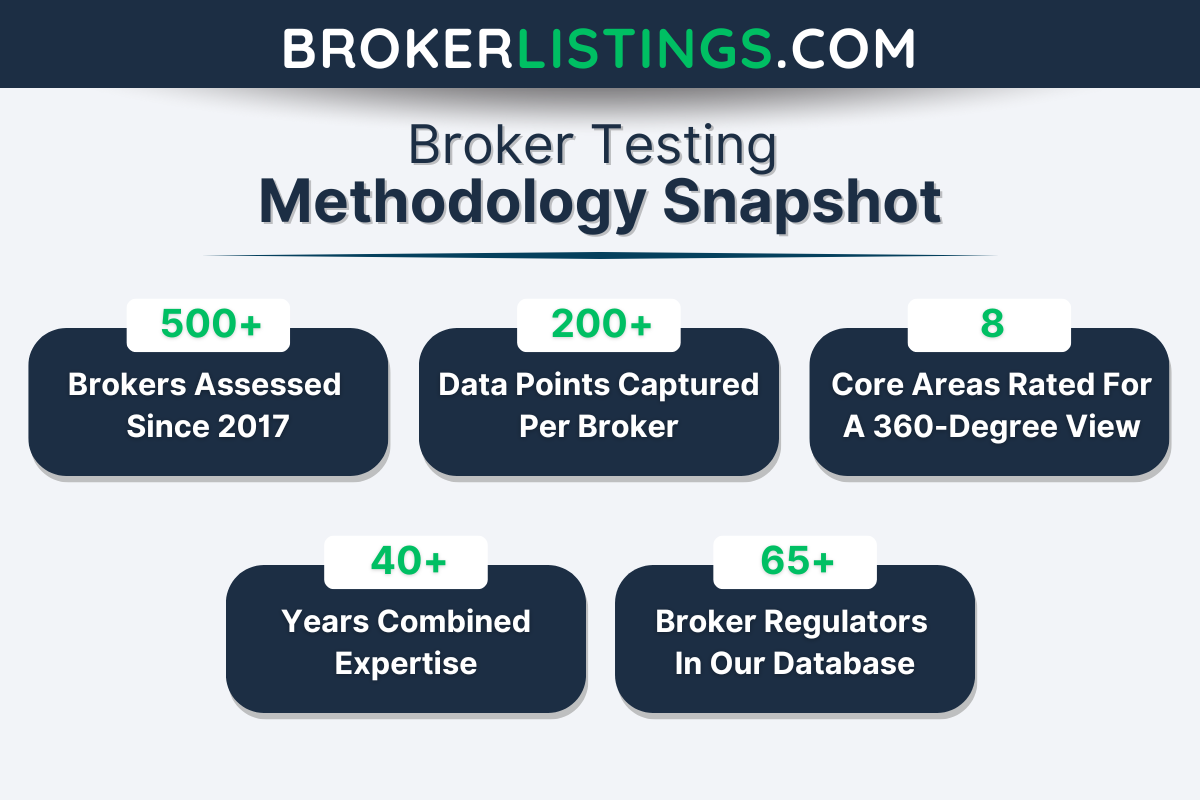
To identify the top brokers for trading oil, we analyzed over 200 key metrics for each provider in our evolving brokerage directory.
Our evaluation prioritized essential factors such as access to oil markets and platform performance. As part of our hands-on testing, we also recorded oil spreads.
After rigorous testing of each broker’s trading software, we assigned overall scores and ranked them to help traders find the most reliable platforms for oil trading.
What to Look for in a Top Oil Broker
Trading oil isn’t just about predicting price movements; it’s also about having the right tools, support, and conditions to execute your strategy effectively. Choosing the wrong broker can lead to unnecessary fees, poor execution, or security risks.
So, what should you look for in a broker when trading oil?
Regulation and Security: Your First Priority
Before thinking about spreads or platforms, ensure a reputable authority regulates your broker.
Top regulators include:
- FCA (Financial Conduct Authority) in the UK
- CySEC (Cyprus Securities and Exchange Commission)
- BaFin (Federal Financial Supervisory Authority) in Germany
Expert take: Regulation ensures the broker operates transparently, keeps your funds in segregated accounts, and adheres to strict financial standards. As a UK-based investor, I never trade with a broker the EU doesn’t regulate; it’s my safety net against fraud or malpractice.
OANDA has earned and maintained its high trust score with authorization from top-tier regulators like the CFTC, and I rate its comprehensive market analysis and economic calendar.
Source: OANDA
Trading Platforms: Your Gateway to the Market
The trading platform is your interface for analyzing the oil market, placing trades, and managing your portfolio. Look for brokers that offer:
- MetaTrader 4 (MT4) or MetaTrader 5 (MT5): These are industry-standard platforms known for their reliability, advanced charting tools, and automated trading capabilities.
- Proprietary Platforms: Some brokers we test develop their own platforms, which may offer unique features tailored to oil trading. eToro, for instance, has a web platform that connects you with an active social investment community where users share insights into the oil market and you can even replicate trades.
Expert take: In my opinion, a good platform should be intuitive, even for beginners, and powerful enough to meet the needs of intermediate traders. With growing mobile use, it must be available on your phone or tablet so you can trade on the go.
XM is one of the top MetaTrader brokers we’ve evaluated, providing oil trading on MT4 and MT5 through desktop, web and mobile solutions.
Spreads and Fees: Keeping Costs Low
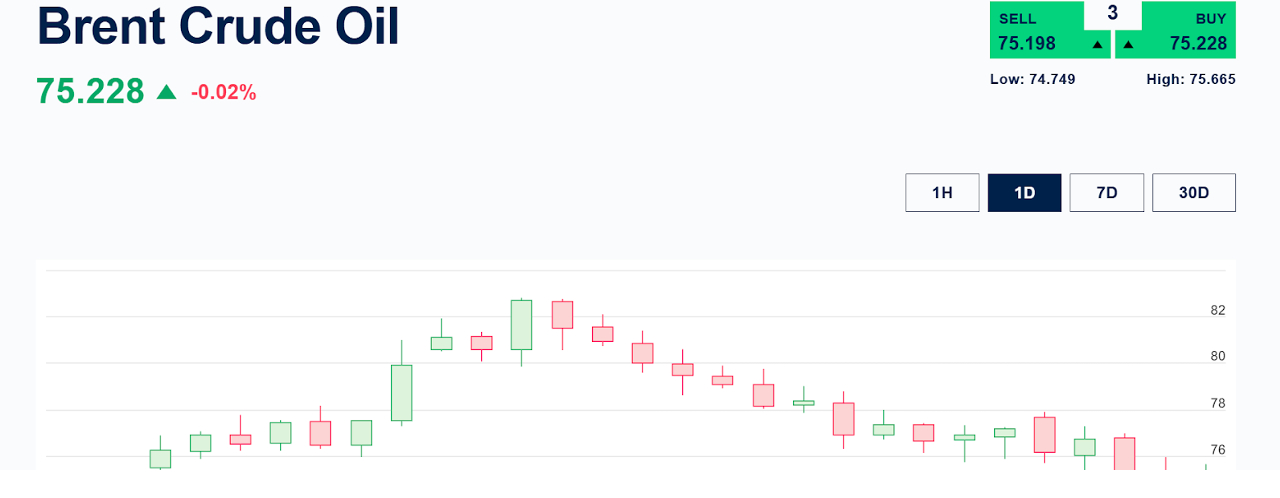
Oil is a highly liquid commodity, but its price can fluctuate rapidly. You need a broker with tight spreads (the difference between the buy and sell price) and low fees to maximize your profits.
Here’s what to watch out for:
- Fixed vs. Variable Spreads: Fixed spreads remain constant, while variable spreads can widen during volatile market conditions. Choose based on your trading style.
- Commissions: Some brokers charge a commission per trade, while others make money through wider spreads. Compare both to find the most cost-effective option.
- Overnight Fees: If you hold positions overnight, you may incur swap fees. These can add up, so check the broker’s fee structure.
CMC Markets stood out during testing for its tight spreads on oil CFDs, while we enjoyed using its next-generation trading platform with customizable charts.
Leverage: A Double-Edged Sword
Leverage allows you to control a larger position with less capital. For example, with 1:10 leverage, you can trade $10,000 with just $1,000. While this can amplify your profits, it also increases your risk.
In Europe, leverage is capped at 1:10 for retail traders due to ESMA (European Securities and Markets Authority) regulations. While this may seem restrictive, it’s designed to protect traders from excessive risk.
Expert take: If you’re a more experienced trader like me, some brokers offer higher leverage through professional accounts, but these come with fewer protections.
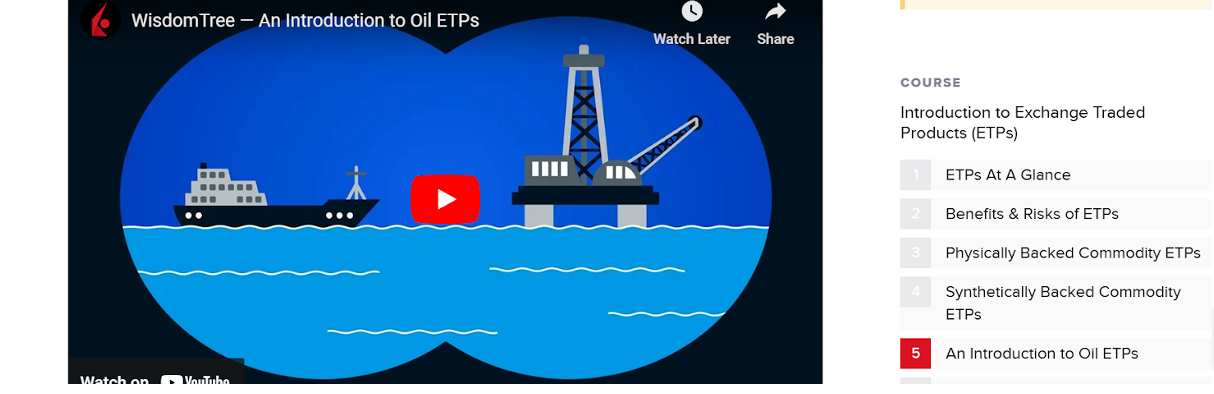
Interactive Brokers is an obvious pick if you want to trade oil on margin. It provides global oil futures and CFDs with low margin rates and competitive fees.
Source: IBKR Campus
Asset Variety: More Options, More Opportunities
Not all oil is the same. The two most commonly traded types are:
- Brent Crude: A global benchmark often influenced by geopolitical events in Europe and the Middle East.
- WTI Crude: A US-based benchmark closely tied to American supply and demand.
Some brokers also offer CFDs (Contracts for Difference) on oil, allowing you to speculate on price movements without owning the underlying asset.
Saxo stands out with its wide access to multiple oil markets, including futures and CFDs. During our hands-on tests, it also impressed with its SaxoTraderGO platform which features professional-grade tools.
Customer Support: Your Lifeline
Even the most experienced traders need help sometimes. Reliable customer support is essential, whether a technical issue or a question about fees.
Look for brokers that offer:
- 24/7 Support: Oil markets are active around the clock, so you need assistance whenever needed.
- Multiple Contact Methods: Live chat, email, and phone support are all good signs.
- Educational Resources: Brokers that provide tutorials, webinars, or market analysis can help you improve your skills.
Pro tip: Stay updated on news and events that affect oil prices, such as OPEC meetings, economic data, or geopolitical developments.
Brokers like IG provide excellent market news and analysis in our experience, which can help you make informed decisions.
Execution Speed and Reliability
In fast-moving markets like oil, every second counts. A delay in order execution can mean the difference between a profitable trade and a loss.
Look for providers with:
- Fast Execution: This ensures your trades are executed at the price you see, with minimal slippage.
- Reliable Servers: Downtime during crucial market events can be costly. Choose a brokerage with a reputation for stability.
Pepperstone impresses with its tight spreads and fast execution on oil CFDs, featuring no dealing desk (NDD) execution that’s ideal for both beginners and advanced traders.
Deposit and Withdrawal Options
Finally, consider how easy it is to fund your account and withdraw your profits.
Look for firms that offer:
- Multiple Payment Methods: Credit cards, debit cards, bank transfers, and e-wallets like PayPal or Skrill.
- Low or No Fees: Some brokers charge fees for deposits or withdrawals, which can eat into your profits.
- Fast Processing Times: You don’t want to wait days for your money to arrive.
Pro tip: Most oil brokers we’ve evaluated offer demo trading accounts, which allow you to practice trading with virtual money. They are a great way to get comfortable with the platform and test your strategies before risking real capital.