Best Brokers For Trading Simulators 2026
Explore the best trading simulators based on our years and countless hours of hands-on testing.
 Written By
Royston Wild
Royston is a seasoned investor and financial writer with over a decade of experience analyzing brokers and investment markets. With a background in stocks, commodities, and forex reporting - he brings a fresh perspective to broker evaluations.
Royston Wild Profile Page Fact Checked By
Tobias Robinson
Tobias is committed to helping traders find the right brokerage for their needs. He has tested 200+ brokers, spent 2,600+ hours using different platforms, and placed 2,100+ trades.
Tobias Robinson Profile Page Edited By
James Barra
James is an experienced broker analyst with a background in financial services. He has spent 2,500+ hours testing brokers, used 35+ different platforms and apps, audited 120+ broker T&Cs, and verified 300+ regulatory licenses. James has also been on US and UK TV, and been a guest on finance podcasts, discussing reports conducted by BrokerListings.com and sharing his expertise.
James Barra Profile PageOctober 16, 2026
-
 Available in United States
Not available in United States
Rating breakdown
Available in United States
Not available in United States
Rating breakdownWhen we tried Interactive Brokers' demo, it closely matched the live TWS platform with access to global markets and advanced order types. Execution speed seemed realistic, but fast-moving assets showed some slippage. Setup needed basic details. The virtual balance was $1M, but trading was enabled only after account approval.
- Demo Account
- ✓
- Minimum Deposit
- $0
- Minimum Trade
- $1
- Leverage
- 1:50 (major forex pairs), 1:2-1:4 (equities)
- Copy Trading
- ✗
- Regulator
- SEC, FINRA, CFTC, NFA, CIRO, FCA, CBI, ASIC, SFC, SEBI, JFSA, MAS
- Instruments
- Stocks, Options, Futures, Forex, Funds, Bonds, ETFs, Mutual Funds, Cryptocurrencies, CFDs Stocks, Options, Futures, Forex, Funds, Bonds, ETFs, Mutual Funds, Cryptocurrencies
- Platforms
- Trader Workstation (TWS), IBKR Desktop, GlobalTrader, Mobile, Client Portal, AlgoTrader, OmniTrader, TradingView, eSignal, TradingCentral, ProRealTime, Quantower
- Account Currencies
- USD, EUR, GBP, CAD, AUD, INR, JPY, SEK, NOK, DKK, CHF, AED, HUF
- Automated Trading
- TWS API
- AI
- ✓
- Guaranteed Stop Loss
- ✗
-
Available in United States
Not available in United States
Rating breakdown
During testing, NinjaTrader's demo offered quick execution and low slippage, perfect for futures and active traders. The platform accurately reflected the live environment, including depth-of-market tools. Setup needed only an email, providing users with a $50,000 virtual balance. The demo had no time limit, ideal for long-term strategy testing.
- Demo Account
- ✓
- Minimum Deposit
- $0 (live trades must meet intraday margin minimums, e.g., $50 to trade micro contracts)
- Minimum Trade
- 1 contract
- Leverage
- $50 intraday margins for Micro contracts and $500 for popular E-mini contracts
- Copy Trading
- ✗
- Regulator
- NFA, CFTC, CySEC
- Instruments
- Futures, Forex, Stocks, Options, Commodities, Futures, Crypto (non-futures depend on provider)
- Platforms
- NinjaTrader Desktop, Web & Mobile, eSignal
- Account Currencies
- USD, EUR, GBP, CAD, AUD
- Automated Trading
- NinjaScript or via Automated Trading Interface
- AI
- ✗
- Guaranteed Stop Loss
- ✗
-
Available in United States
Not available in United States
Rating breakdownVisit eToro USA Read ReviewSecurities trading offered by eToro USA Securities, Inc. (“the BD”), member of FINRA and SIPC. Cryptocurrency offered by eToro USA LLC (“the MSB”) (NMLS: 1769299) and is not FDIC or SIPC insured. Investing involves risk. This site is not an affiliate and may be compensated if you access certain products or services offered by the MSB and/or the BD.
When testing eToro USA's demo, execution speeds were slower than ECN brokers but were acceptable for social and crypto trading. The demo closely resembled live trading, offering a $100K virtual balance with full access to stocks, crypto, and ETFs. No KYC was required. Slippage was moderate during volatile times. The demo has no expiration.
- Demo Account
- ✓
- Minimum Deposit
- $50
- Minimum Trade
- $10
- Leverage
- ✗
- Copy Trading
- ✓
- Regulator
- SEC, FINRA
- Instruments
- Stocks, Options, ETFs, Crypto
- Platforms
- eToro Trading Platform & CopyTrader
- Account Currencies
- USD
- Automated Trading
- ✗
- AI
- ✓
- Guaranteed Stop Loss
- ✗
-
Available in United States
Not available in United States
Rating breakdownVisit Plus500US Read ReviewTrading in futures and options involves the risk of loss and is not suitable for everyone.
During testing, Plus500’s demo was immediately accessible without personal details or expiration. It closely resembled the live platform, offering CFDs on forex, stocks, crypto, and indices. Execution was quick, but spreads were wider, with EUR/USD averaging 0.8–1.2 pips. The $40,000 virtual balance automatically refilled when used up.
- Demo Account
- ✓
- Minimum Deposit
- $10
- Minimum Trade
- Variable
- Leverage
- Variable
- Copy Trading
- ✗
- Regulator
- CFTC, NFA
- Instruments
- Futures on Cryptocurrencies, Metals, Agriculture, Forex, Interest rates, Energy, Equity Index Future Contracts, Prediction Markets
- Platforms
- WebTrader, App
- Account Currencies
- USD
- Automated Trading
- ✗
- AI
- ✗
- Guaranteed Stop Loss
- ✗
-
Available in United States
Not available in United States
Rating breakdown
OKX, established in 2017, is a respected cryptocurrency firm offering a wide range of products, including trading and NFTs. Traders have access to over 400 crypto tokens through OTC trading and derivatives. With a strong web platform, developer tools, and advanced charts, OKX is a popular choice for technical traders.
- Demo Account
- ✓
- Minimum Deposit
- 10 USDT
- Minimum Trade
- Variable
- Leverage
- ✗
- Copy Trading
- ✗
- Regulator
- FinCEN, VARA
- Instruments
- Spot, Futures, Swaps, Options, X-Perps
- Platforms
- AlgoTrader, Quantower
- Account Currencies
- USD, EUR, GBP, INR, JPY, SGD, RUB, AED, SAR
- Automated Trading
- ✓
- AI
- ✓
- Guaranteed Stop Loss
- ✗
Compare Top Trading Simulators In Core Areas
| Broker | |
USD Account |
Demo Account |
Minimum Deposit |
Minimum Trade |
Leverage |
Copy Trading |
Regulator |
Instruments |
Platforms |
Account Currencies |
Automated Trading |
AI |
Guaranteed Stop Loss |
|---|---|---|---|---|---|---|---|---|---|---|---|---|---|---|
 |
✓ | ✓ | $0 | $1 | 1:50 (major forex pairs), 1:2-1:4 (equities) | ✗ | SEC, FINRA, CFTC, NFA, CIRO, FCA, CBI, ASIC, SFC, SEBI, JFSA, MAS | Stocks, Options, Futures, Forex, Funds, Bonds, ETFs, Mutual Funds, Cryptocurrencies, CFDs Stocks, Options, Futures, Forex, Funds, Bonds, ETFs, Mutual Funds, Cryptocurrencies | Trader Workstation (TWS), IBKR Desktop, GlobalTrader, Mobile, Client Portal, AlgoTrader, OmniTrader, TradingView, eSignal, TradingCentral, ProRealTime, Quantower | USD, EUR, GBP, CAD, AUD, INR, JPY, SEK, NOK, DKK, CHF, AED, HUF | TWS API | ✓ | ✗ | |
 |
✓ | ✓ | $0 (live trades must meet intraday margin minimums, e.g., $50 to trade micro contracts) | 1 contract | $50 intraday margins for Micro contracts and $500 for popular E-mini contracts | ✗ | NFA, CFTC, CySEC | Futures, Forex, Stocks, Options, Commodities, Futures, Crypto (non-futures depend on provider) | NinjaTrader Desktop, Web & Mobile, eSignal | USD, EUR, GBP, CAD, AUD | NinjaScript or via Automated Trading Interface | ✗ | ✗ | |
 |
✓ | ✓ | $50 | $10 | ✗ | ✓ | SEC, FINRA | Stocks, Options, ETFs, Crypto | eToro Trading Platform & CopyTrader | USD | ✗ | ✓ | ✗ | |
 |
✓ | ✓ | $10 | Variable | Variable | ✗ | CFTC, NFA | Futures on Cryptocurrencies, Metals, Agriculture, Forex, Interest rates, Energy, Equity Index Future Contracts, Prediction Markets | WebTrader, App | USD | ✗ | ✗ | ✗ | |
 |
✓ | ✓ | 10 USDT | Variable | ✗ | ✗ | FinCEN, VARA | Spot, Futures, Swaps, Options, X-Perps | AlgoTrader, Quantower | USD, EUR, GBP, INR, JPY, SGD, RUB, AED, SAR | ✓ | ✓ | ✗ | |
| Broker | |
USD Account |
Demo Account |
Minimum Deposit |
Minimum Trade |
Leverage |
Copy Trading |
Regulator |
Instruments |
Platforms |
Account Currencies |
Automated Trading |
AI |
Guaranteed Stop Loss |
Safety Comparison
Compare how safe the Best Brokers For Trading Simulators 2026 are.
| Broker | Trust Rating |
Guaranteed Stop Loss |
Negative Balance Protection |
Segregated Accounts |
|---|---|---|---|---|
|
✗ | ✗ | ✓ | |
|
✗ | ✗ | ✓ | |
|
✗ | ✗ | ✓ | |
|
✗ | ✗ | ✓ | |
|
✗ | ✗ | ✗ | |
| Broker | Trust Rating |
Guaranteed Stop Loss |
Negative Balance Protection |
Segregated Accounts |
Mobile Trading Comparison
Compare the mobile trading features of the Best Brokers For Trading Simulators 2026.
| Broker | Mobile Apps |
iOS Rating |
Android Rating |
Smart Watch App |
|---|---|---|---|---|
|
iOS & Android | ✓ | ||
|
iOS & Android | ✗ | ||
|
iOS & Android | ✗ | ||
|
iOS & Android | ✗ | ||
|
Android & iOS | ✗ | ||
| Broker | Mobile Apps |
iOS Rating |
Android Rating |
Smart Watch App |
Comparison for Beginners
Compare how suitable the Best Brokers For Trading Simulators 2026 are for beginners.
| Broker | Demo Account |
Minimum Deposit |
Minimum Trade |
Education Rating |
Support Rating |
Fractional Shares |
Demo Competitions |
|---|---|---|---|---|---|---|---|
|
✓ | $0 | $1 | ✓ | ✗ | ||
|
✓ | $0 (live trades must meet intraday margin minimums, e.g., $50 to trade micro contracts) | 1 contract | ✗ | ✗ | ||
|
✓ | $50 | $10 | ✓ | ✗ | ||
|
✓ | $10 | Variable | ✗ | ✗ | ||
|
✓ | 10 USDT | Variable | ✗ | ✗ | ||
| Broker | Demo Account |
Minimum Deposit |
Minimum Trade |
Education Rating |
Support Rating |
Fractional Shares |
Demo Competitions |
Comparison for Advanced Traders
Compare how suitable the Best Brokers For Trading Simulators 2026 are for advanced or professional traders.
| Broker | Automated Trading |
VPS |
API |
AI |
Pro Account |
Leverage |
Low Latency |
Extended Hours |
|---|---|---|---|---|---|---|---|---|
|
TWS API | ✗ | ✓ | ✓ | ✗ | 1:50 (major forex pairs), 1:2-1:4 (equities) | ✓ | ✓ |
|
NinjaScript or via Automated Trading Interface | ✗ | ✗ | ✗ | ✗ | $50 intraday margins for Micro contracts and $500 for popular E-mini contracts | ✓ | ✗ |
|
✗ | ✗ | ✓ | ✓ | ✗ | ✗ | ✓ | ✓ |
|
✗ | ✗ | ✗ | ✗ | ✗ | Variable | ✓ | ✗ |
|
✓ | ✗ | ✓ | ✓ | ✗ | ✗ | ✓ | ✗ |
| Broker | Automated Trading |
VPS |
API |
AI |
Pro Account |
Leverage |
Low Latency |
Extended Hours |
Accounts Comparison
Compare the trading accounts offered by Best Brokers For Trading Simulators 2026.
| Broker | Demo Account |
Interest on Cash |
Islamic Account |
Joint Account |
Managed Account |
PAMM |
MAM |
LAMM |
Pro Account |
|---|---|---|---|---|---|---|---|---|---|
|
✓ | USD: 3.14%, GBP: 3.24% | ✗ | ✓ | ✓ | ✗ | ✓ | ✗ | ✗ |
|
✓ | ✗ | ✗ | ✓ | ✗ | ✗ | ✗ | ✗ | ✗ |
|
✓ | USD: 4.05% | ✗ | ✗ | ✓ | ✗ | ✗ | ✗ | ✗ |
|
✓ | ✗ | ✗ | ✗ | ✗ | ✗ | ✗ | ✗ | ✗ |
|
✓ | ✗ | ✗ | ✗ | ✗ | ✗ | ✗ | ✗ | ✗ |
| Broker | Demo Account |
Interest on Cash |
Islamic Account |
Joint Account |
Managed Account |
PAMM |
MAM |
LAMM |
Pro Account |
Detailed Rating Comparison
Compare how we rated the Best Brokers For Trading Simulators 2026 in key areas.
| Broker | Trust |
Platforms |
Assets |
Mobile |
Fees |
Accounts |
Research |
Education |
Support |
|---|---|---|---|---|---|---|---|---|---|
|
|||||||||
|
|||||||||
|
|||||||||
|
|||||||||
|
|||||||||
| Broker | Trust |
Platforms |
Assets |
Mobile |
Fees |
Accounts |
Research |
Education |
Support |
Fee and Cost Comparison
Compare the cost of trading with the Best Brokers For Trading Simulators 2026.
| Broker | Cost Rating |
Fixed Spreads |
Inactivity Fee |
EUR/USD Spread |
Crypto Spread |
|---|---|---|---|---|---|
|
✗ | $0 | 0.08-0.20 bps x trade value | 0.12%-0.18% | |
|
✗ | $35 | 1.3 | Floating | |
|
✓ | $10 | ✗ | BTC 0.75% | |
|
✗ | $0 | 0.75 | ✗ | |
|
✗ | $0 | ✗ | Variable | |
| Broker | Cost Rating |
Fixed Spreads |
Inactivity Fee |
EUR/USD Spread |
Crypto Spread |
Customer Ratings
Compare how customers of these brokers feel about them, with real user ratings from Trustpilot, the Apple App Store and Google Play.
| Broker | Customers |
Trustpilot Score |
Trustpilot Reviews |
Android App Rating |
iOS App Rating |
|---|---|---|---|---|---|
|
4,300,000 | 5,531 | |||
|
1,800,000 | 1,251 | |||
|
3,200,000 | 32,244 | |||
|
33,000,000 | 20,136 | |||
|
50,000,000 | 1,784 | |||
| Broker | Customers |
Trustpilot Score |
Trustpilot Reviews |
Android App Rating |
iOS App Rating |
Broker Popularity
See how popular the Best Brokers For Trading Simulators 2026 are in terms of number of clients.
| Broker | Popularity |
|---|---|
| OKX |
|
| Plus500US |
|
| Interactive Brokers |
|
| eToro USA |
|
| NinjaTrader |
|
Why Trade With Interactive Brokers?
Interactive Brokers is ideal for seasoned traders due to its robust charting platforms, updated data, and adaptability, especially with the IBKR Desktop application. Its exceptional pricing and advanced order features appeal to traders, and its variety of stocks remains unmatched in the market.
 Christian Harris
Review Author
Pros
- IBKR is a highly regarded brokerage, regulated by multiple respected authorities. This speaks to its legitimacy and standing within the online trading industry, providing peace of mind.
- There's a large selection of free or paid research subscriptions available to all traders. If you subscribe to Toggle AI, you will also receive commission refunds from IBKR.
- IBKR, primarily designed for skilled traders, has expanded its appeal recently by eliminating its initial $10,000 deposit requirement.
Cons
- Only one active session per account is allowed, which means you can't run the desktop version and mobile app at the same time. This can sometimes lead to a frustrating trading experience.
- Customer service may take time to respond, and there may be delays in fixing problems based on tests. It could be difficult to reach the customer service promptly.
- In 2025, IBKR was fined $11.8 million by the US OFAC for offering services in restricted areas. It also faced a $125,000 fine from FINRA in 2025 for failing to disclose municipal bond information.
Why Trade With NinjaTrader?
NinjaTrader consistently satisfies active futures traders with its low-cost service and high-quality analysis tools. It offers superior charting features, including hundreds of indicators and over 10 chart types.
James BarraReview Author
Pros
- In July 2026, NinjaTrader introduced CME Group Single Stock futures. This allows traders to take directional positions in major U.S. companies such as Nvidia and Amazon without using options.
- The market replay feature lets you download tick-by-tick historical data, go back to any date, and interact with it as if trading live. It's useful for strategy testing and real-world practice.
's ecosystem offers traders access to thousands of add-ons and applications from developers in over 150 countries. These include indicators, strategies, and custom tools that extend the platform's native features.
Cons
- NinjaTrader was fined $250,000 in 2025 for not implementing a sufficient anti-money laundering program and for supervisory failures.
- NinjaTrader was bought by Kraken in May 2025. Although it still operates independently, traders concerned about long-term stability may worry about changes in the platform's direction and pricing under new ownership.
- Intraday margin requirements can rise up to four times in the 15 minutes before major economic news and remain high for several minutes after volatility decreases.
Why Trade With eToro USA?
eToro is a strong choice for traders seeking social investing and copy trading. Its low deposit, zero commissions, and easy-to-use platform suit new traders.
James BarraReview Author
Pros
- The online broker provides a user-friendly social investment network for easy crypto trading replication.
- The low minimum deposit and simple account setup allow beginners to start trading quickly.
- eToro USA Securities is a reliable broker that's regulated by the SEC, part of FINRA, and a member of SIPC.
Cons
- Average fees may reduce active traders' profit margins.
- Traders used to third-party charting tools won't find MetaTrader 4 platform integration.
- eToro USA was fined $1.5 million by the SEC in 2024 for unregistered crypto offerings.
Why Trade With Plus500US?
Plus500US is a strong choice for beginners, with an easy-to-use platform and Futures Academy training. Its tools and reliable service earned second place in DayTrading.com's annual “Best US Broker” award.
James BarraReview Author
Pros
- Plus500 is a well-respected, publicly traded company with over 33 million traders and is a sponsor of the Chicago Bulls.
- The account setup, pricing structure, and web platform make futures trading simpler than competitors like NinjaTrader.
- Plus500US stands out for its low fees, competitive trading margins, and no charges for inactivity, live data, routing, or platform use.
Cons
- Plus500US is expanding its investment options, but it currently only offers around 50+ futures and no stocks.
- Plus500US lacks social trading features, unlike competitors such as eToro US, which might enhance its appeal to aspiring traders.
- The proprietary platform is easy to use but lacks advanced analysis tools available in third-party platforms like MetaTrader 4.
Why Trade With OKX?
OKX is a preferred choice for traders seeking new cryptocurrencies and projects for investment. Traders can benefit from its copy trading feature and automated bots.
Christian HarrisReview Author
Pros
- Traders can access past data for spot and futures markets, which includes open-high-low-close data, cumulative trades, and trading history.
- X-Perps, introduced in 2026, offers opportunities in traditional financial assets like US stocks and commodities.
- A wide range of blockchain products, including DeFi services, NFTs, games, and 400+ established and emerging coins
Cons
- Customer support quality varied during testing.
- In 2025, OKX agreed to pay over $500 million for violating U.S. AML laws.
- The broker's platform and features might be hard to understand for new traders.
Filters
How BrokerListings.com Chose The Top Trading Simulators
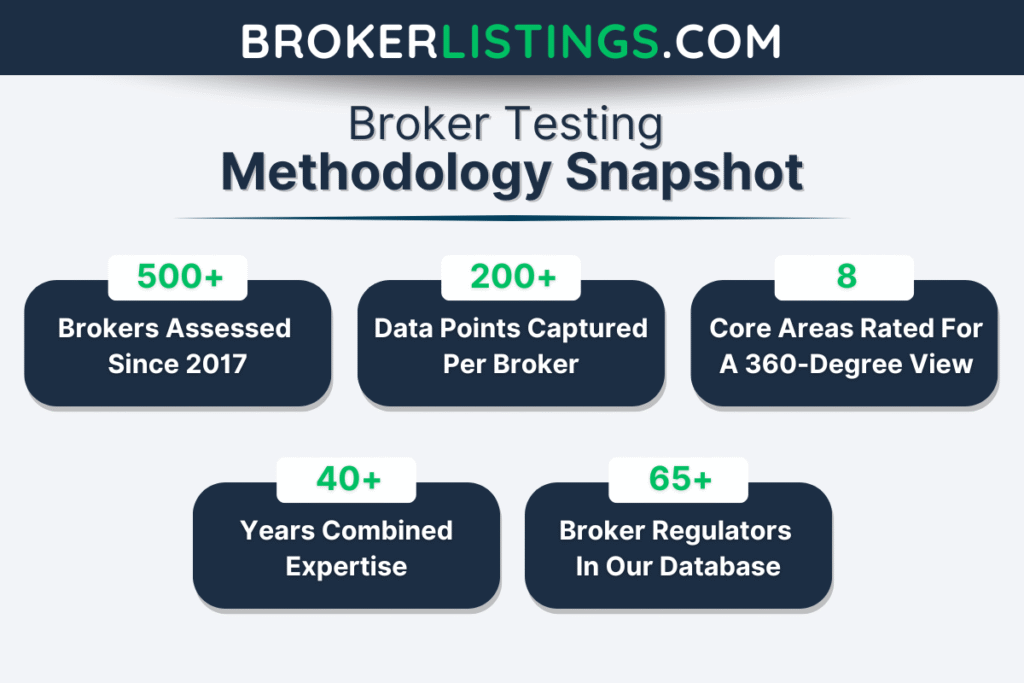
We ranked the top trading simulator providers using their overall ratings. This combines over 200 data points with the hands-on findings of our testers who looked at simulator accuracy, platform performance, features, ease of use, and much more.
How To Pick A Trading Simulator
Using a trading simulator doesn’t require investors to deposit any cash. But although there’s no actual money at risk, it’s important to carefully research which brokerage to use before opening an account to begin virtual trading.
Some of the key things to consider when choosing a broker’s trading sim include:
Trustworthiness
Even if you’re not depositing any real money, it’s important to know the broker you’re looking at is a reputable one that offers a good level of service.
You’ll want to know they offer a reliable trading platform, and that the data their sim uses (whether live or historical) is accurate. It’s also good to know you’ve not provided sensitive personal data to a fraudulent operator.
Being confident in your provider is important, too, as it many investors upgrade to a full-fat trading account later down the line.
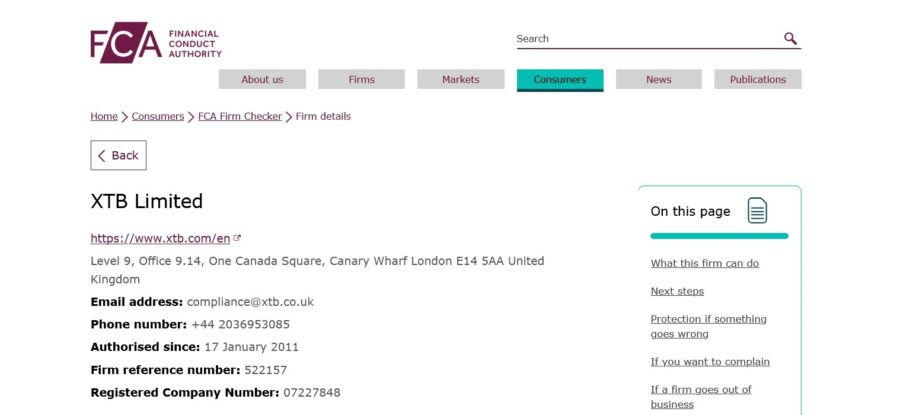
Top broker for trustworthiness: XTB is regulated by five different global regulators, including the UK’s Financial Conduct Authority (FCA) and the Cyprus Securities & Exchange Commission (CySEC).
Source: FCA
It’s critical to find a broker that’s regulated by one or more top-tier watchdogs like the FCA and CySEC. Companies that fall foul of regulations can be subject to disciplinary action, including heavy fines to license revocations. This provides individuals with a deep layer of protection.
Pro tip: BrokerListings.com’s Regulator Ranking System – which ranks major regulators according to the protections they offer investors – is an excellent tool to help investors find the right broker.
Product Range
The range of ‘tradeable’ securities can differ substantially from broker to broker. Some only offer a tiny handful of asset classes, the most popular of which are equities and forex. Others offer a more complete product catalogue which may include derivatives (like futures and contracts for difference (CFDs)).
Pro tip: Consider using a broker that offers a wider selection of securities. Doing this can help investors build a broader range of skills, as different asset classes can behave very differently. What’s more, many individuals trade multiple security types in the real world – being able to do this in practice could set you up better for live trading.
Top broker for product range: Interactive Brokers’ trading sim offers one of the widest asset catalogues out there. These include stocks, forex, bonds, cryptocurrencies and exchange-traded funds (ETFs), alongside a selection of popular derivatives like CFDs.
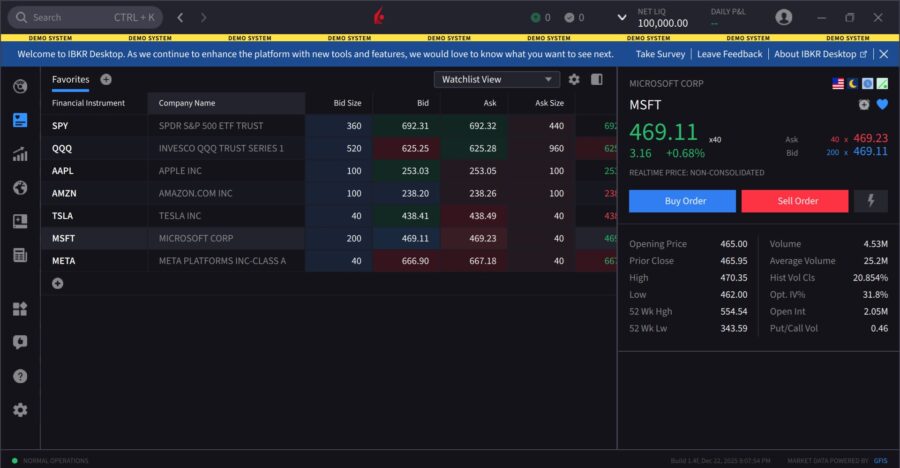
Source: Interactive Brokers
Trading Platform
Brokers have spent fortunes developing their own proprietary trading systems, for both ‘paper’ and ‘real world’ investors.
The right software for you may depend on factors such as the range of tools (such as alerts, advanced charts and risk management tools) on offer; how customizable the interface is; the availability of a mobile app; and the depth of resources (like economic calendars and analyst notes).
Some brokers also allow investors to simulate trading using a third-party platform such as MetaTrader 5 (MT5).
Pro tip: You’ll also need to think about whether the sim operates using live or historical data. For the latter, check how far back the data goes, as limited data can make backtesting results unreliable.
Top broker for trading platform: Pepperstone’s proprietary desktop platform offers an extensive range of tools, while it also provides a mobile app for trading on the go. That’s not all – investors can also choose from a variety of third-party platforms, including MetaTrader 4 and 5 and TradingView.
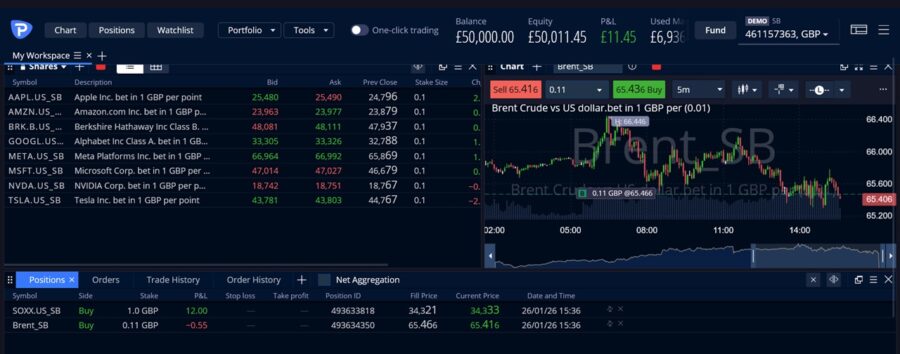
Source: Pepperstone
Live Accounts
As we mentioned, trading sims are often a gateway for investors who eventually transition to an account where real money is at stake.
It can also pay, therefore, to consider the quality of a broker’s full-fat account when choosing a sim provider. Think about things like trading costs (including transaction fees, account charges, and bid-offer spreads); execution speeds; and the quality of their customer service.
Top broker for live accounts: IC’s offers a broad selection of securities across both their trading simulator and real-money accounts. Investors can also choose from many third-party platforms to use (the broker doesn’t offer its own proprietary software).
IC also offers competitive charges, and accounts in a multitude of global currencies which helps investors avoid currency conversion fees. Finally, spreads on many of its asset classes are tight, meaning reduced costs when individuals enter and exit positions.
What Are Trading Simulators?
Trading simulators are software programs that mimic the process of buying and selling financial securities. The main benefit is they allow new and experienced market participants to test out trading strategies without putting any of their hard-earned money at risk.
These sims aim to replicate the experience of real world trading using either live or historical market data. Trading with historical data is known as ‘backtesting,’ and reveals how a strategy would have played out in the past.
Pro tip: Using a trading simulator is also commonly known as ‘paper trading.’
When an individual signs up with a broker, they’ll be given virtual funds to begin building their portfolio. The amount available can differ significantly, from $10,000 at IG, to unlimited funds over at Pepperstone.
What Are The Pros And Cons Of Using Trading Simulators?
Trading simulators offer significant benefits for investors of all levels. However, they also have limitations that can cause problems later down the line.
Here are some of the key advantages and disadvantages to consider:
Pros
- They provide a ‘sandbox’ for novice investors to practice trading with zero risk to their capital. They can build confidence, and help beginners learn about market mechanics, portfolio management, and how to use trading platform tools (such as technical analysis).
- Trading simulators can be a valuable tool for both new and experienced investors to try new and refine existing trading strategies in a risk-free environment.
- Sims are often available outside of normal trading hours. This means investors can backtest their trading ideas and strategies at their convenience.
Cons
- Certain trading simulators rely solely on historical data, and so don’t reflect how market conditions change over time. A trading strategy that worked in the past might not be successful today, potentially leaving investors with a false belief in their approach.
- Trades are typically executed promptly and without issues. As a consequence, investors aren’t exposed to problems such as price slippage and liquidity issues that can impact returns and order fulfilment in the real world.
- Sims don’t accurately demonstrate the emotional challenges of real-world trading. This can leave investors unprepared for the psychological pressure that comes when hard cash is on the line. It can also lead to overconfidence, resulting in investors taking on excessive risk.
Bottom Line
Most brokers offer free access to trading sims, but it pays to carefully research the best one that fits your needs. Not only can this make the virtual trading experience more realistic and enjoyable. It can be an important step for new investors in finding the right broker when they’re finally ready to trade with actual cash.