

OrangeX: Suspicious Crypto Exchange Warning
 Written By
Christian Harris
Christian is a seasoned analyst, leveraging his expertise in stocks, forex, and crypto to evaluate brokers worldwide. With hands-on trading experience and a strong focus on risk management, he helps traders find reliable platforms. Christian's work for BrokerListings.com has been cited in the Financial Times.
Christian Harris Profile Page Fact Checked By
Tobias Robinson
Tobias is committed to helping traders find the right brokerage for their needs. He has tested 200+ brokers, spent 2,600+ hours using different platforms, and placed 2,100+ trades.
Tobias Robinson Profile Page Edited By
James Barra
James is an experienced broker analyst with a background in financial services. He has spent 2,500+ hours testing brokers, used 35+ different platforms and apps, audited 120+ broker T&Cs, and verified 300+ regulatory licenses. James has also been on US and UK TV, and been a guest on finance podcasts, discussing reports conducted by BrokerListings.com and sharing his expertise.
James Barra Profile PageSeptember 28, 2026
Quick Verdict
I’m not saying OrangeX is an outright scam. There’s no evidence of a major hack, it has received real venture funding, and some users may trade and withdraw without problems. Still, I wouldn’t trust my own money there. The unclear regulatory claims, opaque fees during my test trades, very high leverage on small accounts, and repeated complaints about withdrawals make it a higher risk than necessary in my opinion.
OrangeX Safety Assessment
« Make Full Width »| Safety Metric | Status | What To Do |
|---|---|---|
| Regulatory oversight | No top-tier license. Claims US “MSB and NFA” status; MSB is a registration, not supervision, and the NFA membership doesn’t check out | Don’t read the license page as protection. Verify every claim at the source before depositing |
| Corporate transparency | Registration listed as Saint Vincent on the site, Seychelles and Czech Republic elsewhere. CEO named only as “Thomas W.” | Confirm which legal entity would actually hold your funds |
| Leverage and product risk | Up to 1:200 on perpetual futures, with big deposit bonuses and coupons steering beginners toward derivatives | Treat 1:200 as a way to potentially lose fast, not a feature |
| Platform experience | Technical glitch during initial loading in testing. Profit calculator and open positions don’t show fees, so you can be worse off than you think. | Leave significant buffer for high fees not shown until trades are closed |
| Fund protection | 1,000 BTC “insurance fund” and proof-of-reserves claimed, but no third-party audit, no bug bounty, no statutory compensation scheme | Assume there’s no backstop if funds go missing |
| User reputation | Very low Trustpilot rating; recurring reports of locked accounts, stalled withdrawals, and forced “refund agreements” | Read the negative reviews before you deposit, not after |
| Overall risk | High. Not blacklisted, but higher-risk than trusted alternatives | Consider a regulated crypto exchange |
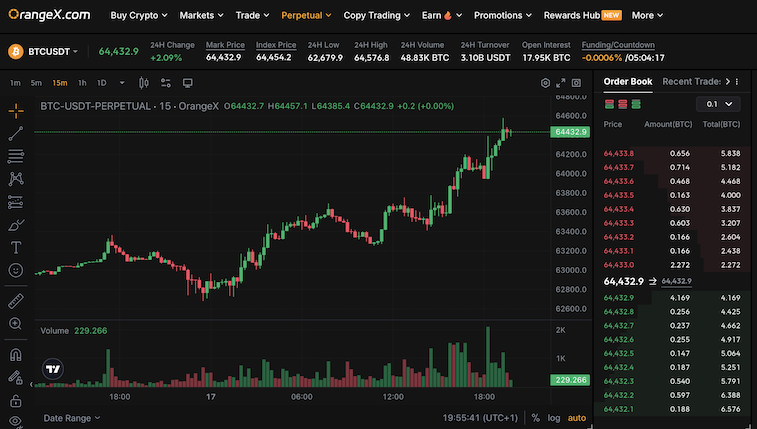
Trading platform
Regulation & Licensing
On the OrangeX homepage it says “Registered in Saint Vincent” and “holds MSB and NFA licenses from the US, with applications pending in Canada, Lithuania, and Estonia.” This statement alone raises several issues.
Let’s start with Saint Vincent and the Grenadines. The country’s Financial Services Authority has clearly stated in its public warning notices (such as the Warning Notice on HiTech Digital Business Ltd) that it does not issue forex or bitcoin/crypto licenses and does not regulate or license companies involved in forex or crypto brokerage. A company can register there, but this does not provide any real oversight. It is just a registration address, not a regulator.
Now for the “US licenses.” A Money Services Business (MSB) registration is simply a form filed with FinCEN. FinCEN does not review the business, check its finances, or supervise how it treats customers. The registrant just fills out the form and is listed. Companies sometime use the term “US” to suggest the SEC or CFTC is involved, but they are not.
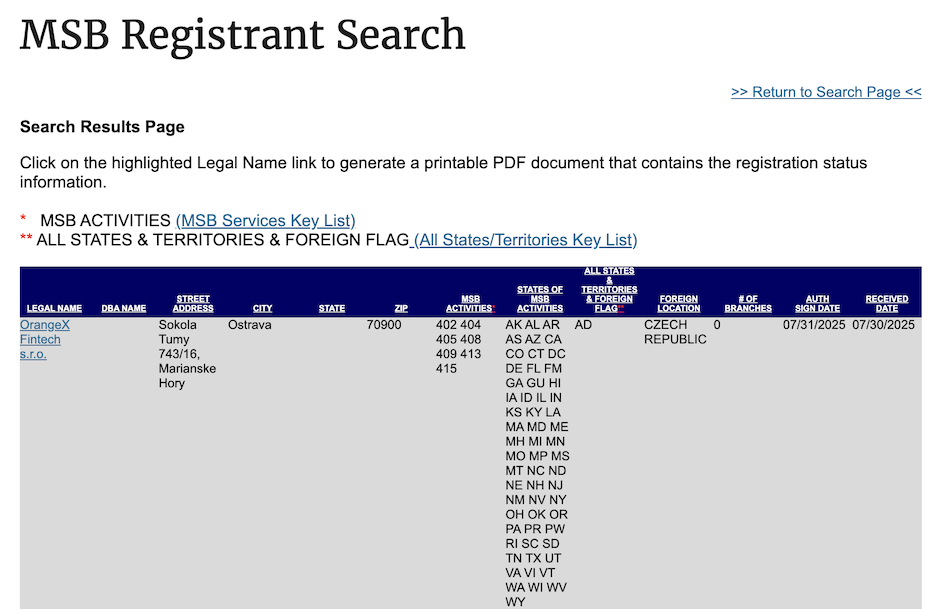
MSB registration
The National Futures Association (NFA) claim is even weaker. I checked the NFA register and found OrangeX is not a member.
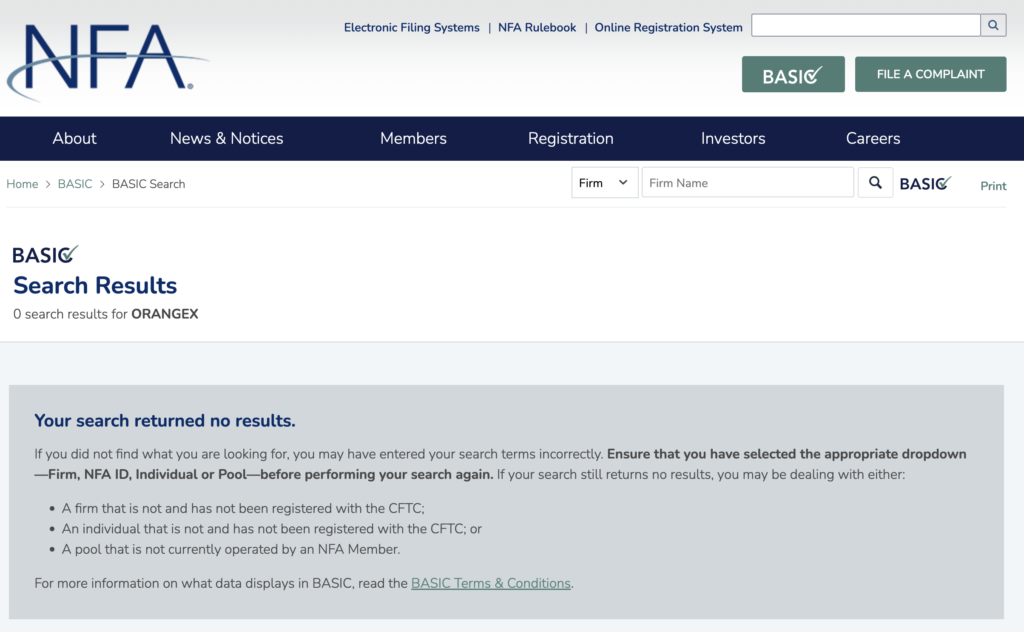
NFA check
The applications in Canada, Lithuania, and Estonia have been listed as “pending” since at least 2023. Applications are not the same as licenses. The only European registration OrangeX had — a Czech VASP entry — has lapsed, according to the company, and is being reapplied for under the EU’s new MiCA rules. A Czech VASP registration was always a simple filing, not a supervised license from a top authority.
Be careful with review sites that repeat OrangeX’s “Tier-1 regulation” claims without checking. Some of these sites may offer affiliate or rebate deals and repeat marketing instead of verifying the facts.
Cross-Border Permissions
This is a key issue. OrangeX advertises “US licenses,” but its own Terms of Service list the US and the UK as excluded jurisdictions. The company promotes American regulatory credibility while blocking American and British users from the platform.
Either the US registration is meaningful, and US customers can trade, or it is just for show. In this case, I believe it is just for show.
The exclusion list also includes China, Singapore, Russia, Hong Kong, India, and several sanctioned countries. This suggests the company is being defensive about compliance, not showing the “regulatory excellence” it claims in press releases.
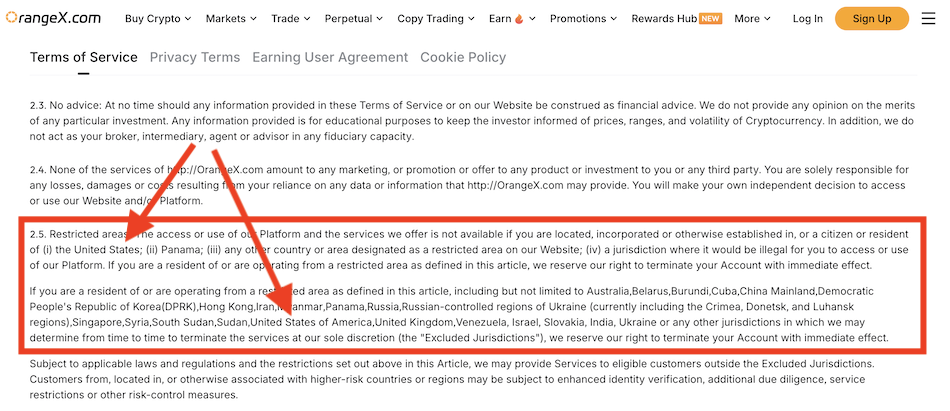
Website footer terms
Leverage, Products & Trading Conditions
OrangeX’s headline pitch is “Up to 200X Leverage.” That’s the number splashed across the homepage, and it’s the one to think hardest about.
The numbers at this level are harsh. With 1:200 leverage, if your position moves against you by just 0.5%, you lose your margin. For example, if you deposit $100 and take a $20,000 position, a half-percent move in the wrong direction wipes out your money.
Crypto prices often move several percent in a day. High leverage does not make it easier to earn more; it often leads to losing everything, especially for new traders.
Set that against how regulated markets treat the same products. Under ESMA’s rules, EU retail clients trading crypto CFDs are capped at 1:2 leverage. The UK’s FCA went further, banning the sale of crypto derivatives to retail consumers altogether back in 2021. OrangeX offers 100 times the EU retail cap, in a form the UK decided retail investors shouldn’t be sold at all — which is likely one reason both regions are blocked. Just because 1:200 crypto leverage isn’t banned in other regions — it doesn’t make it safe to use, especially for less experienced retail investors.
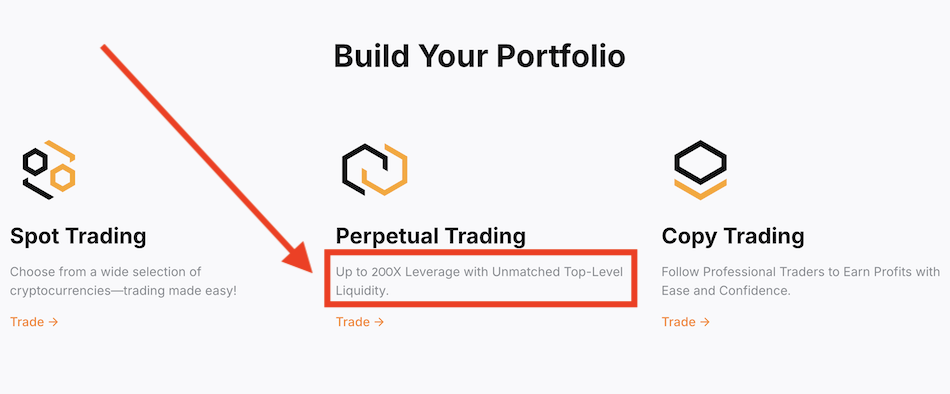
1:200 leverage marketing
The wider product menu is standard for a mid-tier offshore exchange:
- Spot: Roughly 300 tokens, predominantly paired against USDT, with fees around 0.1% for makers and takers.
- Perpetual futures: 550-plus USDT-margined contracts at up to 200x, with maker/taker fees near 0.02%/0.05%.
- Copy trading: Mirror other traders, though many of the portfolios on display carry high minimum entry sizes and choppy track records.
- Earn: Fixed-term USDT and USDC products at advertised rates up to 10% APR at the time of writing.
- Extras: An arbitrage dashboard, tokenized stocks, and metals.
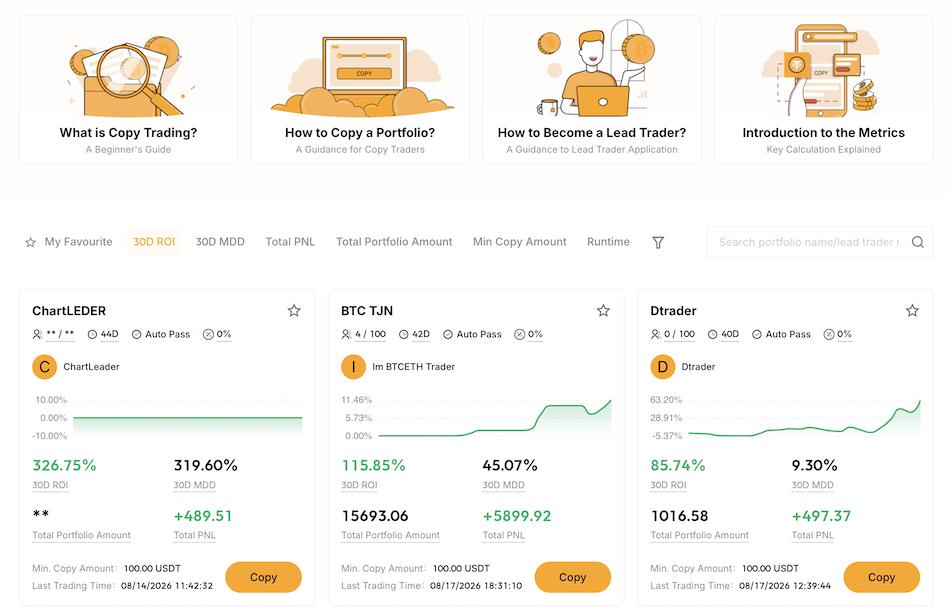
Copy trading
Next are the incentives. New users are offered welcome packages with bonuses of up to about 5,000 USDT, along with trading contests and small “coupons” to try futures trading.
Bonus-based marketing is common. These credits usually have turnover requirements that make them hard to withdraw. This often pushes new users toward the riskiest part of the platform, leveraged derivatives, before they fully understand the risks.

Seasonal promo deals
The OrangeX Trading Experience
When I opened the perpetuals terminal, I saw a detailed, professional trading screen that I could toggle between light and dark modes. It has real TradingView charts with all the main indicators, a live order book, and options for market, limit, and conditional orders, plus trailing stops and three margin modes. The software works well. If you’ve used a platform like OKX before, you’ll feel comfortable here almost right away.
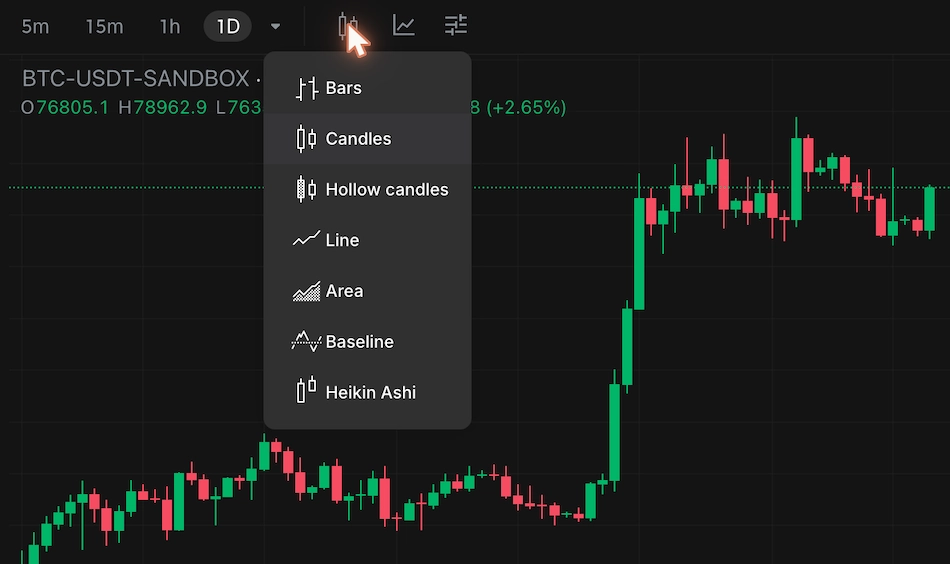
Chart types in dark mode
Yet before I even started, I noticed something odd: the chart was completely blank when I first loaded it and stayed that way for a few seconds. No candles or prices appeared until I refreshed the page. It wasn’t anything suspicious, but it’s not a great first impression for new users.
The leverage slider is where you should pause. It goes up to 1:200, as you can see below, and I moved it from the default 1:25 to the maximum in one go. There was no warning, no risk message, and no prompt asking if I was sure. For context, the UK’s FCA completely bans crypto derivatives for retail investors, and back in 2021 Binance limited futures trading leverage to 1:20.
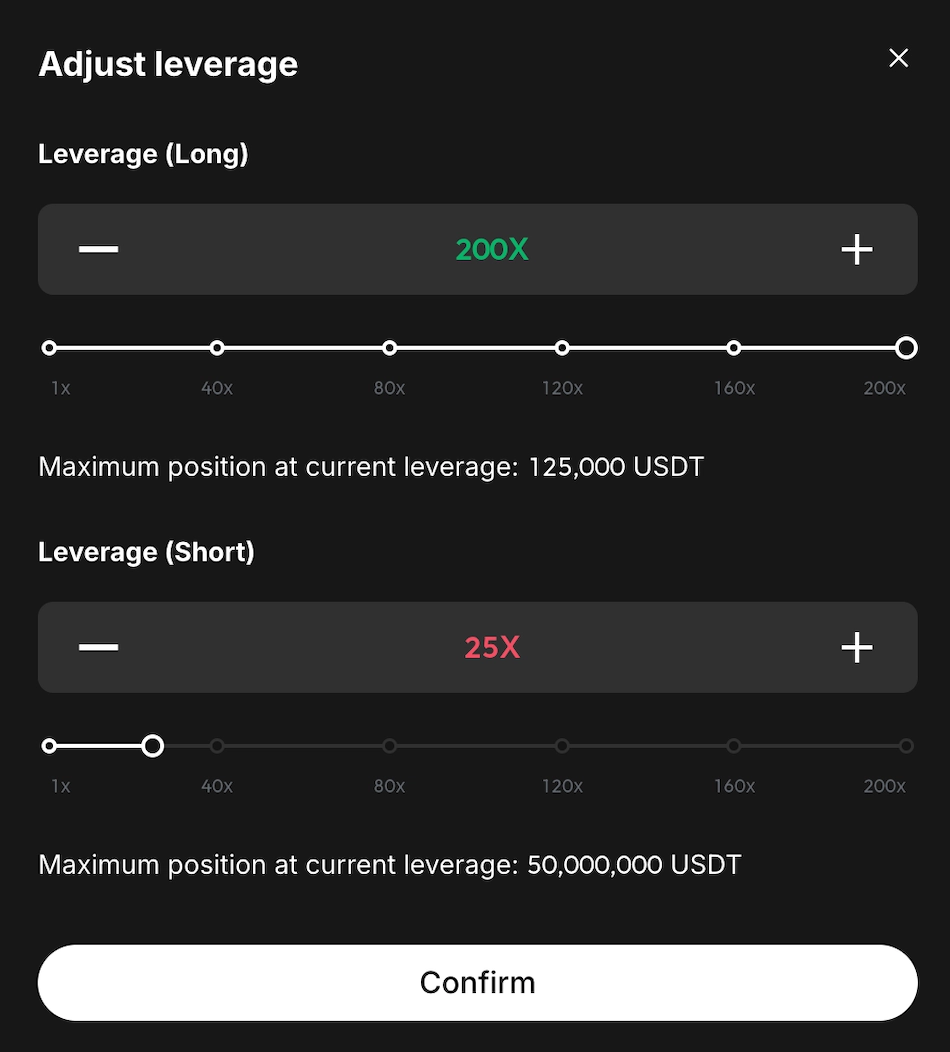
Leverage slider
Next, I opened a position using a market order. It took just one click, and there was no confirmation step. I went long on Bitcoin, held it for five minutes, and then closed the trade, as shown in my trading history below.

Trade history
Even though the price moved in my favor, I still lost 18.5% of my stake. According to OrangeX’s own records, I made $13.69 in profit but paid $59.92 in fees, ending with a net loss of $46.22. With that much leverage, the trading costs were four times higher than the profit from a correct prediction.
That one trade sums up the whole platform. Nothing seemed entirely unfair, but the numbers still worked against me.
I noticed two things that make this problem worse:
- The profit calculator in the order panel doesn’t subtract fees, so it told me I would make a 65% return when the real number was only 41%.
- The running profit on an open position doesn’t include fees, so the screen can show you’re winning even while your account is actually losing money.
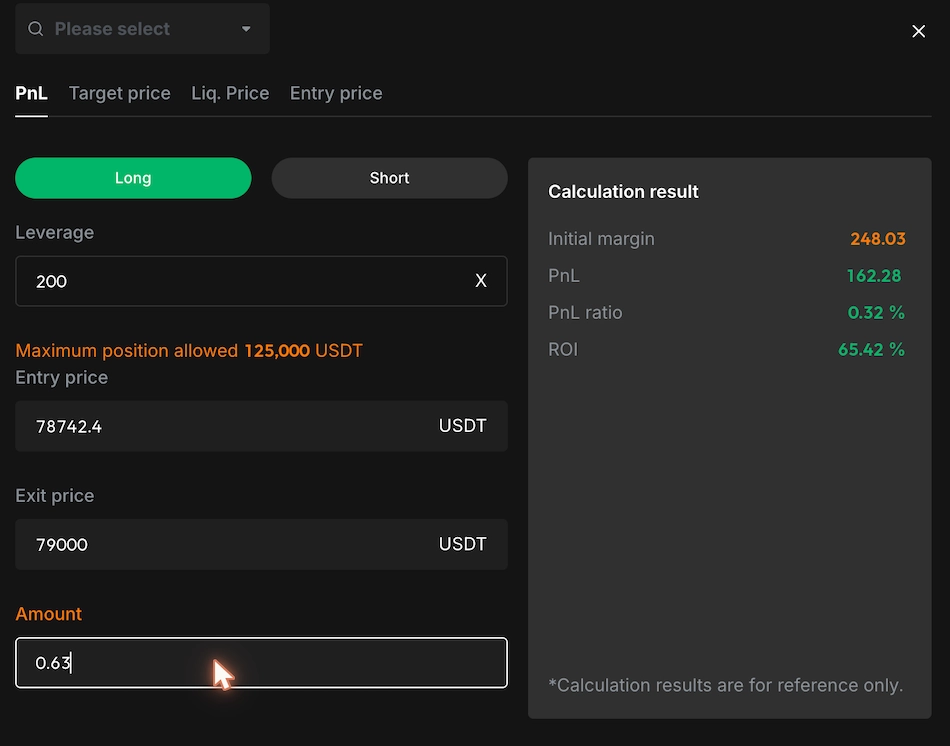
PnL
The whole time, a red banner kept reminding me to verify my identity. It’s odd that the platform lets you try 1:200 leverage before even asking who you are or how much you know about trading.
Who’s Behind OrangeX?
For a company that claims “regulatory compliance excellence,” OrangeX does not share much about who runs it. Its funding announcements mention a chief executive named only as “Thomas W.” There is no full surname or public executive profile, which you would expect from a platform holding money for ‘’2.5 million users’’. The founders are not named either.
The money side is more concrete. OrangeX has raised about $30 million across two rounds — a $10 million Series A in September 2023 and a $20 million round announced in 2025 — led both times by Kryptos, with SCI Ventures, NGC Capital, and Phase Capital named as backers.
Genuine venture capital is a point in its favor and sets OrangeX apart from fly-by-night operators that vanish overnight. It doesn’t, on its own, tell you the platform will treat retail customers fairly, and it doesn’t fix the transparency gap around who actually controls the business day-to-day.
This lack of clarity is important because the company’s identity seems to keep changing. Depending on the document, OrangeX is registered in Saint Vincent (on the current website), Seychelles (press releases mention Victoria), or the Czech Republic (as per the exchange’s LinkedIn profile). Its Terms of Service even mention the British Virgin Islands. A company that cannot be tied to a single jurisdiction is difficult to hold accountable if problems arise.
Brand & Domain Integrity
OrangeX relies on trust signals that seem reassuring at first. The site promotes a 1,000 BTC “insurance fund” and self-published proof-of-reserves reports showing holdings above 120%. Both are self-published.
There is no third-party auditor confirming the reserves, no public reserve audit report from a recognized firm, and no bug bounty program for external security researchers. Larger exchanges use these external checks because “trust us” is not enough.
The licensing paperwork is inconsistent, just like the company’s registration. Marketing materials describe the exchange as regulated and safe, but the official registers do not support this.
This does not prove bad intent, but a platform asking for your crypto should have clear details, and OrangeX does not.
How OrangeX Compares To A Well-Regulated Exchange
To see the gap, line OrangeX up against a crypto platform that holds a recognized license and publishes audited reserves — the profile of e.g. a Coinbase, Kraken, or Gemini.
« Make Full Width »| Feature | OrangeX | Well-Regulated Exchange |
|---|---|---|
| Top-tier regulator | None. Offshore registration; disputed US “licenses” | Licensed or registered with a recognized authority (e.g. US state trust charter, NYDFS, UK FCA registration, MiCA CASP) |
| Max retail leverage | Up to 1:200 on perpetuals | Spot-focused; derivatives limited or unavailable to retail in strict jurisdictions |
| Reserve proof | Self-published, no named auditor | Proof-of-reserves attested by a third-party firm |
| Fund protection | 1,000 BTC internal fund, no statutory scheme | Often segregated custody, some with insurance on custodial assets |
| Complaint recourse | No regulator with authority to intervene | Formal complaints process, sometimes ombudsman or regulator backing |
| Track record | Live since 2021; opaque ownership | Usually multi-year, audited, publicly identified leadership |
My main point is that OrangeX does not offer any product you cannot find on a properly licensed exchange with audited reserves and real customer support. High leverage is the only thing trusted exchanges avoid offering retail traders, and that is a reason to avoid OrangeX.
User Reviews & Reputation
OrangeX’s Trustpilot rating is worrying low, and firmly in the “Bad” band, and Trustpilot itself tags the profile with a note that the company may be associated with high-risk investments. The volume is modest — a few dozen reviews — but the pattern in the negative ones is consistent enough to be worth mapping.
Reading through the one-star reviews, I found that the complaints cluster into a handful of repeating themes:
« Make Full Width »| Complaint theme | What users describe |
|---|---|
| Frozen or locked accounts | Accounts suspended without notice or explanation, sometimes tied to a sudden KYC demand after a withdrawal request |
| Blocked or stalled withdrawals | Deposits accepted quickly, then withdrawals stuck “under review” for days or weeks |
| Forced “refund agreements” | Users pressured to sign a settlement, then paid back only a fraction of their balance |
| Unexplained deductions | Large sums removed as “fees” or “risk policy,” with no breakdown that adds up |
| Support that goes nowhere | Tickets closed without resolution; live chat that reads like a scripted bot |
One common story is that users deposit a four-figure amount, make little or no profit, and then receive only a small part of their original deposit back, with the rest taken as fees. This pattern appears in several seemingly unrelated reviews. Fast deposits and slow withdrawals are the most frequent complaints.
There are two important points to consider. First, exchanges often get negative reviews because losing a leveraged trade can feel like theft, even when it is not, and OrangeX does have satisfied users (albeit not on Trustpilot).
Professional Opinion
I’m not saying OrangeX is as dangerous as some our blacklisted scam brokers. It isn’t a here-today-gone-tomorrow clone site, it raised real capital, and there’s no proven theft or breach at the platform level. Fairness demands that distinction.
But there are many reasons to keep your money elsewhere.
The regulatory claims do not hold up when checked. The company’s identity changes between several jurisdictions. The only public leader is listed by first name and initial. The reserve and insurance numbers are self-reported with no outside auditor. The main feature is 1:200 leverage aimed at small accounts. In our test trades the fees were significant and not reflected in the profit and loss calculator. Most importantly, reviews keep coming back to the issue of getting your money out.
Each of these issues is a warning sign. Together, they make OrangeX a higher-risk option, and there is nothing it offers that a licensed, audited exchange does not provide more safely and effectively.
If you have trouble withdrawing, your account is frozen, or the fees seem wrong, there is no regulator to help and no compensation scheme. For these reasons, I believe it is best to use a properly regulated platform and avoid OrangeX.
Actions To Take If You’ve Already Made A Deposit
If you’re already trading on OrangeX and now have doubts, a few practical steps:
- Keep records. Take screenshots of your balances, trade history, and every support exchange before anything changes.
- Withdraw in writing. Request a full withdrawal, set a clear deadline, and keep the timestamped copy.
- Refuse “release” demands. Never pay a fee, tax, or deposit to “release” your own funds — it almost never frees anything.
- Stop adding money. If a withdrawal stalls, send no more crypto. Test small before you ever trust a platform with size.
- Watch for recovery investment scams. Anyone promising to claw your funds back for an upfront fee is likely a second scammer, often trawling forums for people who’ve posted about a loss.
- Verify who contacts you. Check the credentials of anyone claiming to be OrangeX staff, a regulator, or law enforcement.
- Set realistic expectations. Recovering money from an offshore exchange with no home regulator is genuinely hard, so act early.
Notes
- We aren’t labeling OrangeX an online trading scam. We’re setting out the specific concerns from our review and hands-on use of its platform, which in our view make it a higher-risk place to keep funds. Use the information and the linked sources to weigh the risk yourself.
- Regulatory claims, terms, and site details change fast in crypto. The registration and jurisdiction points above reflect what the OrangeX site, its filings, and public registers showed at the time of testing — confirm the current position before you act.
- Third-party trust scores vary widely for OrangeX. Where a review reads like the company’s own marketing, check whether that site earns a referral fee.
FAQ
Is OrangeX Legit?
OrangeX is a real, operating exchange that has been running since 2021 and has raised roughly $30 million in venture funding, so it isn’t a fake clone site. “Legit” in the sense of trustworthy is a harder yes.
It holds no top-tier license, its regulatory claims don’t hold up against the registers, its corporate registration shifts between jurisdictions, and its low Trustpilot score at the time of our investigation, with recurring complaints about withdrawals. Treat it as higher-risk rather than clearly safe.
Is OrangeX Available In The US?
No. Despite advertising “US MSB and NFA licenses,” OrangeX lists the US in the excluded-jurisdictions section of its own Terms of Service, so US residents can’t use the platform.
The US registration it points to is a FinCEN filing, not supervision, and the NFA membership it claims doesn’t appear on the register. US-based traders should use an exchange that’s actually licensed to serve them.
Is OrangeX Safe?
We’re calling OrangeX higher-risk. There’s no confirmed hack, and some users seemingly trade and withdraw without issue, but the safety net we’d want isn’t there: no regulator with authority over the platform, no statutory compensation scheme, self-published reserve figures, and a steady pattern of users reporting stuck withdrawals and unexplained deductions.
If protecting your capital is the priority, a trusted crypto exchange is the safer home for it.