

Finelo App Review: Is it Legit Or A Scam?
One of our team came across an advert for the Finelo app. Drawn in by a familiar narrative – a financial educational platform marketing ‘AI trading’ – they passed it over to us scam experts, and we put Finelo under the microscope, and found multiple safety issues.
 Written By
James Barra
James is an experienced broker analyst with a background in financial services. He has spent 2,500+ hours testing brokers, used 35+ different platforms and apps, audited 120+ broker T&Cs, and verified 300+ regulatory licenses. James has also been on US and UK TV, and been a guest on finance podcasts, discussing reports conducted by BrokerListings.com and sharing his expertise.
James Barra Profile Page Fact Checked By
Tobias Robinson
Tobias is committed to helping traders find the right brokerage for their needs. He has tested 200+ brokers, spent 2,600+ hours using different platforms, and placed 2,100+ trades.
Tobias Robinson Profile Page Edited By
William Berg
William Berg combines his expertise in law and finance to analyze trading brokers. He has checked 3,250+ regulatory licenses, investigated 2,365+ broker clones and trading scams, and placed 3,500+ trades.
William Berg Profile PageSeptember 3, 2026
We watched over 125 of Finelo’s YouTube videos, combed through its content and adverts on Instagram, LinkedIn, Reddit and Trustpilot, completed the onboarding questionnaires, read its terms and conditions with particular scrutiny of its rules surrounding subscriptions and refunds, and investigated its educational content, challenges, and demo mode to see what’s unique, and what you can get elsewhere for free (most of it).
Whilst we’re stopping short of calling Finelo a trading scam, we still found four red flags that, in our opinion, mean it isn’t worth the monthly subscription, often around $10 – $60:
- Misleading marketing videos that use fictional stories, in some instances imply profits, and lean on emotions like fear of missing out to encourage sign-ups.
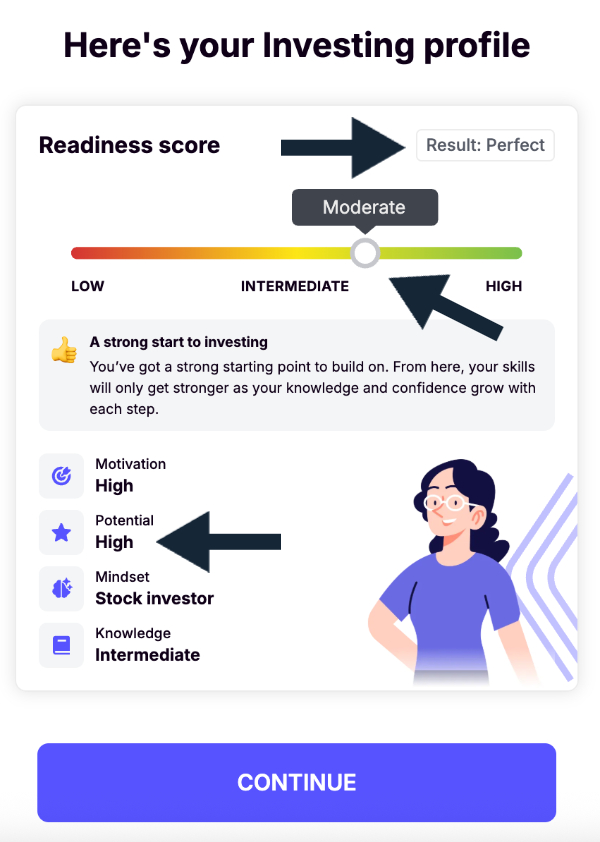
- A sales funnel in the form of onboarding quizzes that miraculously always make you a “perfect” fit for Finelo’s products, seemingly regardless of the answers you provide.
- Aggressive T&Cs that play musical chairs between different jurisdictions to make customer disputes, especially regarding refunds, extremely difficult.
- Education that is largely available for free elsewhere, and a market simulator that you can get by simply opening a demo account at any one of hundreds of brokerages.
We unpack each of our key concerns below.
1. Misleading Advertising
Our main gripe with Finelo is their marketing, with videos and content they push on multiple social channels, including YouTube, Instagram, and LinkedIn.
They often leverage fictional stories and AI-generated characters to prey on emotions like anxiety, fear of missing out, and greed, with very discreet disclaimers. Now, not all of Finelo’s videos are misleading – some promote sensible financial and investing principles, but we saw enough that caused concern, with five examples below.
« Make Full Width »| Video | Issue |
|---|---|
| Knee surgery put me in debt | Fictional story implying Finelo can get someone out of debt in ‘two years’. Marketing aimed at those who are vulnerable in financial distress. |
| Building and Evaluating Models | Claims its AI tool is “outperforming the market consistently” – potentially misleading, with no details on results. “Zero experience needed” marketing to entice beginners. |
| Review and Analyze Your Trades | Implies AI trading tool left users with “no words” – subtly implying profits were made. Preys on FOMO. |
| Incorporating AI into Trading | Suggests AI can handle all trades with limited information and transparency. Says those who don’t join will feel ‘regret’. |
| Investments 10 years ago that are now worth $1 million | Lists hugely volatile assets like Bitcoin and individual stocks like Nvidia without noting they’d be high-risk investments, especially for inexperienced traders. |
2. Artificial Onboarding Questionnaires
Finelo uses an onboarding questionnaire, consisting of 13 questions, to convince prospective users that they will benefit from the Finelo app. The problem is that we completed it four times, giving different and even contradictory answers, and were often greeted midway with reassuring messages such as “trading suits more people than you think”, yet the outcome was almost always the same. We were a “perfect” fit, we were between “intermediate” and “high” readiness, and our potential was always “high”.
It feels like a sales funnel, and by the time you’ve spent 5-10 minutes filling out the questions, you already feel somewhat invested.
We also take a dim view of the digital scratch card we were presented with on a couple of occasions, offering discounts after ‘scratching’ with our cursor. This gives the service a gamified, casino-like feel – not a serious financial education service. You won’t find many regulated financial institutions and brokerages using digital scratch cards to encourage sign-ups.

3. Brutal Terms & Conditions
We read through the boring stuff – the Terms and Conditions, the Subscription Terms, and the Refund Policy. We found several concerning rules:
- Jurisdictional puzzle: Finelo is a company registered in Cyprus, but section 18 of its terms says any arbitration must apply the laws of Florida, while if you take them to court for certain relief it must be in Delaware. This is a common tactic that makes presenting any legal challenge a nightmare for a consumer – you’re dealing with a Cyprus entity, playing by Florida rules, and litigating in a Delaware courtroom. See Terms and Conditions Section 18 (“Informal Dispute Resolution Procedures”).
- Discounted trial: They sometimes offer trials at discounted prices. However, the terms suggest that if you do not cancel at least 24 hours before the trial ends, you may automatically be billed for an even more expensive subscription. We suggest setting a calendar reminder to check whether you want to continue using the app. See Subscription Terms Sections 1–2, and Terms and Conditions Section 7.
- Dispute resolution: Finelo have made dispute resolution a painful uphill battle for customers. Before you can file a case, you must send a physical letter to Cyprus, then you have to wait 60 days for informal negotiations, and you’re required to attend a live video conference on a platform like Zoom or Teams with Finelo’s representatives. This painful, drawn-out process will see many impacted customers give up. See Terms and Conditions Section 18 (Subsection “Mandatory Pre-Filing Notice Procedure”).
Finelo has published videos where it defends itself against negative reviews of its subscription terms on platforms like Trustpilot and Reddit, often pointing out that its rules are typical of subscription models. For us, even if true in some cases, this does not make them less unfair or challenging for consumers, especially given that their client base is partly older, less technology savvy, and inexperienced investors.
4. You’re Paying For Education And Tools You Can Get For Free
What Finelo has done well is package up financial and investment education, primarily at the beginner level, into slick-looking interactive lessons with quizzes and other add-ons. But ultimately, most of the actual content you can find online for free, whether through written content, structured courses, or increasingly videos.
For example, if you want to learn about why you should invest early, the value of automated investing, how stock markets work, and plenty more syllabus content, I’d recommend going elsewhere online and saving yourself money each month.
In fact, below are some free resources I’d suggest checking out (we do not have paid partnerships with any of these providers, and they are regulated financial institutions and official investor education bodies):
- Investing for beginners – Is it right for you, and how does it work? – JP Morgan
- Understanding investment types – Vanguard
- The guide to diversification – Fidelity
- How does the risk-return relationship affect investing? – Get Smarter About Money
- Trading vs investing: Which is right for you? – Fidelity
Elsewhere, their “risk-free market simulator” has a user-friendly interface, however it’s essentially the same as the free demo accounts offered by over 95% of online brokerages we’ve tested. With those providers, you can also then upgrade to a live trading account should you wish to, and by which time you’ll likely be familiar with the platform. With Finelo, you could end up paying $20+/month for a demo trading mode alongside a real-money account, should you start investing for real.
FAQs
What Is Finelo Trading?
Finelo markets itself as a financial educational app that provides bite-sized content, lessons, and market simulations, often through its ‘challenges’. Its app is available on Google Play and the App Store, where its chief tagline is “Master Trading” – something that, in our opinion, most retail investors will be unlikely to achieve if they just rely on Finelo’s very basic educational content and tools.
In more recent times, Finelo has also capitalized on the interest in ‘AI trading’, bringing out a suite of services, including allowing users to upload a chart for an AI to detect trends and patterns, and an ‘AI mentor’ to analyze their financial plan. The problem is, as we often see with these AI-powered tools, there’s very limited transparency about how they work and arrive at their output/decisions. Analysis of a financial plan also generally requires a genuine financial professional to provide truly tailored guidance to your circumstances. And for AI pattern recognition, we’d stick to tools like Autochartist, which is more sophisticated for serious traders.
Is Finelo Legit Or A Scam?
Finelo is a legitimate company. It’s registered via Finelo Limited in Limassol, Cyprus, though it’s not authorized by the Cyprus Securities & Exchange Commission (CySEC) – something we checked. This is likely because it technically doesn’t provide live trading – it provides ‘education’.
It also generally receives positive ratings on Trustpilot, though we read all the one-star reviews and noted frequent frustration with the subscription and payment terms, including: “The ads were very misleading. Saying invest $20 and let ai do the rest. Then you took an additional $47.”
Ultimately, we don’t trust Finelo. We might not be labeling it a scam, but our investigation uncovered enough red flags in its advertising, payment terms, and its products that we’d steer clear.
Is Finelo Worth It?
Not if you like value for money. Its educational content is basic and may suit some beginners, but inexperienced investors could learn most of the same concepts for free elsewhere. Its market simulator is essentially a demo account offered by most traditional brokerages, including those that are tightly regulated and often offer free educational content too. We wouldn’t trust its AI assistants or tools with our money.
This article reflects our opinion on Finelo based on the information available at the time and the views of our researchers. We have identified concerns that prospective users may wish to consider, but we are not making a definitive finding of fraud, scams, or unlawful conduct. Users should carry out their own checks.