 Top Lists for USA
Does OKX Require KYC?
Yes, OKX requires Know Your Customer (KYC) identity checks before you can use key exchange services, including buying and selling crypto and making withdrawals. The KYC process is smooth – I’ve been through it – you take a selfie, share your ID, verify your address, and complete a questionnaire.
 Written By
James Barra
James is an experienced broker analyst with a background in financial services. He has spent 2,500+ hours testing brokers, used 35+ different platforms and apps, audited 120+ broker T&Cs, and verified 300+ regulatory licenses. James has also been on US and UK TV, and been a guest on finance podcasts, discussing reports conducted by BrokerListings.com and sharing his expertise.
James Barra Profile Page Fact Checked By
Tobias Robinson
Tobias is committed to helping traders find the right brokerage for their needs. He has tested 200+ brokers, spent 2,600+ hours using different platforms, and placed 2,100+ trades.
Tobias Robinson Profile Page Edited By
William Berg
William Berg combines his expertise in law and finance to analyze trading brokers. He has checked 3,250+ regulatory licenses, investigated 2,365+ broker clones and trading scams, and placed 3,500+ trades.
William Berg Profile PageOctober 7, 2026
This article covers KYC requirements for the OKX exchange. The self-custody OKX Wallet is different. You can generally create and use the Web3 wallet without KYC.
| KYC Checks | Does OKX Require? |
|---|---|
| Proof of identity | Yes – a photo of a government-issued ID, passport, or driver’s license, which is the OKX ‘recommended’ option |
| Proof of address | Sort of – manually supplied during KYC but OKX did not request documents like utility bills. Often needed before withdrawal |
| Biometric check | Yes – facial recognition |
| Financial questionnaire | Yes – multiple choice questions |
| Tax number | Region-dependent but sometimes needed before you can withdraw |
| Time to complete KYC | 24 minutes in testing (longer than the 10 minutes advertised) |
Steps To Complete KYC At OKX
I opened a real OKX account and documented every key step and requirement in the onboarding and KYC process. My experience is based on the requirements for a UK client – there may be some minor variations if you register from another country with different regulators. Still, here’s what to expect:
1. Launch Verification
Before you can start, you need to provide an email in the sign-up form. You’ll be sent a 6-digit code to the email address provided, that you can use to verify the address. You’ll be asked to do the same thing for your phone number, with a 6-digit verification code sent via SMS.
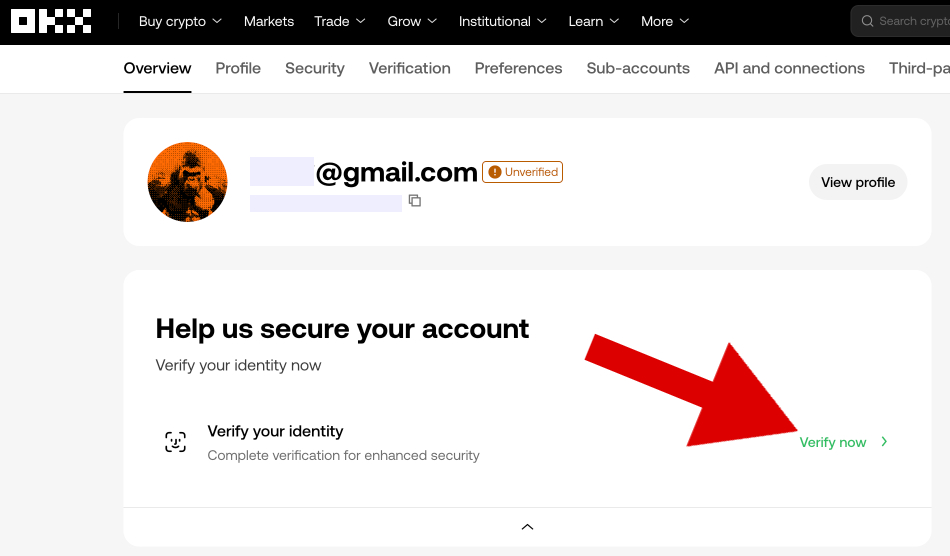
With those basic contact details registered, you can press the green ‘Verify Now’ button in the ‘Overview’ area to launch the KYC verification.
2. Choose Between An Individual And Institutional Account
Click the ‘Individual verification’ box if you’re a retail investor/everyday person looking to use OKX’s services. The institutional verification option is for companies and is not the process I went through and detail in the rest of this guide.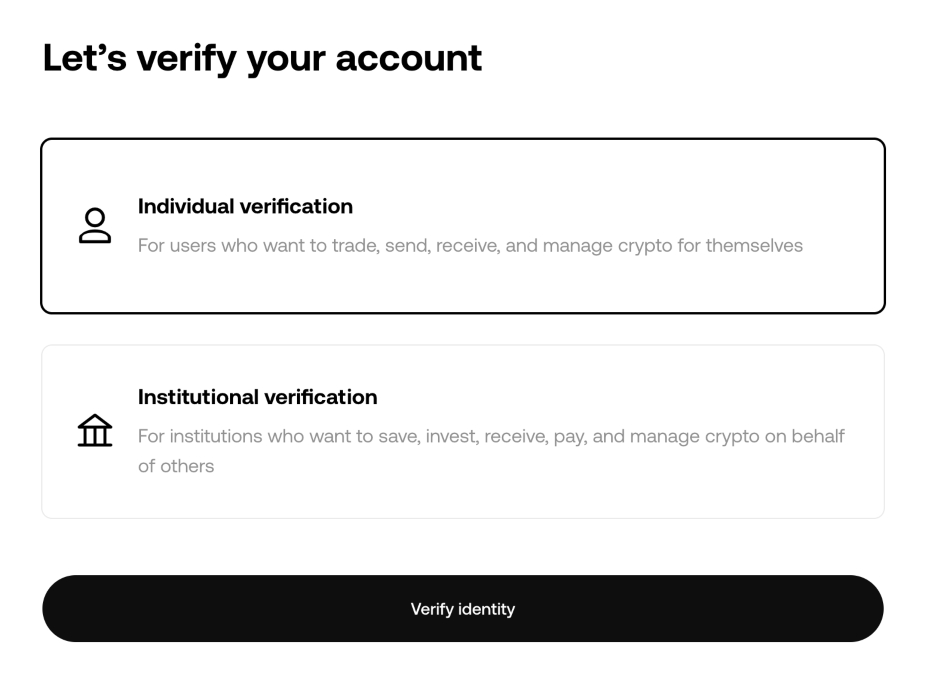
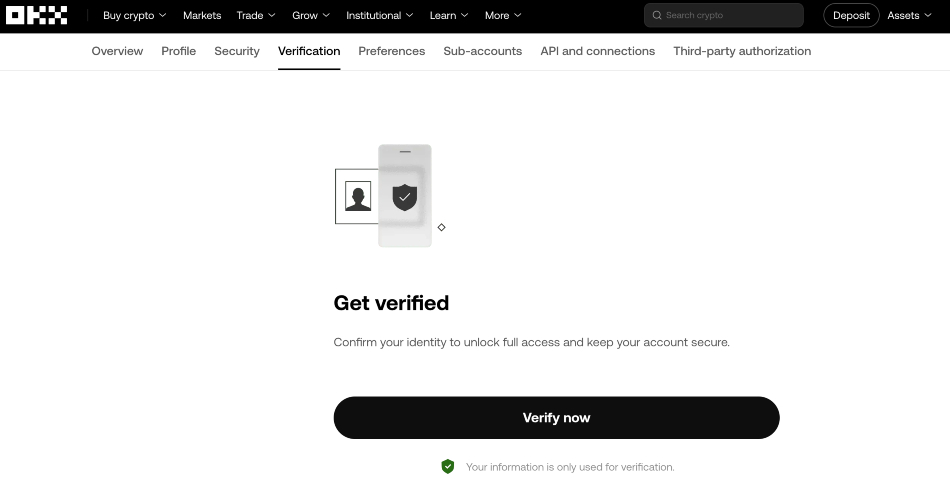
You’ll then be taken to a ‘Get verified’ page. Click ‘Verify now’ to be taken through to the next stage.
3. Provide Documentation And Selfie
You’ll be taken to a page to confirm your location. This starts by selecting your country of residence from a drop-down menu. You can see below that I selected ‘United Kingdom’.
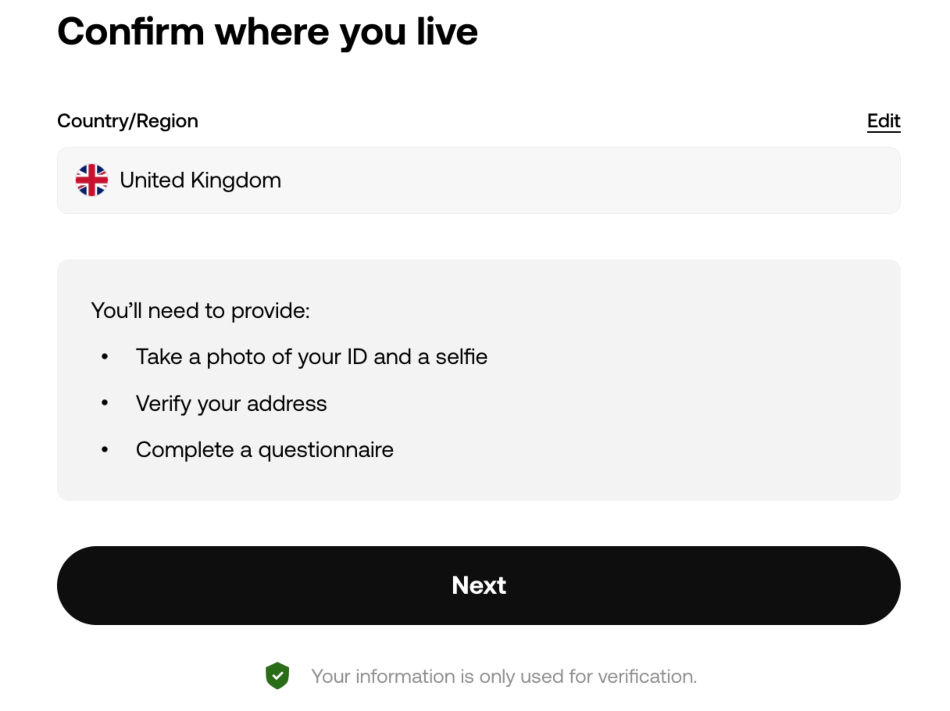
You’ll then be asked to select an ID type out of passport, driver’s license, and other government identification cards. I opted for passport.
You then need to take a photo of the ID card and take a selfie. You can do this from your computer, but I opted for the mobile camera option, which requires giving OKX permission to access your camera roll. A QR code was shown on the screen, which when I pointed my phone camera at it, took me to the OKX onboarding process on my mobile.
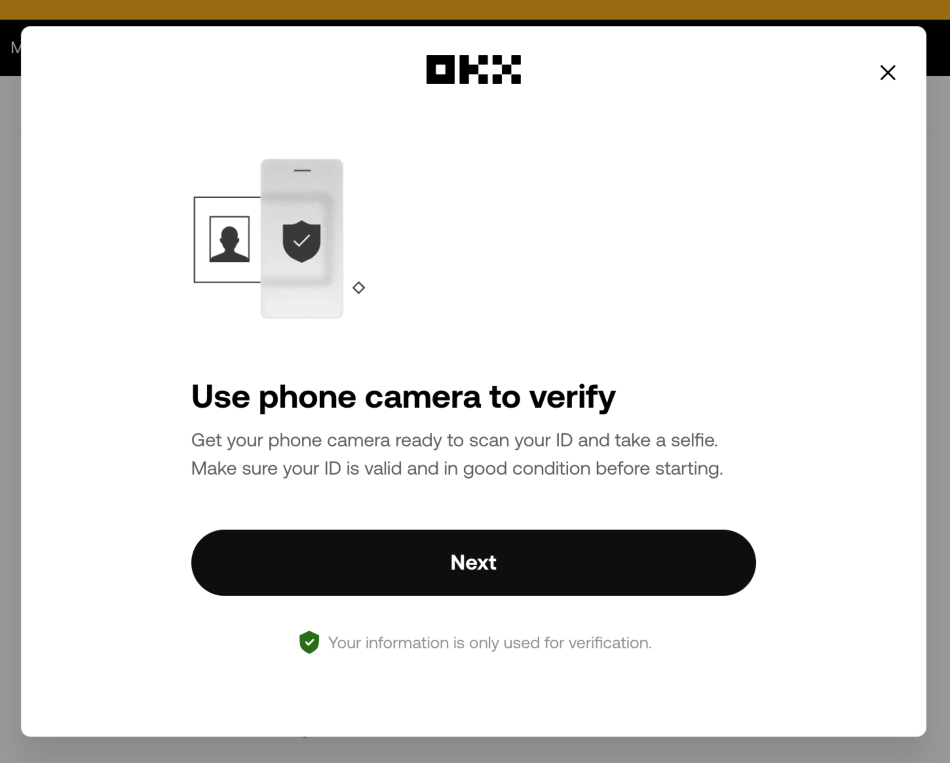
This bit was surprisingly smooth. I directed the camera at the passport page with my photo on, minding to keep it within the borders, and then had to do the same thing to take a selfie of my face. It took the software less than 10 seconds to scan both the ID document and my face – much faster than at other investment providers I’ve opened accounts with.
OKX then asks you to confirm that the personal information, including first and middle names, date of birth, nationality, and document number, that they scanned from your document is correct. These types of software have gotten very good in recent years, so there weren’t any issues in mine.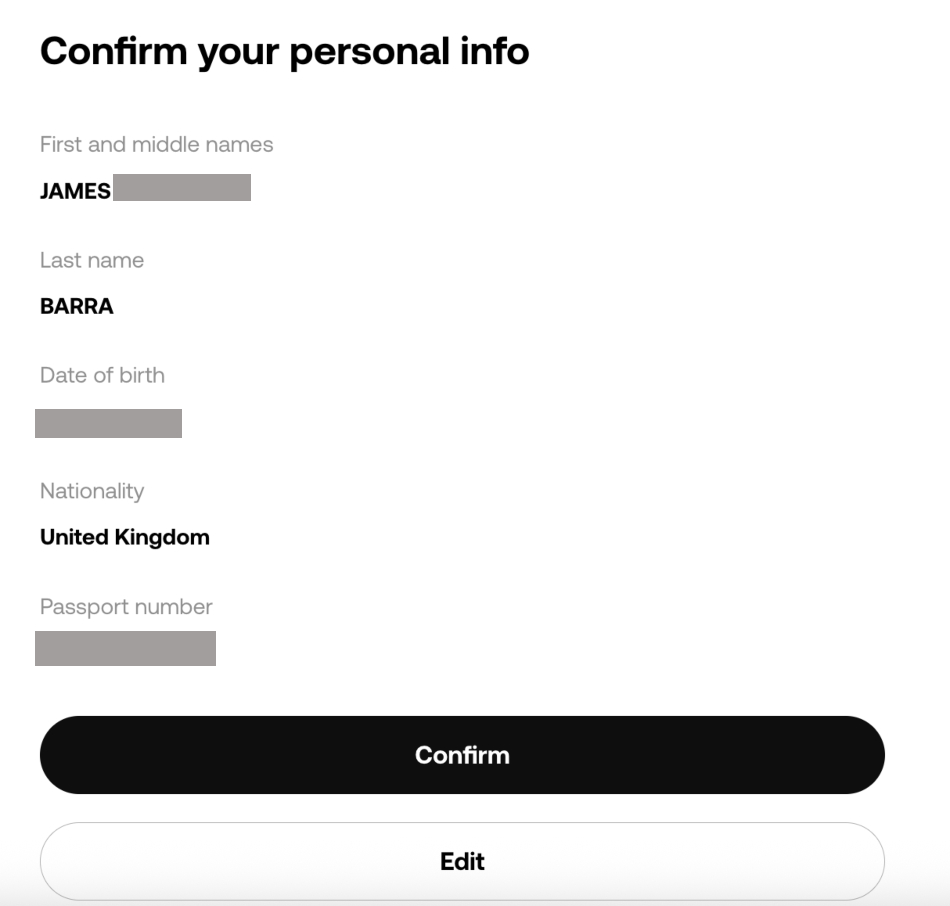
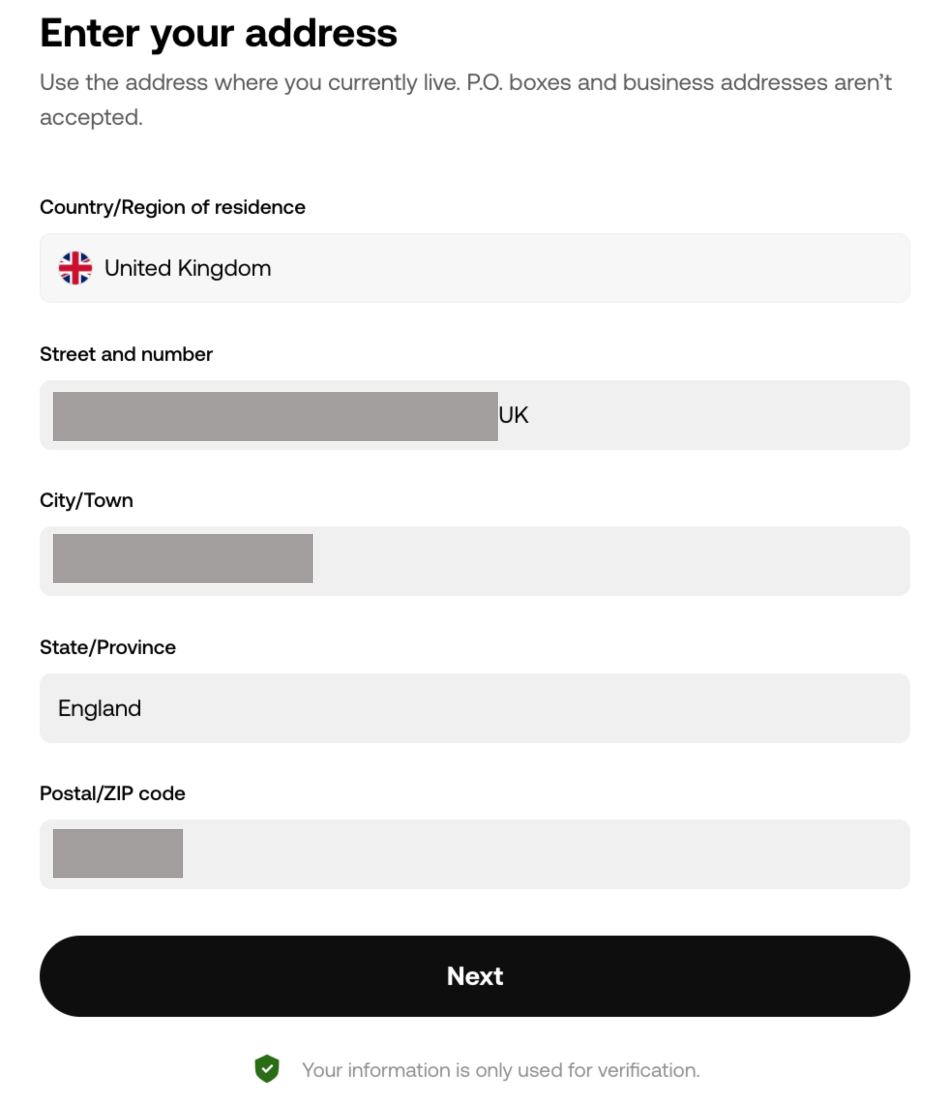
You’re then asked to enter and confirm your residential address. You can manually type this all out, but when I started inputing my address, it automatically populated the rest of it.
What’s neat is that OKX doesn’t take 24 hours or longer like some investment providers I’ve signed up with, to manually check your verification documents. Instead, I immediately got the confirmation message below.
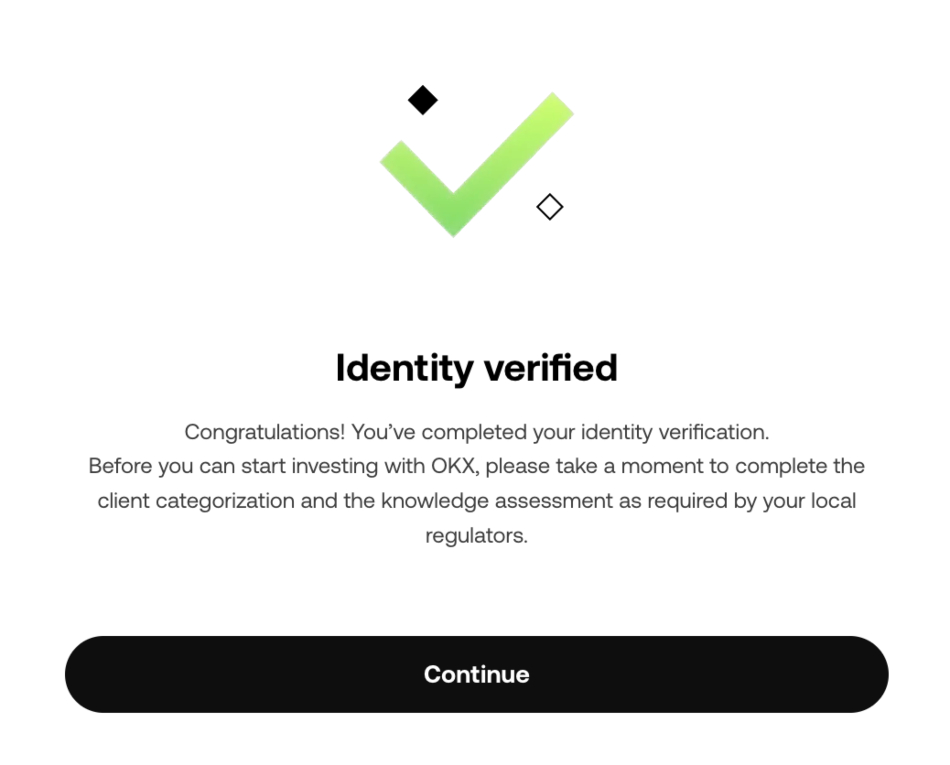
4. Complete Profile Questionnaire
With the ID and address checks ticked off, you’re asked to complete a questionnaire about your financial profile and experience. I’ve completed dozens of these and it includes all the normal questions brokerages, exchanges, and trading platforms are often required to ask as part of mandatory client categorization, cryptoasset suitability, and KYC checks.
For example, you need to state your primary reason for using OKX, e.g. trading, investing, sending/receiving crypto, online purchases/payments (I selected investing), as well as how much crypto you expect to deposit per month with 6 ranges from 0 to 100,000+, the industry you work in from a drop-down, and the main source of your funds, such as savings, salary, etc.
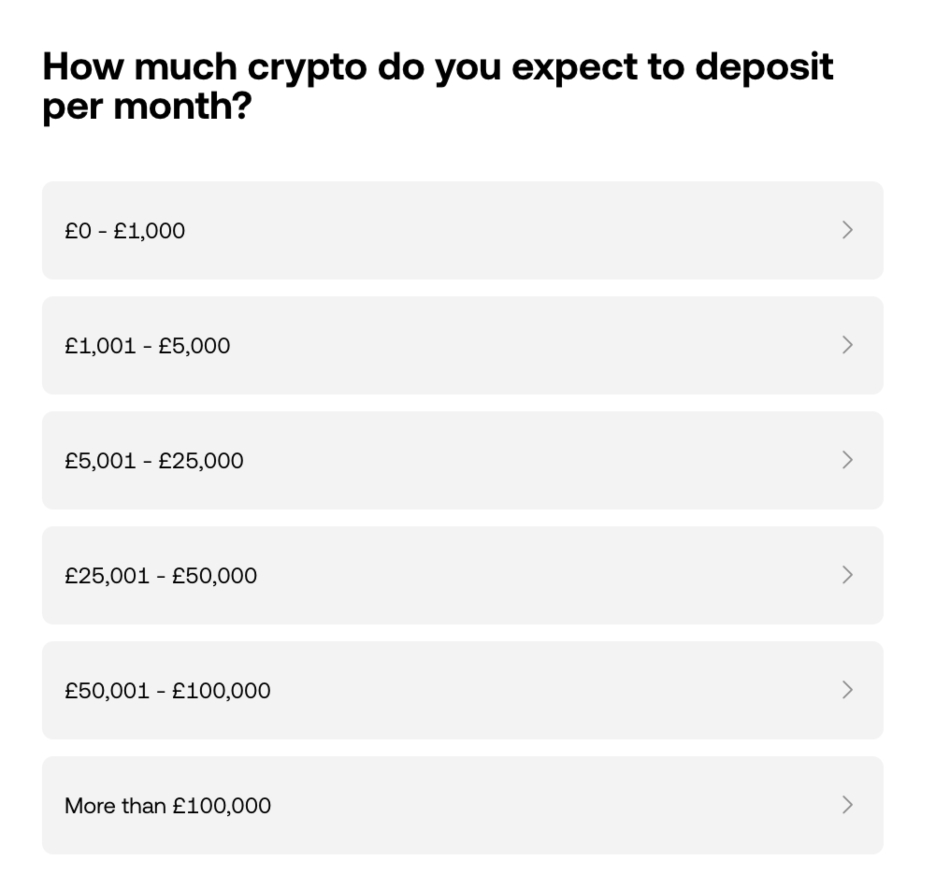
At this point, OKX booted me out, and I had to log back in with my password and an SMS verification code, followed by a face scan, which I did via a QR code on my phone. I was then redirected to the client categorization and knowledge assessment.
I had to specify whether I was a restricted investor or high net worth investor, providing details like what percentage of my net worth I had put in high-risk investments in the last 12 months, and how much I intend to put in the following 12 months.
There was then a further 12 multiple choice questions designed to ascertain my understanding of OKX, and crucially, the safeguards it doesn’t offer, as well as testing my understanding of the risks associated with investing in cryptos.
For instance, I had to answer whether OKX will be responsible for filing my taxes (it won’t be), whether my crypto would be recoverable if OKX failed (it probably won’t), and whether high potential rewards typically come with low or high risk (it’s high risk), and whether cryptos are generally riskier than traditional assets like equities (they are).
These are typical questions you’d get at other crypto exchanges, and if you fail the quiz, you shouldn’t be investing in high-risk cryptos.
Once completed, OKX confirms you’ve passed its KYC checks and other onboarding requirements, and you’re free to deposit and use its suite of products and tools.
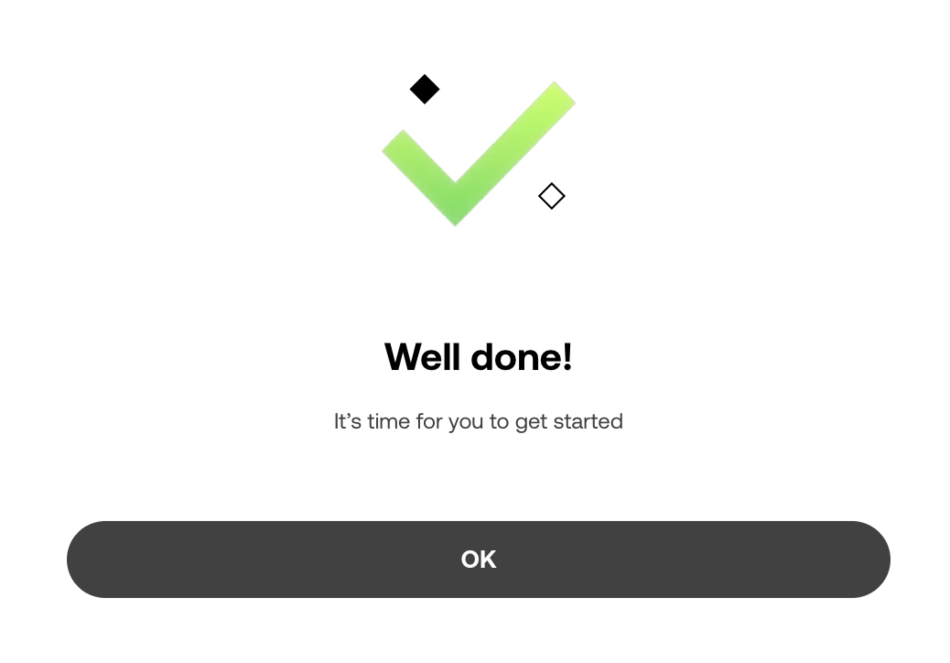
The whole KYC process, from verifying my email and telephone to supplying and signing off my identity documents, selfie, and the answers in the personal questionnaire and knowledge assessment took me just shy of 25 minutes. It’s slower than the “less than 10 minutes” OKX advertises in some of its marketing, but still much faster than I’ve been through at many firms.
The fact that it’s fully digital and can be largely done via mobile also makes for a much smoother user experience.
Can I Use OKX Without KYC?
You can access some basic features, but it’s a much more limited experience. For example, you can use the site’s calculators to see which cryptocurrency tokens you can buy and sell with fiat, and expected conversion rates. You can also view price charts, market data, and some of its learning resources and tools.
The problem is that most of the core exchange functions require KYC. For instance, you can’t actually deal or trade cryptos, and you should expect to complete KYC before you can regularly make hassle-free deposits or withdrawals.
What Are KYC Checks?
Know Your Customer (KYC) checks are legally mandated requirements in many regions that OKX and lots of licensed providers have to run to confirm clients are who they say they are to prevent anti-money laundering (AML) and other crimes.
There are ultimately very few no-KYC crypto exchanges and brokers, and even those without detailed checks at the sign-up stage often require some form of identity and address verification when it comes to withdrawing gains from the platform.