
Best Brokers For Low Trading Fees 2026
We put the top discount brokers to the test, analyzing their low fees and tight spreads to uncover the cheapest trading platforms on the market today.
 Written By
Paul Holmes
With over 15 years of trading experience, including developing algorithmic strategies on MetaTrader and evaluating brokers, he brings deep expertise in market analysis and trader education, helping traders choose the right platform for their requirements.
Paul Holmes Profile Page Fact Checked By
Tobias Robinson
Tobias is committed to helping traders find the right brokerage for their needs. He has tested 200+ brokers, spent 2,600+ hours using different platforms, and placed 2,100+ trades.
Tobias Robinson Profile Page Edited By
James Barra
James is an experienced broker analyst with a background in financial services. He has spent 2,500+ hours testing brokers, used 35+ different platforms and apps, audited 120+ broker T&Cs, and verified 300+ regulatory licenses. James has also been on US and UK TV, and been a guest on finance podcasts, discussing reports conducted by BrokerListings.com and sharing his expertise.
James Barra Profile PageAugust 18, 2026
-
1Interactive Brokers (IBKR) is a leading brokerage offering access to over 170 markets in 40 countries and a range of investment services. With 40+ years in the industry, this Nasdaq-listed company follows strict regulations by the SEC, FCA, CIRO, and SFC, making it a trusted global trading broker.
-
2NinjaTrader is a US-based brokerage regulated for trading futures. It offers three different pricing plans for varied needs and budgets, along with extremely low margins on popular contracts. The company's renowned charting software and trading platform provides extensive customization options and excellent technical analysis features.
-
3Founded in 2001, FOREX.com is part of StoneX, a global financial services firm with over a million customers. Regulated in the US, UK, EU, Australia, and other regions, it offers thousands of markets, not just forex, with competitive pricing on advanced platforms.
-
4Firstrade is a US-based discount broker-dealer authorized by the SEC and a member of FINRA/SIPC. It offers welcome bonuses, advanced tools and apps, and commission-free trading. Firstrade Securities is a popular top online brokerage, and opening a new account is fast and simple.
-
5eToro is a platform for social investing that provides options for both short and long-term trading on stocks, ETFs, options, and crypto. The platform is recognized for its easy-to-use, community-oriented interface and reasonable fees. With oversight from FINRA and SIPC, and used by millions globally, eToro is a reputed name in the industry. Trading on eToro is facilitated by eToro USA Securities, Inc.
Cheapest Brokers Comparison
Fees add up when you actively trade - so here's how our top discount brokers compare on costs:
| Broker |  |
USD Account |
Cost Rating |
Fee on EUR/USD |
Fee on FTSE |
Fee on Stocks |
Fee on Oil |
Fee for Inactivity |
|---|---|---|---|---|---|---|---|---|
 |
✓ | 0.08-0.20 bps x trade value | 0.005% (£1 Min) | 0.003 | 0.25-0.85 | $0 | ||
 |
✓ | 1.3 | ✗ | ✗ | ✗ | $35 | ||
 |
✓ | 1.2 | 1.0 | 0.14 | 2.5 | $15 | ||
 |
✓ | ✗ | ✗ | $0 per trade | ✗ | $0 | ||
 |
✓ | ✗ | ✗ | $0 | ✗ | $10 | ||
| Broker | |
USD Account |
Cost Rating |
Fee on EUR/USD |
Fee on FTSE |
Fee on Stocks |
Fee on Oil |
Fee for Inactivity |
Broker Details Comparison
| Broker | Demo Account |
Minimum Deposit |
Minimum Trade |
Leverage |
Assets |
Platforms |
|---|---|---|---|---|---|---|
|
✓ | $0 | $0 | 1:50 (major forex pairs), 1:2-1:4 (equities) | Stocks, Options, Futures, Forex, Funds, Bonds, ETFs, Mutual Funds, Cryptocurrencies, CFDs Stocks, Options, Futures, Forex, Funds, Bonds, ETFs, Mutual Funds, Cryptocurrencies | Trader Workstation (TWS), IBKR Desktop, GlobalTrader, Mobile, Client Portal, AlgoTrader, OmniTrader, TradingView, eSignal, TradingCentral, ProRealTime, Quantower |
|
✓ | $0 (live trades must meet intraday margin minimums, e.g., $50 to trade micro contracts) | 0.01 Lots | $50 intraday margins for Micro contracts and $500 for popular E-mini contracts | Futures, Forex, Stocks, Options, Commodities, Futures, Crypto (non-futures depend on provider) | NinjaTrader Desktop, Web & Mobile, eSignal |
|
✓ | $100 | 0.01 Lots | 1:50 | Forex, Futures and Options on Metals, Energies, Commodities, Indices, Bonds Forex, CFDs, Stock CFDs, Indices, Commodities, Futures, Options, Crypto | WebTrader, Mobile, MT4, MT5, TradingView |
|
✗ | $0 | $5 | ✗ | Stocks, ETFs, Options, Mutual Funds, Bonds, Fixed | Firstrade Invest 3.0, TradingCentral |
|
✓ | $50 | $10 | ✗ | Stocks, Options, ETFs, Crypto | eToro Trading Platform & CopyTrader |
| Broker | Demo Account |
Minimum Deposit |
Minimum Trade |
Leverage |
Assets |
Platforms |
How Safe Are The Brokers With The Lowest Trading Fees?
See how the top discount brokers protect your funds:
| Broker | Trust Rating |
Guaranteed Stop Loss |
Negative Balance Protection |
Segregated Accounts |
|---|---|---|---|---|
|
✗ | ✗ | ✓ | |
|
✗ | ✗ | ✓ | |
|
✗ | ✗ | ✓ | |
|
✗ | ✗ | ✓ | |
|
✗ | ✗ | ✓ | |
| Broker | Trust Rating |
Guaranteed Stop Loss |
Negative Balance Protection |
Segregated Accounts |
Mobile Trading Comparison
Retail investors increasingly trade from mobile - here's how the cheapest brokers stacked up in our app tests:
| Broker | Mobile Apps |
iOS Rating |
Android Rating |
Smart Watch App |
|---|---|---|---|---|
|
iOS & Android | ✓ | ||
|
iOS & Android | ✗ | ||
|
iOS & Android | ✗ | ||
|
iOS & Android | ✗ | ||
|
iOS & Android | ✗ | ||
| Broker | Mobile Apps |
iOS Rating |
Android Rating |
Smart Watch App |
Are The Brokers With The Lowest Trading Fees Good For Beginners?
Beginners need more than just low trading fees - they also need tools to learn how to trade:
| Broker | Demo Account |
Minimum Deposit |
Minimum Trade |
Education Rating |
Support Rating |
Fractional Shares |
Demo Competitions |
|---|---|---|---|---|---|---|---|
|
✓ | $0 | $0 | ✓ | ✗ | ||
|
✓ | $0 (live trades must meet intraday margin minimums, e.g., $50 to trade micro contracts) | 0.01 Lots | ✗ | ✗ | ||
|
✓ | $100 | 0.01 Lots | ✗ | ✗ | ||
|
✗ | $0 | $5 | ✓ | ✗ | ||
|
✓ | $50 | $10 | ✓ | ✗ | ||
| Broker | Demo Account |
Minimum Deposit |
Minimum Trade |
Education Rating |
Support Rating |
Fractional Shares |
Demo Competitions |
Are The Brokers With The Lowest Trading Fees Good For Advanced Traders?
Experienced traders need low fees to avoid mounting costs, plus other tools to enhance their trading:
| Broker | Automated Trading |
VPS |
API |
AI |
Pro Account |
Leverage |
Low Latency |
Extended Hours |
|---|---|---|---|---|---|---|---|---|
|
Capitalise.ai, TWS API | ✗ | ✓ | ✓ | ✗ | 1:50 (major forex pairs), 1:2-1:4 (equities) | ✓ | ✓ |
|
NinjaScript or via Automated Trading Interface | ✗ | ✗ | ✗ | ✗ | $50 intraday margins for Micro contracts and $500 for popular E-mini contracts | ✓ | ✗ |
|
Expert Advisors (EAs) on MetaTrader | ✓ | ✓ | ✓ | ✗ | 1:50 | ✓ | ✗ |
|
✗ | ✗ | ✗ | ✗ | ✗ | ✗ | ✗ | ✓ |
|
✗ | ✗ | ✓ | ✓ | ✗ | ✗ | ✓ | ✓ |
| Broker | Automated Trading |
VPS |
API |
AI |
Pro Account |
Leverage |
Low Latency |
Extended Hours |
Accounts Comparison
Compare the trading accounts offered by Best Brokers For Low Trading Fees 2026.
| Broker | Demo Account |
Interest on Cash |
Islamic Account |
Joint Account |
Managed Account |
PAMM |
MAM |
LAMM |
Pro Account |
|---|---|---|---|---|---|---|---|---|---|
|
✓ | USD: 3.14%, GBP: 3.24% | ✗ | ✓ | ✓ | ✗ | ✓ | ✗ | ✗ |
|
✓ | ✗ | ✗ | ✓ | ✗ | ✗ | ✗ | ✗ | ✗ |
|
✓ | ✗ | ✓ | ✗ | ✗ | ✗ | ✗ | ✗ | ✗ |
|
✗ | ✗ | ✗ | ✓ | ✗ | ✗ | ✗ | ✗ | ✗ |
|
✓ | USD: 4.05% | ✗ | ✗ | ✓ | ✗ | ✗ | ✗ | ✗ |
| Broker | Demo Account |
Interest on Cash |
Islamic Account |
Joint Account |
Managed Account |
PAMM |
MAM |
LAMM |
Pro Account |
Compare The Ratings Of The Top Low Cost Brokers
See how the best discount brokers scored in each area with our ratings:
| Broker | Trust |
Platforms |
Assets |
Mobile |
Fees |
Accounts |
Research |
Education |
Support |
|---|---|---|---|---|---|---|---|---|---|
|
|||||||||
|
|||||||||
|
|||||||||
|
|||||||||
|
|||||||||
| Broker | Trust |
Platforms |
Assets |
Mobile |
Fees |
Accounts |
Research |
Education |
Support |
Fee and Cost Comparison
Compare the cost of trading with the Best Brokers For Low Trading Fees 2026.
| Broker | Cost Rating |
Fixed Spreads |
Inactivity Fee |
EUR/USD Spread |
Crypto Spread |
|---|---|---|---|---|---|
|
✗ | $0 | 0.08-0.20 bps x trade value | 0.12%-0.18% | |
|
✗ | $35 | 1.3 | Floating | |
|
✗ | $15 | 1.2 | BTC 1.4%, ETH 2% | |
|
✗ | $0 | ✗ | Variable | |
|
✓ | $10 | ✗ | BTC 0.75% | |
| Broker | Cost Rating |
Fixed Spreads |
Inactivity Fee |
EUR/USD Spread |
Crypto Spread |
Customer Ratings
Compare how customers of these brokers feel about them, with real user ratings from Trustpilot, the Apple App Store and Google Play.
| Broker | Customers |
Trustpilot Score |
Trustpilot Reviews |
Android App Rating |
iOS App Rating |
|---|---|---|---|---|---|
|
4,300,000 | 5,497 | |||
|
1,800,000 | 1,217 | |||
|
450,000 | 2,496 | |||
|
✗ | 53 | |||
|
3,200,000 | 32,078 | |||
| Broker | Customers |
Trustpilot Score |
Trustpilot Reviews |
Android App Rating |
iOS App Rating |
How Popular Are These Top Brokers For Low Fees?
Trading fees are just part of the puzzle - traders often seek brokers with the most clients, indicating reliability:
| Broker | Popularity |
|---|---|
| Interactive Brokers |
|
| eToro USA |
|
| NinjaTrader |
|
| FOREX.com |
|
Why Trade With Interactive Brokers?
Interactive Brokers is ideal for seasoned traders due to its robust charting platforms, updated data, and adaptability, especially with the IBKR Desktop application. Its exceptional pricing and advanced order features appeal to traders, and its variety of stocks remains unmatched in the market.
Pros
- IBKR, primarily designed for skilled traders, has expanded its appeal recently by eliminating its initial $10,000 deposit requirement.
- Interactive Brokers has introduced a single platform combining prediction markets from Kalshi, CME Group, and ForecastEx. Users can trade yes/no contracts on political, economic, and climate events, with a fixed $1 payout per contract, 24/6 market access, and interest on qualified positions.
- IBKR provides a cost-effective platform for traders by offering low fees, narrow spreads, and clear pricing.
Cons
- Customer service may take time to respond, and there may be delays in fixing problems based on tests. It could be difficult to reach the customer service promptly.
- In 2025, IBKR was fined $11.8 million by the US OFAC for offering services in restricted areas. It also faced a $125,000 fine from FINRA in 2025 for failing to disclose municipal bond information.
- TWS is complex, and beginners might find it difficult to use and understand all its features.
Why Trade With NinjaTrader?
NinjaTrader consistently satisfies active futures traders with its low-cost service and high-quality analysis tools. It offers superior charting features, including hundreds of indicators and over 10 chart types.
Pros
- In July 2026, NinjaTrader introduced CME Group Single Stock futures. This allows traders to take directional positions in major U.S. companies such as Nvidia and Amazon without using options.
's ecosystem offers traders access to thousands of add-ons and applications from developers in over 150 countries. These include indicators, strategies, and custom tools that extend the platform's native features. - The market replay feature lets you download tick-by-tick historical data, go back to any date, and interact with it as if trading live. It's useful for strategy testing and real-world practice.
Cons
- NinjaTrader was bought by Kraken in May 2025. Although it still operates independently, traders concerned about long-term stability may worry about changes in the platform's direction and pricing under new ownership.
- NinjaTrader was fined $250,000 in 2025 for not implementing a sufficient anti-money laundering program and for supervisory failures.
- Intraday margin requirements can rise up to four times in the 15 minutes before major economic news and remain high for several minutes after volatility decreases.
Why Trade With FOREX.com?
FOREX.com is a top-tier brokerage suitable for forex traders of all skill levels. It offers more than 80 currency pairs, has small spreads starting from 0.0 pips, and features low fees. The platform provides powerful charting tools that include over 100 technical indicators and multiple research aids.
Pros
- FOREX.com has over 20 years of experience with strong regulatory oversight, and has received multiple awards, including second place in our 'Best Forex Broker' awards. As such, FOREX.com is globally reputed as a reliable trading brokerage.
- Educational resources include tutorials, webinars, and a YouTube channel to help you learn about financial markets.
- FOREX.com provides top-tier forex pricing beginning at 0.0 pips. They also offer competitive cashback rebates up to 15% for dedicated traders.
Cons
- US clients do not have negative balance protection, so you can potentially owe more than your original account deposit.
- Demo accounts have a limited time duration of 90 days, which may not be sufficient for thoroughly testing trading strategies.
- FOREX.com, part of GAIN Capital Group LLC, paid a $700,000 fine to the NFA for mismanaging client accounts.
Why Trade With Firstrade?
Firstrade is ideal for beginners wanting to trade US stocks without commission fees. It offers plenty of free educational resources and high-quality research, including its new FirstradeGPT tool. Users also get trading ideas from Morningstar, Briefing.com, Zacks, and Benzinga.
Pros
- Trusted US-regulated broker, member of SIPC
- Improved stock trading features now include overnight trading and fractional shares.
- Improved platform in 2025 with Firstrade Invest 3.0, featuring a cleaner interface and faster order entry for active traders in key areas like watchlists and options chains.
Cons
- Customer support needs improvement after testing, but 24/7 help is now available.
- Firstrade does not offer a demo or paper trading account, unlike over 90% of other options we've reviewed.
- Firstrade emphasizes stocks and lacks forex options, reducing diversification opportunities.
Why Trade With eToro USA?
eToro is a strong choice for traders seeking social and copy trading. Its low deposit, zero commissions, and easy-to-use platform suit new traders.
Pros
- The eToro App Store launched in 2026, offering algorithmic trading tools and social analytics. In July, it introduced an AI-powered app for autonomous trading.
- The broker's Academy provides extensive educational resources for traders, ranging from beginners to advanced levels.
- eToro USA Securities is a reliable broker that's regulated by the SEC, part of FINRA, and a member of SIPC.
Cons
- Traders used to third-party charting tools won't find MetaTrader 4 platform integration.
- eToro USA was fined $1.5 million by the SEC in 2024 for unregistered crypto offerings.
- Average fees may reduce active traders' profit margins.
Filters
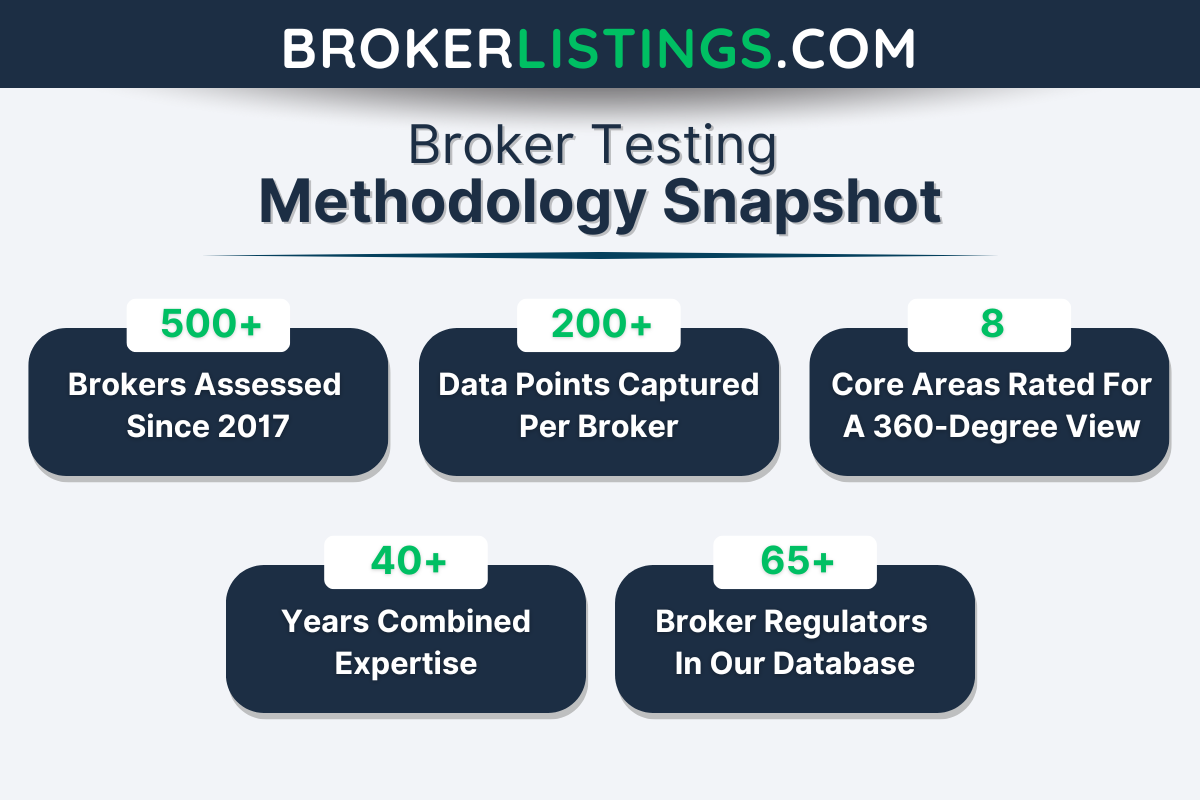
How We Chose The Cheapest Brokers
We evaluated 10+ types of fees across major asset classes (forex, stocks, commodities, crypto, CFDs), in addition to inactivity fees. Each broker received a cost rating from 0 to 5 (higher is better) based on affordability.
Next, we ranked brokers by their overall ratings, factoring in our hands-on testing to identify those with the lowest fees and the best trading experience.
Our exhaustive analysis ensures only the top budget-friendly brokers made the list.
What To Look For In A Low-Cost Broker
After years of trading forex, stocks, and indices, I’ve learned that securing a broker with the lowest fees can really impact your returns.
So, here are the key factors to weigh up when choosing a discount broker:
Low Spreads And Commissions
If you’re hunting for a low-cost broker, the first thing to check is spreads and commissions because those tiny costs add up fast. The tighter the spread, the less you pay to enter and exit trades and low commissions keep transaction costs down for frequent traders.
- Lower costs per trade – Every pip saved on the spread means more profit in your pocket.
- Better for active traders – If you’re scalping or day trading, tight spreads help maximize gains.
- Reduces slippage impact – Smaller spreads mean you enter and exit trades closer to your intended price.
Top Pick for Low Spreads and Commissions: IC stands out as one of the cheapest brokers we’ve analyzed. Spreads can hit absolute zero on top FX pairs like EUR/USD and you benefit from ultra-low commissions – just $3.50 per side per lot on the Raw Spread account, making it one of the most affordable. Deep liquidity and lightning-fast order processing mean better pricing for retail traders.
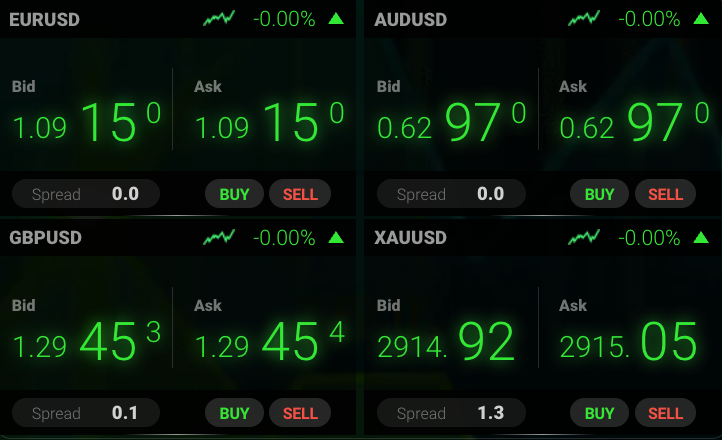
IC – Forex And Gold Spreads
Low Overnight Fees (Swap Rates)
If you hold trades overnight, swap fees (also known as rollover rates) can eat into your profits. Here’s why they matter:
- Lower holding costs – Some brokers charge hefty fees for keeping trades open past midnight.
- Better for swing traders – High swaps can seriously cut into gains if you hold positions for days or weeks.
- Important for margin traders – The cost of borrowing funds for leveraged trades adds up over time.
Top Pick for Low Swap Fees: Fusion Markets stands our from our tests with industry-leading low swap rates – among the most affordable swap fees across forex and CFD assets. You won’t get hit with sneaky fees that inflate the cost of holding trades. If you’re a swing trader holding positions for days or weeks, Fusion Markets keeps costs down.
No Markup On Market Prices
When a broker applies a markup to market prices, it can eat into your profits. Brokers that offer no markup on market prices provide more transparent and cost-effective trading.
Here’s why no markup on market prices matters:
- More accurate pricing – You get prices that reflect the true market value, not inflated costs.
- Better profit potential – No markups mean you can trade with fewer additional costs, leading to higher returns.
- Transparency – No hidden fees or tricks, just fair, transparent pricing.
Top Pick for No Markup on Market Prices: IC excels with its no-markup pricing, which is great for active traders. Get true ECN pricing – raw spreads starting at 0.0 pips without markups. What you see is what you get; no hidden costs or inflated spreads. Order execution is also fast and precise, with no manipulation of market prices. That’s why some of our testing panel personally use IC for live trading.
Low-Cost Forex Trading
Forex traders need a broker that keeps costs down, especially those trading frequently or with high leverage. Here’s why low-cost forex trading matters:
- Spreads eat into profits – The tighter the spread, the less you pay per trade.
- Commissions can add up – A broker with low or no commissions helps keep costs minimal.
- Better for high-volume traders – Every pip saved counts if you’re trading multiple lots daily.
Top Pick for Low-Cost Forex Trading: FOREX.com offers one of the most cost-effective setups for forex traders that we’ve seen. Get ultra-low spreads – as tight as 0.0 pips on major pairs like EUR/USD with a commission-based account. You can also trade forex commission-free with slightly wider spreads. Active traders can access rebates and tiered pricing to save even more.
Low-Cost Stock And Index Trading
If you’re trading stocks or indices, costs can pile up quickly. Tight spreads and low commissions are crucial to keep expenses in check. Here’s why:
- Lower costs per position – Stock and index CFDs can have wider spreads in our experience, so a broker with competitive pricing helps.
- Better for long-term traders – Lower costs mean higher potential profits if you hold positions for days or weeks.
- Ideal for diverse portfolios – Whether you trade the S&P 500, NASDAQ, or individual stocks, lower fees matter.
Top Pick for Low-Cost Stock and Index Trading: IG offers ultra-tight index spreads – as low as 0.4 points on major indices like the S&P 500. Also get competitive stock CFD commissions – just $0 on US shares and low fixed fees on global stocks.
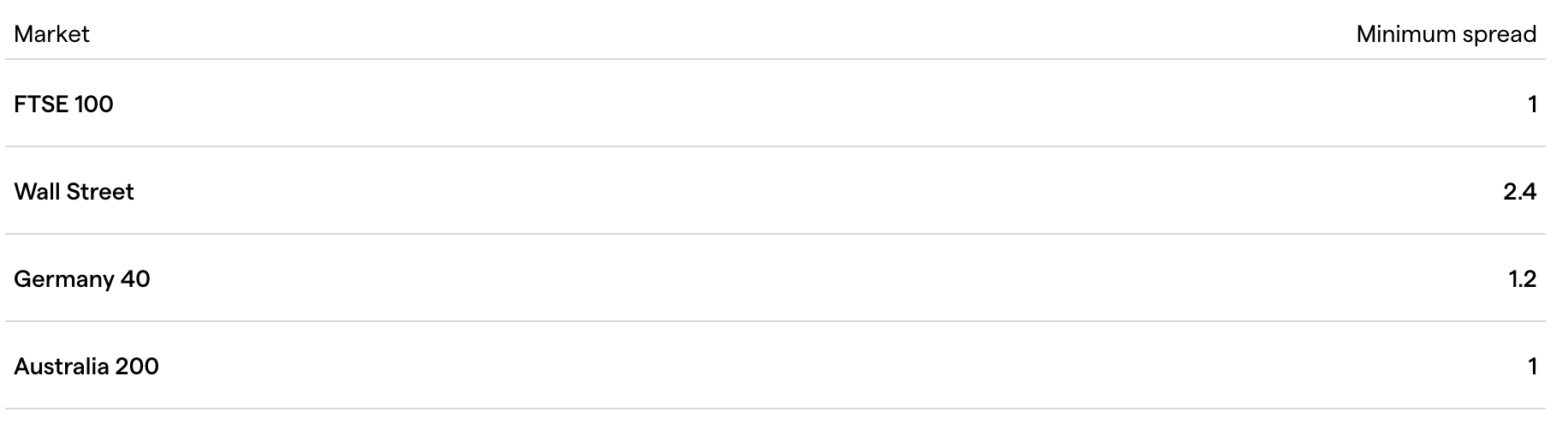
IG – Cash Index CFD Spreads
No Deposit And Withdrawal Fees
Funding and withdrawing from your trading account shouldn’t come with unnecessary costs. We’ve discovered some brokers charge hefty fees for deposits and withdrawals, cutting into your profits.
Here’s why fee-free funding matters:
- Keeps your money in your pocket – No extra charges just to access your funds.
- Ideal for frequent deposits/withdrawals – Active traders who move money often save big.
- Better for international traders – Some brokers charge currency conversion or bank transfer fees, so avoid them.
Top Pick for Free Deposits and Withdrawals: FXCC makes funding and withdrawing easy and cost-free with $0 deposit and withdrawal fees. It also supports multiple free payment methods – bank transfers, credit cards, and e-wallets without extra charges. Withdrawals are processed quickly with no unnecessary delays.
Fee Guides At Popular Brokers
Some brokers have complex fee schedules that vary based on the client’s region, account, and product. For some of these, we’ve built deep-dive guides to unpack the trading costs:
FAQ
What Types Of Fees Should I Expect To Pay When Trading?
- Spreads: This is the gap between the buying and selling price of an asset. Narrow spreads are better, especially for traders who make many transactions, such as scalpers.
- Commissions: These are fixed costs charged per trade, usually accompanied by raw spreads, preferred by those who want predictable pricing, such as day traders.
- Overnight Fees: If you hold a position overnight, you may incur costs based on interest rate differences between currencies. Some brokers offer swap-free accounts that waive these fees for religious reasons.
- Hidden Fees: These can include inactivity fees, withdrawal charges, currency conversions, and additional costs related to using leverage (borrowing money to trade).
Here’s how costs can add up in a trade:
Imagine you trade the S&P 500 (a popular US stock index) with a broker that has the following costs:
- Spread costs for trading: $0.50
- Commission for buying and selling: $4.00
- Fees for holding a trade overnight: $0.94 for two nights
- Currency conversion fee: $0.25
If you made a $50 profit, your net profit after these costs would be $44.31.