
Best Brokers in Russia
Following our firsthand tests, we’ve listed the top brokers for traders in Russia. These are trading providers that cater to Russian residents with access to popular commodities like oil and natural gas, alongside support for RUB-based accounts.
 Written By
Royston Wild
Royston is a seasoned investor and financial writer with over a decade of experience analyzing brokers and investment markets. With a background in stocks, commodities, and forex reporting - he brings a fresh perspective to broker evaluations.
Royston Wild Profile Page Fact Checked By
William Berg
William Berg combines his expertise in law and finance to analyze trading brokers. He has checked 3,250+ regulatory licenses, investigated 2,365+ broker clones and trading scams, and placed 3,500+ trades.
William Berg Profile Page Edited By
James Barra
James is an experienced broker analyst with a background in financial services. He has spent 2,500+ hours testing brokers, used 35+ different platforms and apps, audited 120+ broker T&Cs, and verified 300+ regulatory licenses. James has also been on US and UK TV, and been a guest on finance podcasts, discussing reports conducted by BrokerListings.com and sharing his expertise.
James Barra Profile PageMay 15, 2026
Some Russians may look for an overseas provider because the choice of locally approved brokers is limited. However this is high-risk – you may not get the same local legal protections or complaint routes compared with a broker licensed by Russia’s central bank.
-
1Grand Capital is a MetaTrader broker offering welcome bonuses and trading competitions. Their user-friendly copy trading service and numerous account types make it suitable for different traders and strategies. With over 400 assets available, there is a vast range of trading options. New users can swiftly set up an account and commence trading.
-
2Established in 2005, FXOpen is a broker with multiple regulations, attracting over 1 million traders. It caters to active trading, offering access to over 700 markets and supports high-frequency trading, scalping, and algorithmic trading using expert advisors (EAs).
-
3InstaTrade, located in the British Virgin Islands, is an online broker offering passive investment products and active trading via CFDs. It provides zero-spread accounts, excellent research through InstaTrade TV, and access to MT4 and its web-based InstaTrade Gear, attracting short-term traders of all levels.
Compare Brokers
| Broker |  |
Demo Account |
Minimum Deposit |
Minimum Trade |
Leverage |
Copy Trading |
Regulator |
Instruments |
Platforms |
Account Currencies |
Automated Trading |
AI |
Guaranteed Stop Loss |
|---|---|---|---|---|---|---|---|---|---|---|---|---|---|
 |
✓ | $10 | 0.01 Lots | 1:500 | ✓ | ✗ | CFDs, Forex, Indices, Shares, Energies, Metals, Cryptocurrencies | MT4, MT5 | USD, EUR, GBP, JPY, CHF, RUB | ✓ | ✗ | ✗ | |
 |
✓ | $100 | 0.01 Lots | 1:30 (EU, UK), 1:1000 (Global) | ✓ | FCA, CySEC, FC | CFDs, Forex, Stocks, Indices, Commodities, Crypto, ETFs | TickTrader, MT4, MT5, TradingView | USD, EUR, GBP, AUD, JPY, CHF, SGD, RUB | Expert Advisors (EAs) on MetaTrader | ✗ | ✗ | |
 |
✓ | $1 | 0.01 | 1:1000 | ✓ | ✗ | CFDs, Forex, Stocks, Indices, Commodities, Cryptos, Futures | InstaTrade Gear, MT4 | USD, EUR, RUB | Experts Advisors (EAs) on MetaTrader | ✗ | ✗ | |
| Broker | |
Demo Account |
Minimum Deposit |
Minimum Trade |
Leverage |
Copy Trading |
Regulator |
Instruments |
Platforms |
Account Currencies |
Automated Trading |
AI |
Guaranteed Stop Loss |
How Safe Are The Best Brokers In Russia?
We reviewed the account and fund safeguards available to Russian clients:
| Broker | Trust Rating |
Guaranteed Stop Loss |
Negative Balance Protection |
Segregated Accounts |
|---|---|---|---|---|
|
✗ | ✗ | ✓ | |
|
✗ | ✓ | ✓ | |
|
✗ | ✓ | ✓ | |
| Broker | Trust Rating |
Guaranteed Stop Loss |
Negative Balance Protection |
Segregated Accounts |
Mobile Trading Comparison
Mobile access is a priority for many investors in Russia - here’s how our top picks perform on smartphones:
| Broker | Mobile Apps |
iOS Rating |
Android Rating |
Smart Watch App |
|---|---|---|---|---|
|
✓ | ✗ | ||
|
iOS & Android | ✗ | ||
|
iOS & Android | ✗ | ||
| Broker | Mobile Apps |
iOS Rating |
Android Rating |
Smart Watch App |
Comparison for Beginners
Compare how suitable the Best Brokers in Russia are for beginners.
| Broker | Demo Account |
Minimum Deposit |
Minimum Trade |
Education Rating |
Support Rating |
Fractional Shares |
Demo Competitions |
|---|---|---|---|---|---|---|---|
|
✓ | $10 | 0.01 Lots | ✗ | ✓ | ||
|
✓ | $100 | 0.01 Lots | ✗ | ✓ | ||
|
✓ | $1 | 0.01 | ✗ | ✗ | ||
| Broker | Demo Account |
Minimum Deposit |
Minimum Trade |
Education Rating |
Support Rating |
Fractional Shares |
Demo Competitions |
Comparison for Advanced Traders
Compare how suitable the Best Brokers in Russia are for advanced or professional traders.
| Broker | Automated Trading |
VPS |
API |
AI |
Pro Account |
Leverage |
Low Latency |
Extended Hours |
|---|---|---|---|---|---|---|---|---|
|
✓ | ✗ | ✗ | ✗ | ✗ | 1:500 | ✗ | ✗ |
|
Expert Advisors (EAs) on MetaTrader | ✓ | ✓ | ✗ | ✗ | 1:30 (EU, UK), 1:1000 (Global) | ✓ | ✗ |
|
Experts Advisors (EAs) on MetaTrader | ✓ | ✗ | ✗ | ✗ | 1:1000 | ✗ | ✗ |
| Broker | Automated Trading |
VPS |
API |
AI |
Pro Account |
Leverage |
Low Latency |
Extended Hours |
Accounts Comparison
Compare the trading accounts offered by Best Brokers in Russia.
| Broker | Demo Account |
Interest on Cash |
Islamic Account |
Joint Account |
Managed Account |
PAMM |
MAM |
LAMM |
Pro Account |
|---|---|---|---|---|---|---|---|---|---|
|
✓ | ✗ | ✓ | ✗ | ✗ | ✗ | ✗ | ✓ | ✗ |
|
✓ | ✗ | ✓ | ✗ | ✗ | ✓ | ✗ | ✗ | ✗ |
|
✓ | ✗ | ✗ | ✗ | ✓ | ✗ | ✗ | ✗ | ✗ |
| Broker | Demo Account |
Interest on Cash |
Islamic Account |
Joint Account |
Managed Account |
PAMM |
MAM |
LAMM |
Pro Account |
Compare The Ratings Of Our Top Trading Brokers In Russia
See how our recommended brokers for Russian traders scored across the key categories in our testing:
| Broker | Trust |
Platforms |
Assets |
Mobile |
Fees |
Accounts |
Research |
Education |
Support |
|---|---|---|---|---|---|---|---|---|---|
|
|||||||||
|
|||||||||
|
|||||||||
| Broker | Trust |
Platforms |
Assets |
Mobile |
Fees |
Accounts |
Research |
Education |
Support |
Fee and Cost Comparison
Compare the cost of trading with the Best Brokers in Russia.
| Broker | Cost Rating |
Fixed Spreads |
Inactivity Fee |
CFD Stocks Spread |
EUR/USD Spread |
Crypto Spread |
|---|---|---|---|---|---|---|
|
✗ | $0 | From 1 pip (Standard) | From 1 pip (Standard) | From 0.4 pips | |
|
✗ | $10 | 0.40 (Apple) | 0.2 | 9.0 (BTC) | |
|
✗ | ✗ | 8 (Apple Inc) | 0.0 | 0 | |
| Broker | Cost Rating |
Fixed Spreads |
Inactivity Fee |
CFD Stocks Spread |
EUR/USD Spread |
Crypto Spread |
Customer Ratings
Compare how customers of these brokers feel about them, with real user ratings from Trustpilot, the Apple App Store and Google Play.
| Broker | Customers |
Trustpilot Score |
Trustpilot Reviews |
Android App Rating |
iOS App Rating |
|---|---|---|---|---|---|
|
1,500,000 | 95 | |||
|
1,000,000 | 462 | |||
|
7,000,000 | 16 | |||
| Broker | Customers |
Trustpilot Score |
Trustpilot Reviews |
Android App Rating |
iOS App Rating |
Broker Popularity
Many traders in Russia look for brokers with a strong reputation, broad client base and recognizable brand. Here’s how our leading providers measure up:
| Broker | Popularity |
|---|---|
| InstaTrade |
|
| Grand Capital |
|
| FXOpen |
|
Why Trade With Grand Capital?
Grand Capital might attract traders who use MetaTrader, as well as passive investors interested in copy trading and LAMM solutions. However, it lacks strong regulatory oversight and has a history of regulatory warnings.
Pros
- Fast and easy account opening
- Broad choice of payment methods and account currencies.
- The GC Invest platform is designed for copy trading.
Cons
- Basic training and market analysis are essential for traders.
- High spreads on some assets
- Limited regulatory oversight
Why Trade With FXOpen?
FXOpen is perfect for high-volume traders, providing quick execution with its ECN trading system, spreads starting from 0 pips, and reduced commissions as low as $1.50 per lot.
Pros
- FXOpen cut FX spreads by over 40% in 2022 and added commission-free index trading in 2023, lowering trading costs.
- FXOpen simplified its account offerings in 2024, offering user-friendly ECN accounts with raw spreads from 0.0 pips, fast execution speeds, and reduced commissions for high-volume traders.
- FXOpen launched TradingView in 2022 and improved its TickTrader platform in 2024. It provides Level 2 pricing, over 1,200 trading tools, and advanced order types, serving experienced and high-frequency traders.
Cons
- FXOpen has expanded its asset range, but it still offers fewer global stocks, commodities, and cryptocurrencies than BlackBull, limiting diverse trading opportunities.
- FXOpen offers limited education, with fewer courses and webinars than brokers like IG, making it less suitable for beginners.
- FXOpen remains a trusted broker authorized by the FCA and CySEC but lost its ASIC license in 2024 due to 'serious concerns.' It no longer accepts Australian traders.
Why Trade With InstaTrade?
InstaTrade provides active trading with a complete platform, extremely fast execution under 10ms, and VPS hosting, making it ideal for algo traders using rapid, high-volume strategies.
Pros
- InstaTrade TV provides video interviews and insightful market information about stocks, cryptocurrencies, and more. It assists in identifying opportunities for quick trading.
- InstaTrade provides approximately 300 assets for investment. It particularly shines in the area of currency pairs, making it an excellent platform for experienced traders interested in volatile exotics.
- InstaTrade provides a high-quality range of charting tools for traders. Its web trader includes over 250 indicators, 11 types of charts and a design that's easy to use.
Cons
- InstaTrade's learning resources are helpful for new traders but are not as organized or comprehensive as those provided by top companies such as eToro.
- InstaTrade is offshore and not regulated by a trusted authority, offering limited legal protections for retail investors.
- InstaTrade's website and client interfaces are quite complex which can be confusing for new traders. On the other hand, XTB offers a more straightforward and user-friendly trading experience.
Filters
How We Chose The Best Brokers For Traders In Russia
To build our shortlist, we assessed several key factors:
- Brokers preferably offered RUB account support. The ability to deposit, withdraw or manage a trading account in Russian rubles can make funding simpler for residents, while potentially reducing currency conversion costs. However, currency charges may still apply when trading assets priced in another currency, such as US stocks.
- We looked for firms offering popular markets in Russia, such as commodities like oil and natural gas. We also checked for access to popular global financial markets.
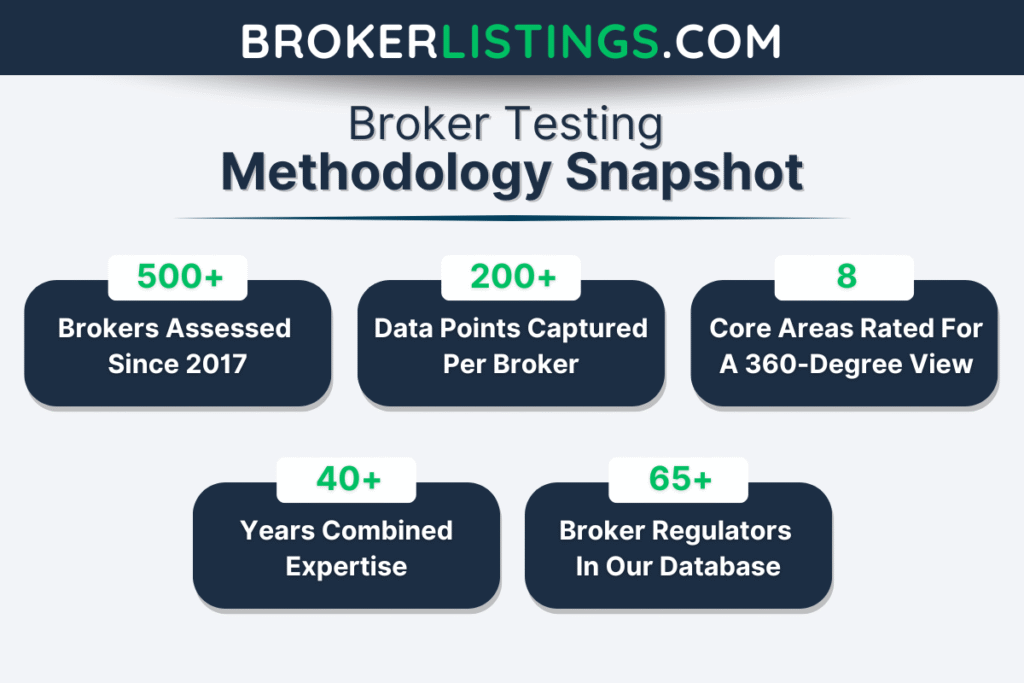
- We followed our rigorous testing process. Our team evaluated each firm across 8 core categories, collected more than 200 individual data points per brokerage, and documented the overall trading experience. These results fed into each broker’s rating and helped determine our final rankings.
How To Choose A Broker In Russia
Russia might not have the long record of trading and investing as other major economies do, following the collapse of the Soviet Union during the early 1990s. But it’s now home to a large and rapidly growing base of investors, even as Western economic sanctions and other consequences of the Ukraine conflict play out.
According to the Central Bank of the Russian Federation (CBR), the number of retail investors on the Moscow Exchange (MOEX) rose 50-fold between 2013 and 2025. These investors now make up almost three-quarters of those trading domestic shares.
The growth in investor participation has naturally led to an explosion in the number of brokers offering financial services. Unfortunately, it also means the number of fraudsters operating has risen sharply.
So what should you consider when choosing a broker in Russia? Here are the key things to look out for:
Trustworthiness
You’ll need to know you can trust the brokerage regardless of where in the world you’re trading from. Handing over money and personal information to unscrupulous people and entities can be an obvious recipe for disaster.
In 2025 alone, the CBR detected more than 7,000 financial scams and blocked 21,500 online sites operated by scammers. The problem is rising in complexity, too, as bad actors increasingly use artificial intelligence to fool unsuspecting investors.
To operate in Russia, brokers should be licensed by and adhere to strict rules laid down by the CBR. In its role as regulator, the central bank’s responsibilities include “developing and ensuring the stability of the Russian financial market” and “[protecting] the rights and legitimate interests of shareholders and investors in financial markets.”
Helpfully, the CBR provides an online Financial Market Participant Directory investors can use to check a broker’s regulatory status. The directory is only maintained using the Russian language, though non-speakers should be able to use their internet browser’s translation tool to use the facility. Be mindful though of translation errors that could misinterpret technical legal or financial terminology.
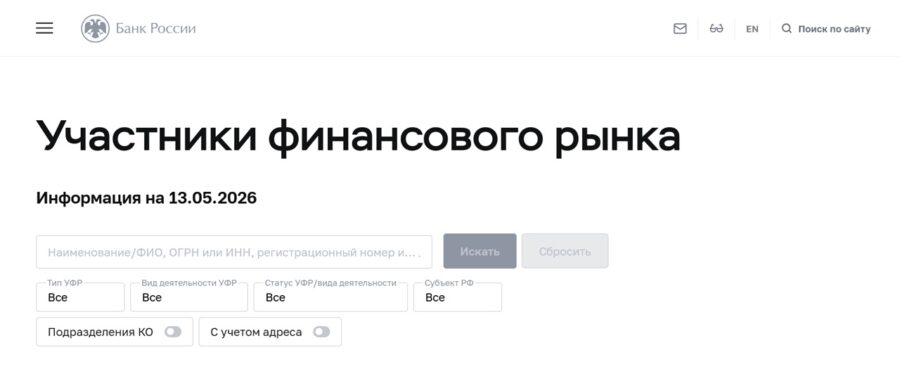
Source: CBR
The CBR also provides a warning list of companies that have been found providing illegal financial services in the country. This searchable resource is published in both Russian and English.
Pro tip: Though the CBR offers some protections, the level of safeguarding on offer trails that of other major global regulators by some distance. Accordingly, the central bank has been assigned Category C status under BrokerListings.com’s Regulator Ranking System.
Russian investors also cannot apply for financial redress if the broker they’re using goes bust and they lose money. This differs from the UK and the US, for instance, where brokers must be signed up to national compensation schemes (in these cases the Financial Services Compensation Scheme (FSCS) and the Securities Investor Protection Corporation (SIPC) respectively).
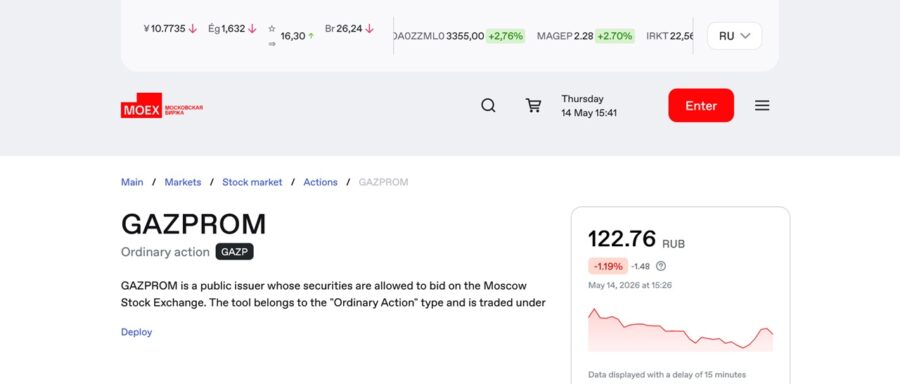
Source: MOEX
The number of CBR-licensed brokers is limited and has fallen further following the 2022 Ukraine conflict, as sanctions and compliance issues have reduced the presence of foreign financial services providers in the country. This means some Russian residents may turn to offshore brokers where investor protections are also limited (or even worse than those offered by the CBR). It’s important to understand this is a risk – you may lose access to local complaint channels and recourse options if you go overseas.
Pro tip: Whether or not you use a broker on the central bank’s ‘approved’ list, ensure that they are regulated by a respected global watchdog, ideally one which has achieved Category A status with BrokerListings.com.
Also consider things like how long they’ve been in operation, whether or not they hold a stock market listing, and how well they are regarded on consumer ratings platforms.
Trading Costs
Brokers that are CBR-regulated must provide a clear disclosure of the fees and charges that customers can expect. These include:
- Transaction charges.
- Account management fees.
- Deposit and withdrawal costs.
- Forex conversion fees.
- Bid (buy) and ask (sell) spreads.
- Premium service costs (like access to advanced market data or a better trading platform).
Some of these costs – particularly trading fees and spreads – can depend on things like the asset being bought or sold, and the levels of liquidity in the market. If you’re a frequent trader, it’s especially important to consider what you’ll be charged – in this case, high transaction costs and wide spreads can take an enormous bite out of profits.
Pro tip: Some brokers offer trading accounts where trades, profits and losses are all denominated in rubles. The range is limited, but it may be worthwhile depending on how and what you trade. Over time, currency-conversion costs can also be significant for high-volume investors.
Financial Markets
Russian traders can deal in a range of financial securities including forex, shares, bonds, exchange-traded funds (ETFs) and derivatives like contracts for difference (CFDs). However, the range of tradeable assets is far narrower than can be found in many other regions.
This reflects the reduced pool of brokerages in recent years, but that’s not all. Western sanctions have, for instance, seen the European Union restrict the sale of financial assets to Russians.
In response, Russia has fired back by suspending trades involving the US dollar (USD) and euro (EUR) on MOEX. Disruptions to international clearing and settlement systems have also restricted Russians’ access to particular securities and cross-border financial assets.
For these reasons, retail trading activity is concentrated around what can be bought and sold on MOEX, home to the country’s largest-listed companies including Gazprom and Sberbank. Russian corporate and government bonds are also widely traded on the exchange, as are forex pairings pitting the Russian ruble (RUB) against international currencies, and derivative instruments like futures and options contracts.
Pro tip: Currency trades involving the USD and EUR are also traded. However, those restrictions on MOEX forex trades mean popular pairings such as the USD/RUB and EUR/RUB are traded ‘over the counter’ and not on the exchange’s order book.
Trading Platform
Regardless of what you trade, you’ll want to know you can do it swiftly, easily, and with the aid of a sophisticated trading system. So consider the quality of the brokerage’s dealing software, and more specifically things like:
- Trade execution speeds.
- How customizable the user interface is.
- The availability of advanced charting tools.
- Security features for signing in and withdrawing funds.
- How easy it is to navigate the interface.
- The range of risk management tools.
- Access to customer service representatives.
Some brokers offer their own proprietary trading platforms, while others only allow you to trade via third-party software (like MetaTrader 5 (MT5) and TradingView). Some allow investors to use both.
Pro tip: You may be required to pay more for a broader range of trading tools and other resources from your broker. Consider whether this cost is worth it, based on how it improves your trading experience and the profits you make.
Bottom Line
Russia is home to an active investing community, although the number of licensed brokers operating in the country remains extremely limited.
Investors should be aware that the CBR’s protections from fraudsters and bad business practices are not as robust as in other major economies.
Finally, remember that the availability of brokers and the financial securities they provide could be subject to further changes as geopolitical tensions continue to intensify.
FAQs
Who Regulates Brokerages In Russia?
Financial markets are regulated by the Central Bank of the Russian Federation (CBR), which was established in 1990.
The number of firms licensed by the national regulator is extremely limited, however. And the protections the CBR provides investors lag behind those of many international financial watchdogs.