
Best Brokers in New Zealand
Based on our tests, we’ve listed the top brokers for traders in New Zealand. These are firms authorized by the New Zealand Financial Markets Authority (FMA), and many cater to residents with access to Asia-Pacific markets and support for NZD-based accounts.
 Written By
Royston Wild
Royston is a seasoned investor and financial writer with over a decade of experience analyzing brokers and investment markets. With a background in stocks, commodities, and forex reporting - he brings a fresh perspective to broker evaluations.
Royston Wild Profile Page Fact Checked By
Tobias Robinson
Tobias is committed to helping traders find the right brokerage for their needs. He has tested 200+ brokers, spent 2,600+ hours using different platforms, and placed 2,100+ trades.
Tobias Robinson Profile Page Edited By
William Berg
William Berg combines his expertise in law and finance to analyze trading brokers. He has checked 3,250+ regulatory licenses, investigated 2,365+ broker clones and trading scams, and placed 3,500+ trades.
William Berg Profile PageAugust 19, 2026
-
1BlackBull is a New Zealand CFD broker offering over 2,180 instruments. Rebranded in 2023, it features a modern design, professional trading tools, and average execution speeds of 20ms.✓ Supports NZD Accounts
-
2Plus500, founded in 2008 and based in Israel, is a leading brokerage with more than 25 million registered traders across 50+ countries. The company specializes in CFD trading, provides a user-friendly platform and mobile app, and offers competitive spreads. It does not impose commission, deposit, or withdrawal fees. Plus500 holds the trust of its traders by being licensed by well-known regulators such as FCA, ASIC, and CySEC.
-
3Founded in 1974, IG is part of IG Group Holdings Plc, a public company listed on the LSE as IGG. The brand provides access to over 17,000 markets with easy-to-use platforms and apps. For 50 years, IG has been an industry leader, excelling in all key areas for traders.
-
4Founded in 2007, Axi is a forex and CFD broker regulated by multiple authorities. It has enhanced its trading experience by expanding stock offerings, upgrading the Axi Academy, and launching a copy trading app.
-
5Moomoo is a regulated trading platform overseen by trusted regulators like the SEC. It provides a simple, cost-effective method to trade in stocks, ETFs, and various assets from China, Hong Kong, Singapore, the US, and Australia. They provide the option for margin trading, along with no minimum deposit requirement, and several bonus options.
New Zealand Trading Suitability Comparison
See how our top-rated firms stack up for traders in New Zealand:
| Broker |  |
NZD Account |
FMA Authorized |
|---|---|---|---|
 |
✓ | ✓ | |
 |
✗ | ✓ | |
 |
✗ | ✓ | |
 |
✗ | ✓ | |
 |
✗ | ✓ | |
| Broker | |
NZD Account |
FMA Authorized |
Broker Details Comparison
| Broker | Demo Account |
Minimum Deposit |
Minimum Trade |
Leverage |
Assets |
Platforms |
|---|---|---|---|---|---|---|
|
✓ | $0 | 0.01 Lots | 1:30 | CFDs, Stocks, Indices, Commodities, Futures, Crypto | BlackBull Invest, BlackBull CopyTrader, MT4, MT5, cTrader, TradingView, AutoChartist |
|
✓ | $100 | Variable | ✓ | CFDs on Forex, Stocks, Indices, Commodities, ETFs, Options, Crypto | WebTrader, App |
|
✓ | $0 | 0.01 Lots | 1:30 (Retail), 1:250 (Pro) | CFDs (not in US), Forex, Stocks, Indices, Commodities, ETFs, Futures, Options, Crypto, Spread Betting (UK only) | Web, L2 Dealer, MT4, TradingView, AutoChartist, TradingCentral, ProRealTime |
|
✓ | $0 | 0.01 Lots | 1:30 | CFDs, Forex, Stocks, Indices, Commodities, Crypto | Axi Copy Trading, MT4, AutoChartist |
|
✓ | $0 | $0 | 1:2 | Stocks, Options, ETFs, ADRs, OTCs ,Futures | Desktop Platform, Mobile App |
| Broker | Demo Account |
Minimum Deposit |
Minimum Trade |
Leverage |
Assets |
Platforms |
How Safe Are The Best Brokers In New Zealand?
FMA authorization is an essential starting point, but we also investigated the practical protections available to Kiwi clients:
| Broker | Trust Rating |
Guaranteed Stop Loss |
Negative Balance Protection |
Segregated Accounts |
|---|---|---|---|---|
|
✗ | ✓ | ✓ | |
|
✓ | ✓ | ✓ | |
|
✓ | ✓ | ✓ | |
|
✗ | ✓ | ✓ | |
|
✗ | ✗ | ✓ | |
| Broker | Trust Rating |
Guaranteed Stop Loss |
Negative Balance Protection |
Segregated Accounts |
Mobile Trading Comparison
Mobile access is now standard for many investors in New Zealand - here’s how our top Kiwi brokers perform on smartphones:
| Broker | Mobile Apps |
iOS Rating |
Android Rating |
Smart Watch App |
|---|---|---|---|---|
|
iOS & Android | ✗ | ||
|
iOS, Android & Windows | ✗ | ||
|
iOS & Android | ✓ | ||
|
iOS & Android | ✗ | ||
|
Yes (iOS & Android) | ✗ | ||
| Broker | Mobile Apps |
iOS Rating |
Android Rating |
Smart Watch App |
Comparison for Beginners
Compare how suitable the Best Brokers in New Zealand are for beginners.
| Broker | Demo Account |
Minimum Deposit |
Minimum Trade |
Education Rating |
Support Rating |
Fractional Shares |
Demo Competitions |
|---|---|---|---|---|---|---|---|
|
✓ | $0 | 0.01 Lots | ✗ | ✗ | ||
|
✓ | $100 | Variable | ✗ | ✗ | ||
|
✓ | $0 | 0.01 Lots | ✗ | ✗ | ||
|
✓ | $0 | 0.01 Lots | ✗ | ✓ | ||
|
✓ | $0 | $0 | ✓ | ✗ | ||
| Broker | Demo Account |
Minimum Deposit |
Minimum Trade |
Education Rating |
Support Rating |
Fractional Shares |
Demo Competitions |
Comparison for Advanced Traders
Compare how suitable the Best Brokers in New Zealand are for advanced or professional traders.
| Broker | Automated Trading |
VPS |
API |
AI |
Pro Account |
Leverage |
Low Latency |
Extended Hours |
|---|---|---|---|---|---|---|---|---|
|
Expert Advisors (EAs) on MetaTrader, cTrader Automate | ✓ | ✓ | ✓ | ✗ | 1:30 | ✓ | ✗ |
|
✗ | ✗ | ✗ | ✓ | ✗ | ✓ | ✗ | ✗ |
|
Expert Advisors (EAs) on MetaTrader, build your own on ProRealTime | ✓ | ✓ | ✓ | ✓ | 1:30 (Retail), 1:250 (Pro) | ✓ | ✓ |
|
Expert Advisors (EAs) on MetaTrader, Myfxbook | ✓ | ✓ | ✓ | ✓ | 1:30 | ✓ | ✗ |
|
Moomoo OpenAPI | ✗ | ✓ | ✓ | ✗ | 1:2 | ✓ | ✓ |
| Broker | Automated Trading |
VPS |
API |
AI |
Pro Account |
Leverage |
Low Latency |
Extended Hours |
Accounts Comparison
Compare the trading accounts offered by Best Brokers in New Zealand.
| Broker | Demo Account |
Interest on Cash |
Islamic Account |
Joint Account |
Managed Account |
PAMM |
MAM |
LAMM |
Pro Account |
|---|---|---|---|---|---|---|---|---|---|
|
✓ | ✗ | ✓ | ✗ | ✓ | ✓ | ✓ | ✗ | ✗ |
|
✓ | ✗ | ✓ | ✗ | ✗ | ✗ | ✗ | ✗ | ✗ |
|
✓ | GBP: 3.75% | ✗ | ✓ | ✓ | ✗ | ✗ | ✗ | ✓ |
|
✓ | ✗ | ✓ | ✗ | ✗ | ✓ | ✓ | ✗ | ✓ |
|
✓ | USD: 3.35% | ✗ | ✗ | ✗ | ✗ | ✗ | ✗ | ✗ |
| Broker | Demo Account |
Interest on Cash |
Islamic Account |
Joint Account |
Managed Account |
PAMM |
MAM |
LAMM |
Pro Account |
Compare The Ratings Of Our Top Trading Brokers In New Zealand
See how our recommended brokers for UK traders scored across the core areas in our hands-on testing:
| Broker | Trust |
Platforms |
Assets |
Mobile |
Fees |
Accounts |
Research |
Education |
Support |
|---|---|---|---|---|---|---|---|---|---|
|
|||||||||
|
|||||||||
|
|||||||||
|
|||||||||
|
|||||||||
| Broker | Trust |
Platforms |
Assets |
Mobile |
Fees |
Accounts |
Research |
Education |
Support |
Fee and Cost Comparison
Compare the cost of trading with the Best Brokers in New Zealand.
| Broker | Cost Rating |
Fixed Spreads |
Inactivity Fee |
CFD Stocks Spread |
EUR/USD Spread |
Crypto Spread |
|---|---|---|---|---|---|---|
|
✗ | $0 | No mark-up | 0.16 | 12 average (Bitcoin) | |
|
✗ | $10 | 1.28 (Apple) | 0.6 | Variable | |
|
✗ | $12 | 0.02 | 0.86 | Variable | |
|
✗ | $10 | 0.07 | 0.2 | From 0.0 | |
|
✗ | $0 | $0 per trade | ✗ | 0.49% per spot Bitcoin trade (US), 0.3% to 0.39% (Singapore) | |
| Broker | Cost Rating |
Fixed Spreads |
Inactivity Fee |
CFD Stocks Spread |
EUR/USD Spread |
Crypto Spread |
Customer Ratings
Compare how customers of these brokers feel about them, with real user ratings from Trustpilot, the Apple App Store and Google Play.
| Broker | Customers |
Trustpilot Score |
Trustpilot Reviews |
Android App Rating |
iOS App Rating |
|---|---|---|---|---|---|
|
✗ | 3,496 | |||
|
32,000,000 | 19,927 | |||
|
753,000 | 10,054 | |||
|
60,000 | 7,766 | |||
|
24,000,000 | 506 | |||
| Broker | Customers |
Trustpilot Score |
Trustpilot Reviews |
Android App Rating |
iOS App Rating |
Broker Popularity
Many traders in New Zealand prefer brokers with a large customer base and brand presence. Here’s how our top providers compare:
Why Trade With BlackBull?
After upgrading its London Equinix servers to reduce trading delays, BlackBull is a strong option for stock CFD trading with ECN pricing. Its competitive spreads and commission-free USD crypto pairs also suit active crypto traders.
Pros
- BlackBull has partnered with ZuluTrade and Myfxbook, enhanced its own CopyTrader, and enabled cTrader Copy, offering a comprehensive trading experience.
- BlackBull is better suited to new traders after updating its ECN Prime account, with average EUR/USD spreads of 0.16 and no minimum deposit, down from $2,000.
- BlackBull provides all essentials for traders, including execution speeds under 100ms and tight spreads starting at 0.0 pips.
Cons
- The Education Hub now includes webinars and tutorials, but the courses still need to better explain the broader economic factors that affect prices.
- Unlike most top brokers, BlackBull charges a $5 withdrawal fee, which can reduce cost-effectiveness, especially for active traders who often transfer funds.
- Despite offering 2,180+ assets, including new Asia Pacific indices, its selection is mainly stocks, with an average range of currency pairs and indices.
Why Trade With Plus500?
Plus500 provides a streamlined experience for traders through a modern and dynamic CFD trading platform. However, its research tools are limited, it charges higher fees compared to some brokers, and its educational resources can be improved.
Pros
- The broker provides low-commission trading across various markets, reducing extra fees and attracting experienced traders.
- Plus500 offers a WebTrader platform specifically made for CFD trading. It presents a neat and straightforward interface.
- In 2025, Plus500 introduced new share CFDs in emerging sectors such as quantum computing and AI, providing opportunities in stocks like IonQ, Rigetti, Duolingo, and Carvana.
Cons
- Without social trading, users cannot follow or copy experienced traders’ trades.
- Plus500 does not support MetaTrader or cTrader charting tools, which may be a drawback for advanced traders who prefer these platforms.
- Compared to competitors like IG, Plus500's research and analysis tools are somewhat limited.
Why Trade With IG?
IG offers a complete package with an easy-to-use web platform, top-notch education for beginners, advanced charting tools with TradingView integration, real-time data, and strong trade execution for experienced traders.
Pros
- IG received an FCA crypto asset license, allowing it to return to the UK market with buying, selling, and storage for 55+ digital tokens. Fees start at 1.49% in an FCA-licensed environment.
- The IG app provides an excellent mobile trading experience with a clean design that earned it the Runner Up spot in our 'Best Trading App' award.
- The proprietary web-based platform serves traders at all levels, offering advanced charting tools and real-time market data for trading. IG has also integrated TradingView.
Cons
- IG has stopped its swap-free account, making it less attractive to Islamic traders.
- Beginners may find IG's fees confusing, as there are different charges for various trades and services, possibly resulting in unexpected costs.
- In the UK and EU, there is negative balance protection, but US clients do not have account protection or guaranteed stop losses.
Why Trade With Axi?
Axi is an excellent choice for trading forex on the MetaTrader 4 platform. It offers over 70 currency pairs, the MT4 NextGen upgrade, and tight spreads from 0.2 pips with the Pro account.
Pros
- Axi's new copy trading app is intuitive, offering helpful filtering options to align strategies with individual risk preferences.
- Axi provides an excellent MT4 experience, enhanced with the NextGen plug-in for advanced order management and analytics, featuring low execution latency of about 30ms.
- The expanding educational resources in the Axi Academy, including free eBooks, video tutorials, and interactive quizzes, effectively support beginner traders.
Cons
- Although it expanded stock CFDs in the US, UK, and EU, its selection remains smaller than firms like BlackBull, which offer thousands of equities.
- Axi lags behind because it only provides MT4, while many competitors now offer MT5, cTrader, TradingView, and custom software for a smoother experience with better tools.
- Axi remains reliable, but recent issues with the ASIC and FMA require it to consistently ensure a secure environment while complying with licensing conditions.
Why Trade With Moomoo?
Moomoo is a great option for beginner and intermediate traders aiming to diversify their investment portfolio. The brokerage's app is easily navigable and the trading fees are significantly low.
Pros
- Moomoo is a FINRA and SIPC member, providing additional security for potential clients interested in trading.
- Moomoo offers detailed analytics and insights compared to other brands.
- API Skills offers agentic investing for retail traders. Users can connect their AI agents, such as Claude or OpenAI, to Moomoo's platform to execute algorithmic strategies using natural language.
Cons
- Moomoo has received several regulatory penalties lately, including fines and orders in 2026 that temporarily halted the acceptance of some Japanese and Chinese clients.
- The account options are limited compared to similar brokerages, with no managed portfolios or robo-advisor solutions.
- No negative balance protection, a standard safety feature at top-tier regulated brokers.
Filters
How We Chose The Best Brokers For Traders In New Zealand
To make our shortlist, we considered several factors:
- Brokers had to be regulated by the FMA. This was non-negotiable. We checked each broker’s status using the List of Licensed and Reporting Entities. We didn’t just relying on marketing claims on each broker’s website.
- Brokers preferably offered a NZD trading account. The ability to deposit and trade in New Zealand dollars can help reduce conversion fees and make account management smoother. We confirmed NZD availability either when we signed up for test accounts or directly with brokerages’ support teams. Note that FX charges can still apply when you trade assets priced in another currency, such as Australian equities.
- Brokers had to provide access to markets relevant to Kiwi traders. We looked for firms with products commonly traded by residents in New Zealand, such as stocks and indices on the New Zealand stock market and Australian Securities Exchange, as well as currency pairs containing the NZD. We tested platforms ourselves to verify what clients in New Zealand can access, while also looking for wider access to global markets.
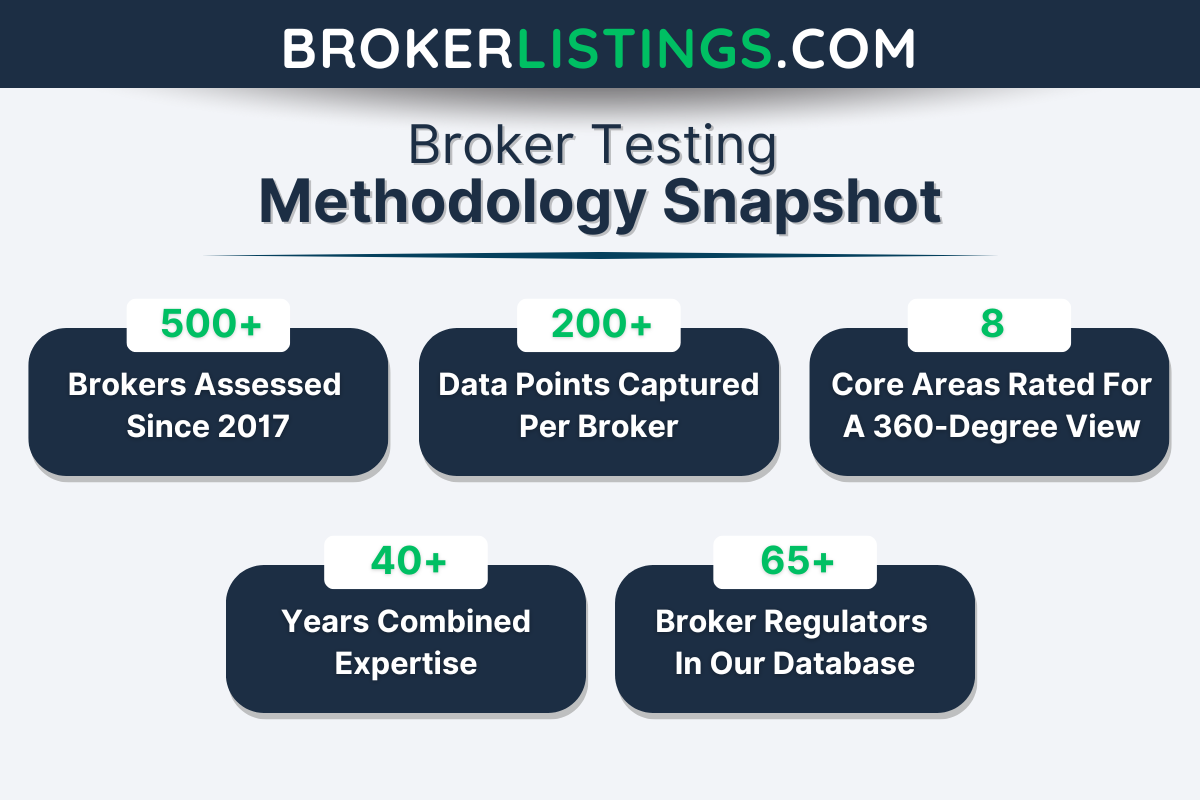
- We followed our rigorous testing process. Our team evaluated each firm in 8 core categories, gathered more than 200 individual data points per brokerage, and documented the trading experience. Those results fed into an overall rating for each broker and helped determine the final rankings.
How To Choose A Broker In New Zealand
The number of New Zealanders that regularly invest is growing as people’s knowledge and understanding of financial markets grows. A sharp rise in the number of online trading platforms in recent years is also fueling this increase.
Roughly one in three people in New Zealand hold positions in the stock market, making its citizens the fifth-most active investors on the planet. But as with other regions, an explosion in financial market participation has created an unfortunate boom in the number of online fraudsters.
It’s therefore critical to know the broker you’re considering is legitimate. But that’s not all you need to check for.
Want to know the key questions to ask when selecting a brokerage? After hours of testing we’ve narrowed it down to the following four:
1. Can I Trust The Broker?
Research shows that New Zealanders lost a whopping $265 million New Zealand dollars (NZD) to scammers over a 12 month period. With the number of bad actors rising, and their methods of defrauding people becoming ever-more sophisticated, it’s critical that individuals take steps to protect themselves.
The best way is to check the broker you’re considering is licensed by the Financial Markets Authority (FMA). This is New Zealand’s chief market regulator, whose self-stated objective is to “license and supervise financial services providers, enforce standards, and provide guidance to help firms comply with the law.”
Companies that fail to maintain good business practices can be subject to strict sanctions. This also applies to entities found trading without authorization. These can include financial penalties, suspension of the trading license, and banning people and companies from operating altogether.
The FMA is effective in creating a more secure environment for financial markets to operate in, and for establishing strong safeguards for traders and investors. As a consequence, it’s been awarded Category A status under BrokerListings.com’s regulator ranking system.
Individuals can quickly and simply ascertain a broker’s regulatory status by using the New Zealand Company Office’s Financial Service Providers Register (FSPR).
The FMA, meanwhile, provides a warning list of individuals and firms investors should avoid. It also maintains a database of companies who have been offering financial services without being listed on the FSPR.
Pro tip: FMA-registered brokers must also be registered with an approved dispute resolution scheme, like the Financial Dispute Resolution Service (FDRS). This means traders have access to an independent body that can investigate complaints and award compensation where appropriate.
Top broker for trustworthiness: BlackBull has held a license with the FMA since October 2014 (Financial Services Provider (FSP) number 403326), registered under the name Black Bull Group Limited. It has a clean regulatory record in New Zealand with zero instances of rule breaches and enforcement action.
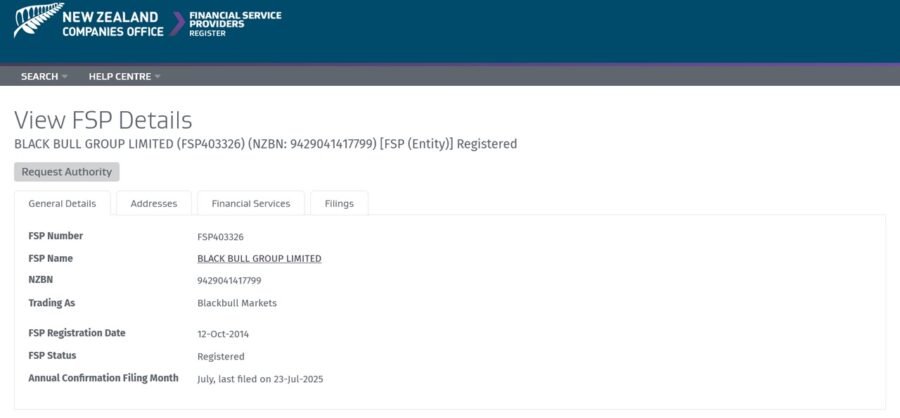
Source: FSPR
2. What Are The Trading Costs?
The amount of money a trader needs to spend may depend on the level of service they require. Want a comprehensive library of trading guides, advanced charting tools for technical analysis, or access to premium research? You may have to pay extra for that.
That said, some brokers charge higher-than-average fees even when not offering additional perks. Under FMA rules, service providers must clearly disclose all fees, charges and other costs, but there is no cap on what they can charge.
It therefore pays to shop around and to closely check a brokerage’s trading fees before signing up. Important things to consider are transaction charges, management fees, charges for depositing and withdrawing cash, and currency conversion costs.
Pro tip: Investors can avoid expensive foreign exchange charges by using a broker that offers accounts denominated in the New Zealand dollar (NZD). These accounts can also make portfolio management and analysis simpler.
Top broker for trading costs: Axi’s standard accounts offer zero trading commissions, no deposit fees, and free withdrawals above NZD$80.
The broker has compensated for this by raising its bid (buy) and ask (sell) spreads. These are the difference between the price a trading platform is willing to buy a security for and the price it’s happy to sell it for. However, Axi’s spreads are still narrower than many other service providers offering the same no-trading-fee models.
Pro tip: Most brokers accept a variety of payment methods from customers, including bank transfer and credit card payment. The passage of the Customer and Product Data Act 2025 – which lets individuals securely share bank data and authorize third-party payments – could open up new payment routes for traders to deposit cash going forwards.
3. What Securities Can I Buy And Sell?
Share investors often trade securities on the New Zealand Exchange (NZX), and especially those on the NZX Main Board, home to the country’s largest companies. Traders can also deal in small-cap growth shares on this central board, along with exchange-traded funds (ETFs), bonds, and derivatives (like futures contracts).
Forex trading is also extremely popular, with local investors pitting the NZD against other major and minor currencies. The NZD/USD cross, which matches the ‘Kiwi’ against the US dollar, is especially popular.
Pro tip: The NZD is a popular currency with traders across the globe, though trading it through pairings that don’t involve widely used currencies such as the USD, EUR (euro), JPY (Japanese yen) and GBP (British pound) may be difficult due to availability and more expensive with slower execution due to liquidity challenges. Availability issues can also be experienced with trading small-cap stocks on the NZX.
Want to buy shares in New Zealand Rural Land Company, for instance, which invests in agricultural and forestry land? Limited liquidity means not all brokers may offer this smaller company’s stock.
The same restrictions impact assets on overseas exchanges. However, traders in New Zealand should often be able to buy and sell other large-cap equities on major trading venues like the Australian Securities Exchange and New York Stock Exchange, as these are widely supported by brokerages.
Top broker for range of securities: CMC Markets offers an enormous range of securities – for instance, more than 12,000 contracts for difference (CFDs) are available across markets including forex, stocks, commodities and cryptocurrencies. There are also more than 300 currency pairings available to trade, including over 30 NZD currency pairs. The CMC NDZ index is also provided.
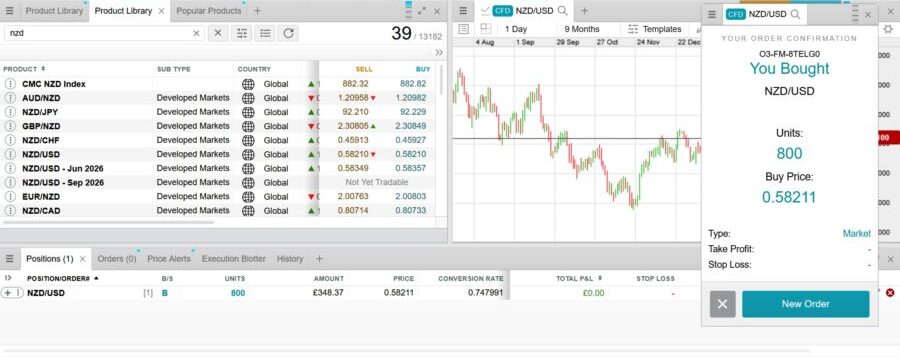
CMC Markets Platform
4. Does The Trading Platform Meet My Needs?
The quality of the trading platform and its functionality can differ significantly among brokerages (we know we’ve spent thousands of hours testing trading platforms and apps). If factors like advanced charting tools, news feeds, investing guides and advanced market orders (like a market-to-limit instruction) are important to you, think about how much extra you’d be prepared to pay for them.
Some other things are non-negotiables, however, like fast execution speeds if you’re a short-term trader, a stable platform during busy periods, strong security features (like two-factor authentication during sign in) and on-hand customer service.
Pro tip: Think about taking the broker for a ‘test drive’ by opening a demo investing account. This way, you can assess a number of different platforms without having to make multiple cash deposits.
Top broker for trading platform: IG offers a quick, intuitive and highly customizable proprietary desktop platform. It offers free trading courses for both new and experienced investors, advanced market instructions, trader alerts, and customer service support 24/7 from Saturday morning to late Friday evening.
IG is also great when it comes to offering a flexible trading experience. It’s possible to trade on the go with a dedicated mobile app. Customers can also plug in third-party software like ProRealTime and MetaTrader4 (MT4) to hone their trading strategy and place trades.
Bottom Line
New Zealand is home to a vibrant community of traders and investors. High financial market participation means there are many companies out there offering brokerage services, so take the time to find the best service provider for your needs.
The FMA provides strong protection against bad business practices and scammers. But as is the case in other regions, investors can still get stung and capital is ultimately at risk, so do your research before handing over any money or personal information.
FAQs
Who Regulates Brokerages In New Zealand?
Brokers must register with the Financial Markets Authority (FMA) to do business in New Zealand. The body has described its role as “promoting and facilitating fair, efficient, and transparent financial markets in New Zealand,” and will supervise firms’ conduct and enforce sanctions when it deems wrongdoing has occurred.
Can I Open An Account In New Zealand With NZD As My Base Currency?
Trading in your local currency can save you a fortune in currency conversion fees and makes portfolio management simpler. Fortunately for traders in New Zealand, a number of brokers offer trading using the NZD. Be mindful, though, that it may still be cheaper overall to use an account denominated in overseas currencies like the USD, depending on what you trade and how often.