

Is XTB Good For Beginners?
XTB is a good fit for beginners because of its low entry requirements, demo access, intuitive xStation platform, and excellent education.
 Written By
Christian Harris
Christian is a seasoned analyst, leveraging his expertise in stocks, forex, and crypto to evaluate brokers worldwide. With hands-on trading experience and a strong focus on risk management, he helps traders find reliable platforms. Christian's work for BrokerListings.com has been cited in the Financial Times.
Christian Harris Profile Page Fact Checked By
Tobias Robinson
Tobias is committed to helping traders find the right brokerage for their needs. He has tested 200+ brokers, spent 2,600+ hours using different platforms, and placed 2,100+ trades.
Tobias Robinson Profile Page Edited By
James Barra
James is an experienced broker analyst with a background in financial services. He has spent 2,500+ hours testing brokers, used 35+ different platforms and apps, audited 120+ broker T&Cs, and verified 300+ regulatory licenses. James has also been on US and UK TV, and been a guest on finance podcasts, discussing reports conducted by BrokerListings.com and sharing his expertise.
James Barra Profile PageOctober 7, 2026
12 Reasons XTB Works For New Traders
Here’s why XTB suits beginners:
- $0 minimum deposit: You can start small while you learn. The minimum trade is also accessible at 0.01 lots on forex and $10 for real stocks and ETFs.
- Demo account: It takes less than 5 minutes to open a demo account, providing access to xStation to practice placing orders and testing strategies before risking real money.
- One clean platform: There are no chart-heavy third-party platforms like MT4/MT5 that best suit experienced traders; beginners can stick to the clean, user-friendly and web-accessible or mobile app version of xStation.
- Built-in education: There are videos, guides and platform tutorials that help new traders learn without leaving the app. There are also strong resources accessible for free on the XTB website. I’d recommend beginners start with ‘7 Steps to Your First Trade‘.
- Trader’s Calculator: Available in the platform, it’s useful for planning trades, showing margin, commission and other costs.
- Risk management tools: Stop loss, take profit and easy-to-set-up price alerts help beginners plan exits before entering a trade.
- Negative balance protection: Retail clients in eligible regions like the UK and Europe won’t see their accounts drop below zero, even in volatile markets.
- Investment Plans: XTB has brought in hands-off ETF portfolios that suit newer users who aren’t yet ready or inclined to trade actively.
- Fractional shares and ETFs: Users can invest smaller amounts in real stocks and ETFs, instead of needing to buy full shares – ideal for beginners and those with less capital.
- Low-cost stock and ETF investing: Commission-free stock and ETF investing is available, up to monthly limits, in some regions, keeping pricing straightforward to understand compared with firms who charge spreads and commissions.
- Clear account reporting: Open positions, history, margin and cash balances are easy to monitor in xStation – both in the web platform and mobile app.
- 24/5 live chat: There’s fast and helpful support to assist newer traders with questions about the xStation platform, account settings, and other teething issues. We’ve tested the support multiple times, and often get responses from real agents on live chat within 2 minutes, and sometimes in as little as 20 seconds.
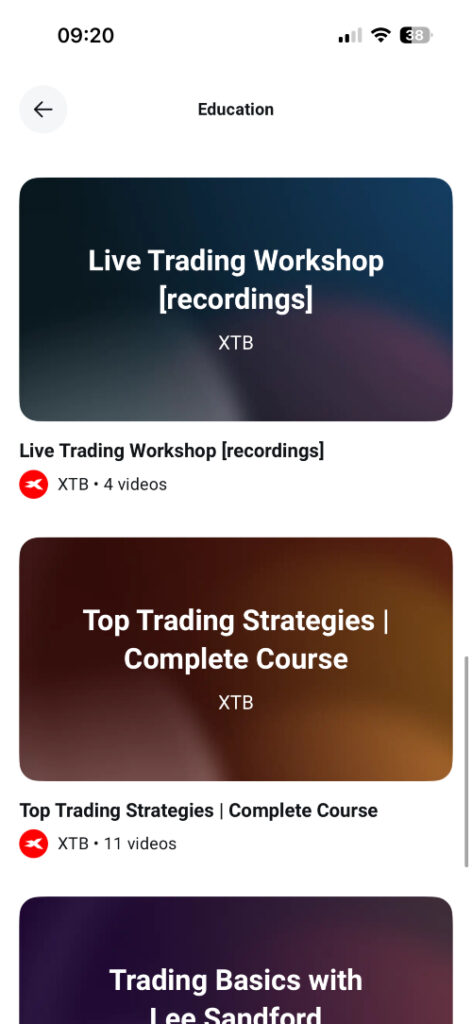
The XTB app has a dedicated section for ‘Education’, featuring guides and videos
Where Beginners Need To Be Careful
While XTB overwhelmingly meets the needs of beginner traders, it’s not perfect:
- CFDs involve leverage: Despite moving into longer-term investment products like Investment Plans in recent years, it still offers CFDs in many markets, where its own warning notes 69-80% of retail accounts lose money. Leveraged CFDs are high risk and can increase both gains and losses.
- Leverage is fixed, so you cannot reduce it for individual trades: This removes a simple risk control that cautious beginners might prefer. A broker with manual leverage adjustments would benefit newer traders.
- The demo account runs out after 30 days in some regions. The demo mode is easy to sign up for, but it runs out after 30 days, and some newer traders would be better having more time to learn how xStation works and to trial strategies. That said, if you open a live account the demo mode stays available indefinitely, and given there’s no minimum deposit, it’s an easy fix.
- There’s a $10 inactivity fee. XTB charges $/£/€10 if you haven’t traded in 365 days and haven’t made a deposit in 90 days, which may catch out beginners who try trading and then go idle. A broker with no inactivity fee may work better. Alternatively, you could buy a fractional share to avoid this charge or set a simple calendar reminder to check whether to close your XTB account.
Bottom Line
If you’re a new trader wanting a simple platform with built-in learning resources and no pressure to deposit a large amount, XTB is one of the easier options. The key is to stay disciplined: use the demo account seriously, keep your positions small, and be careful with leverage, as that is what often causes problems for new traders.