

Fake Celebrity Investment Ads Are Getting Better: Here’s How To Spot Them
 Written By
Christian Harris
Christian is a seasoned analyst, leveraging his expertise in stocks, forex, and crypto to evaluate brokers worldwide. With hands-on trading experience and a strong focus on risk management, he helps traders find reliable platforms. Christian's work for BrokerListings.com has been cited in the Financial Times.
Christian Harris Profile Page Fact Checked By
Tobias Robinson
Tobias is committed to helping traders find the right brokerage for their needs. He has tested 200+ brokers, spent 2,600+ hours using different platforms, and placed 2,100+ trades.
Tobias Robinson Profile Page Edited By
James Barra
James is an experienced broker analyst with a background in financial services. He has spent 2,500+ hours testing brokers, used 35+ different platforms and apps, audited 120+ broker T&Cs, and verified 300+ regulatory licenses. James has also been on US and UK TV, and been a guest on finance podcasts, discussing reports conducted by BrokerListings.com and sharing his expertise.
James Barra Profile PageMay 6, 2026
You’ve probably seen them by now. Someone famous pops up in your Facebook feed. Maybe it’s Elon Musk talking about some AI trading bot. Or a local news personality you trust explaining a “revolutionary” way to grow your savings. The video looks legit. The person sounds like themselves. There’s even a professional-looking news article backing it up. But it’s completely fake – all of it.
Deepfake investment scams have gotten so good that even tech-savvy people are getting fooled. The AI voice cloning is spot-on. The face mapping looks real. And the whole setup, from the celebrity endorsement to the fake BBC article to the deposit page – feels incredibly professional. Almost anyone could fall victim.
This is a problem everywhere. In the UK, more than £10 million was lost in a single year to fraudsters who used fake adverts with celebrities. Skip across the globe and Australia has seen a 25% jump in fake celebrity finance endorsements, spurred on by AI. While in the US, the FBI has explicitly warned about criminals using “generative AI tools to create images of celebrities or social media personas”.
Essentially, AI has made it dirt cheap to produce convincing fakes. You don’t need to be a tech genius anymore – just some software, a script, and a social media ad budget.
Let us show you exactly how these scams work by walking through three case studies – you’ll then be able to spot them from a mile away.
Why People Fall For These Videos
These scams don’t work because people are stupid or careless. They work because the technology has gotten really, really good.
Early deepfakes you could spot a mile away – grainy, jittery, obviously fake. But now we’re talking 1080p video with clean lighting, smooth facial blending, and realistic head movements. When you’re scrolling through your feed, these things look completely legitimate.
And think about how most of us actually encounter these ads – on our phones, usually while we’re half-distracted. Those small screens hide all the subtle giveaways that might jump out at you on a bigger monitor. The blurred edges, the tiny distortions in the lighting, the micro-glitches around the face – they all get lost on a 6-inch screen.
But honestly, the psychology is what often gets people. When you see a familiar face, your guard goes down automatically. Your brain basically goes, “Oh, I know this person” and treats that recognition as a reason to trust them.
If you’ve seen someone on TV or in interviews before, you’re already halfway to believing whatever they’re saying before you even think about whether it makes sense. That’s exactly what scammers are counting on.
Just How Bad Has It Gotten?
Investment fraud costs people billions of dollars every year in the US alone, according to the FTC.
Celebrity deepfake scam ads were most reported to the Advertising Standards Authority (ASA) in the UK in 2024, and the National Anti-Scam Centre of Australia reports a surge in fake ads using celebrity faces to push dodgy trading platforms.
And here’s what makes them so dangerous: they don’t look like scams. They look like interviews, news segments, and professional advertisements. That polished appearance is exactly what hooks people.
We expect the quantity and the adverse impacts of these sorts of scams to only increase in the coming years, making it essential everyday people know the red flags to look out for.
Case Studies
We’ve done a deep-dive on three real fake celebrity investment scams. Let’s walk through what makes them so compelling.
Case Study #1: Elon Musk AI Trading Bot Scam
Elon Musk plus AI plus easy money? That’s marketing gold for scammers.
This scam isn’t just a rearranged video clip – it’s a manufactured persona funnel. Scammers used AI-assisted face and voice techniques to create a pseudo-interview of Elon Musk promoting a “secret AI trading bot” that supposedly delivers consistent daily returns.
The generated assets were then used in paid ads on YouTube, Facebook, and other platforms that linked to cloned news sites and fake broker landing pages.
Technically, this relied on two overlapping AI pipelines:
- Visual synthesis: Modern facial generation tools (e.g., GANs and diffusion-based systems) learn a person’s facial geometry, expressions, lighting responses, and muscle dynamics from hours of publicly available footage. The scam visual isn’t a single manually edited deepfake clip – it’s an AI-generated output that maps Musk’s features onto a generated script.
- Voice cloning: A separate model is trained on clear audio samples (podcasts, interviews, press conferences) to replicate the cadence, tone, and inflection of his speech. This is why many of these scam videos have a fluent but slightly flat delivery – they’re synthesised, not recorded.
The result is a video that looks like Musk speaking naturally, but with subtle technical artefacts if you know what to look for.

This style of scam typically follows a three-layer layout designed to engineer trust:
- Paid social ad thumbnail + headline Example: “Elon Musk reveals a new AI trading system making $800/day.”
- Fake news article page Styled to mimic a reputable outlet (e.g., BBC, CNBC) with faux logo, stock news layout, and an embedded video – this is where the deepfake lives.
- Broker landing page after the article, with users routed to a registration form that pushes contact capture and, eventually, deposits.
This structure isn’t accidental. Each layer lowers suspicion:
- The paid ad grabs attention.
- The cloned news page borrows credibility.
- The broker page pushes commitment.
That’s a psychological funnel – not an investing education.
Case Study #2: Martin Lewis Consumer Finance Deepfake
This deepfake of Martin Lewis was being used to promote a fake investment project linked to Elon Musk. This wasn’t just a fake video. It was a coordinated funnel.
Scammers used AI to generate a fabricated video of Martin Lewis appearing to endorse a high-return investment platform. The clip was then embedded in a fake news article designed to appear like a legitimate UK broadcaster.
Technically, the video likely combined two elements:
- Face manipulation trained on broadcast footage.
- Voice cloning trained on radio and TV audio.
Martin Lewis has years of high-resolution studio interviews online. That’s ideal training data. A model can learn facial movement patterns, lighting behavior, and speaking rhythm. Once trained, it can generate new mouth movements in sync with synthetic speech.
In most versions of the scam we’ve seen, the voice was clean but slightly flat. Emotional emphasis didn’t always match the words. There were occasional microdelays between mouth movement and sound. On a desktop monitor, you might notice it. On a phone, it looks convincing.
But the deepfake wasn’t the only deception. The video often sat inside a cloned “news article” page. Here’s how the structure worked:
- Headline in bold black font Example: “Martin Lewis Reveals Passive Income Secret on Morning TV.”
- News logo at the top Often styled to mimic a major UK broadcaster.
- Stock photo of a TV studio Used to reinforce credibility.
- Embedded deepfake video Positioned above the fold.
- Article text written in a conversational tone It often included fake quotes and “live TV moment” language.
- Call-to-action buttons ”Start with £250 Today” or “Limited Spots Remaining.”
- Fake comment section Dozens of positive testimonials were posted within minutes of each other.
This layout matters. The deepfake alone creates attention. The news-style wrapper creates trust. That combination increases conversion rates.
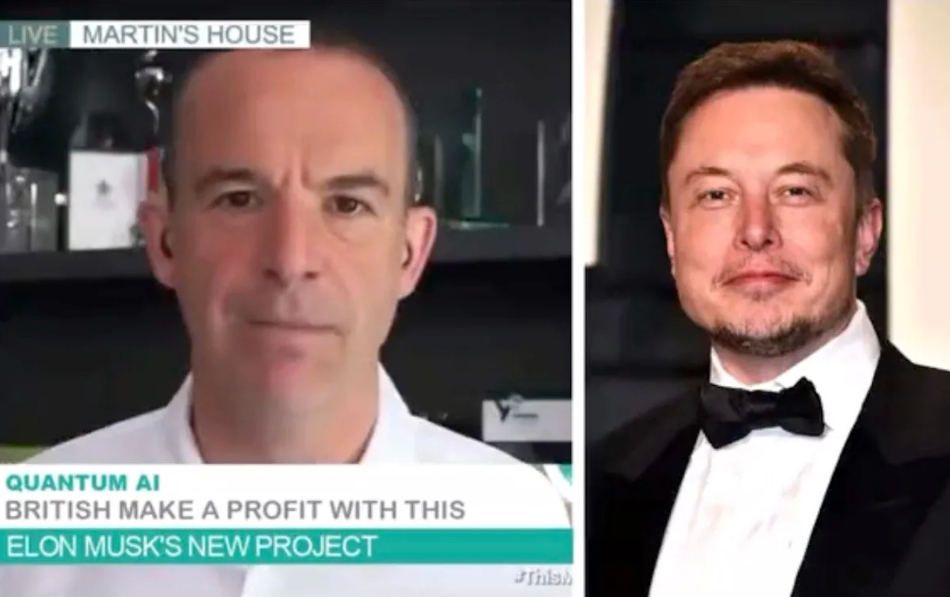
The fake interview clip sounds pretty real. But if you actually go to Martin’s official social channels and search for it? It doesn’t exist. That’s your first red flag right there. Nonetheless, one vulnerable pensioner in the UK lost £60K in the cruel scam.
Many of these public figures have issued direct warnings telling people these videos are fake. When the actual person is saying “this is a scam,” that should tell you everything you need to know.
Case Study #3: Fake Local News Forex Scams
Some cams use familiar local branding instead of, or alongside famous billionaires. “Local TV host reveals side income strategy.” “Exclusive interview.” “Banks are worried.”
It feels closer to home, which makes it more believable. But look closely, and the local news logo is often altered. There are no links to the actual newsroom. The headline is sensationalized. The lead capture form asks for minimal info and pushes crypto payments.
The scam almost always starts with a paid social ad. Using platforms like Facebook or YouTube, scammers target:
- People interested in investing.
- Viewers of financial news content.
- Older demographics with higher savings balances.
- Users who recently searched for trading platforms.
The ad copy is vague but urgent: “Local Dad Reveals Simple Trading Trick Banks Don’t Want You to Know.”
The targeting is not random. It’s behavioral profiling. Ad platforms allow demographic filtering, interest segmentation, and retargeting pixels. Scammers exploit this infrastructure just as legitimate marketers do.
The difference? The intent. Once the user clicks, they’re routed to a cloned news site.
Technically, these pages are:
- Static HTML copies of legitimate news sites.
- Slightly modified templates scraped from real publications.
- Hosted on look-alike domains (e.g., news-daily[region].com instead of the actual outlet).
The page often includes:
- A copied masthead.
- A fabricated interview transcript.
- Stock images of trading dashboards.
- Fake comment sections with timestamps.
What makes this convincing isn’t the article itself. It’s visual familiarity. Our brains associate layout consistency with legitimacy. Same fonts. Same colour palette. Same “Breaking News” banner.
From a technical perspective, this takes hours to replicate – not weeks. News site templates are publicly visible in browser developer tools. A moderately skilled web operator can quickly recreate the front end.
Here’s where the scam becomes technical in a different way. Many fake local news forex scams connect to:
- White-label broker platforms.
- Offshore CFD entities with minimal oversight.
- Clone firms impersonating regulated brokers.
A white-label broker setup allows operators to rent trading software infrastructure and rebrand it. The front end looks legitimate. The back end? Controlled entirely by the operator.
That means:
- Prices can be manipulated.
- Withdrawals can be delayed.
- Accounts can be frozen arbitrarily.
To the victim, it feels like market losses. In reality, it may be internal ledger adjustments.
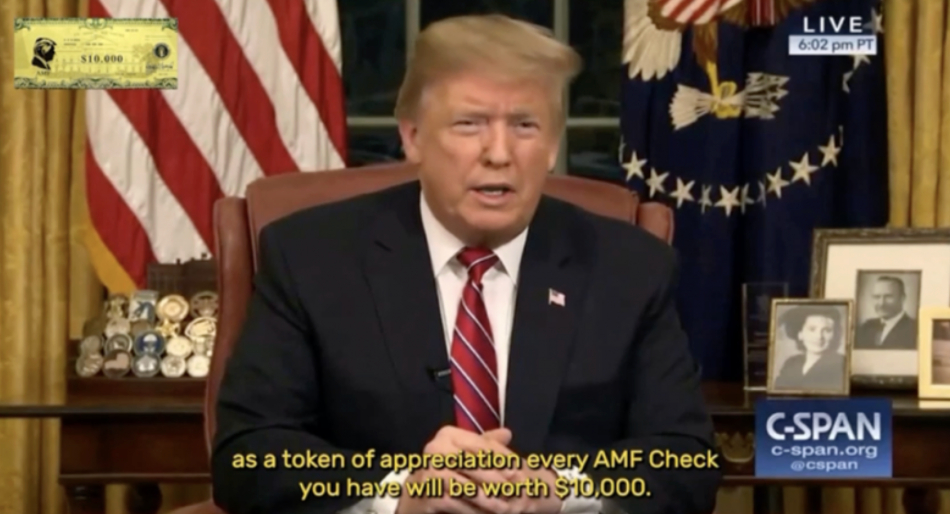
The Pattern Behind Every Scam
Different faces, different countries, different stories, but the same basic structure every time. First, they borrow trust from someone famous or familiar. Then they add a tech angle or insider hook to make it feel exclusive.
Next comes the fake media legitimacy – a lookalike news site or article. Then they capture your contact details through a simple form. Finally, they apply pressure and push hard for a deposit.
Once you see this pattern, new scams become way easier to spot.
« Make Full Width »| Category | What You'll See | Why It's a Problem |
|---|---|---|
| Celebrity Endorsement | Famous face in paid ad | Most public figures don’t promote trading platforms via social ads |
| Guaranteed Returns | ”Earn $500/day” | Markets fluctuate; guaranteed returns are impossible |
| Risk-Free Language | ”No risk involved” | All real investing carries risk |
| Fake News Branding | Lookalike BBC/CNN site | Borrowing credibility they don’t have |
| No Regulatory Details | Missing license info | Legit brokers clearly list regulator and license number |
| New Website | Registered weeks ago | Established firms don’t appear overnight |
| Countdown Timers | ”Limited spots left” | Creates fake urgency |
| Minimal Signup | Just name, phone, email | Designed to trigger fast sales calls |
| Immediate Pressure | Call pushing deposit | High-pressure sales tactic |
| Crypto-Only Payments | Bitcoin/crypto required | Hard to reverse, typical scam indicator |
How Actual Legitimate Brokers Market Themselves
Real brokers and investment firms show you their regulatory credentials upfront. You’ll see license numbers from the likes of the FCA (UK), ASIC (Australia), CySEC (Europe), SEC (US), or CFTC (US) clearly displayed on their website.
- They never guarantee returns. Markets fluctuate – anyone promising fixed profits is lying.
- They don’t use high-pressure sales calls pushing you to deposit money the same day.
- Risk disclosures are prominent and clear, not buried in fine print.
- You can easily find their legal entity name, physical address, client agreements, and privacy policies.
When you know what legitimate looks like, the fakes stand out immediately.
Our regulator directory lists major financial regulators worldwide and classifies them based on the strength of their oversight.
How To Spot A Deepfake Ad
As traders and investors, we’re trained to notice micro-details on charts or fundamentals that don’t quite make sense. Apply that same skill to websites.
Look for:
- Slightly altered domain names.
- Missing regulatory disclosures.
- No verifiable company registration number.
- Non-functional navigation links.
- Overly aggressive countdown timers.
- Generic privacy policy pages copied from elsewhere.
- Comment sections that aren’t clickable.
- No named editor or journalist.
Individually, these are small. Collectively, they form a pattern. And pattern recognition is what keeps capital intact.
« Make Full Width »| Feature | Deepfake Scam | Regulated Broker |
|---|---|---|
| Celebrity Endorsement | Uses famous face in paid ads without verification | Rarely relies on celebrity endorsements |
| Return Claims | Promises fixed income | Never guarantees profits |
| Risk Disclosure | Focuses only on profits | Clear, prominent risk statements |
| Regulatory Info | No license or fake credentials | Verified regulator (FCA, ASIC, CySEC, SEC, CFTC etc.) |
| Website Age | Recently registered domain | Established, long-standing domain |
| Sales Tactics | Urgency, countdowns, aggressive calls | No pressure tactics |
| Payment Methods | Crypto or irreversible transfers | Traceable standard payment methods |
| Transparency | Vague company details | Full legal information available |
5-Step Verification Checklist
Before you hand over any money, run through these five quick checks:
- Check the regulator. Look them up on the respective regulator’s database. If they’re not registered, walk away.
- Search the celebrity’s name plus “scam.” Official warnings from the actual person matter.
- Check the website. How old is the domain? Does it have proper legal information? What about regulatory claims?
- Question guaranteed returns. If they’re promising fixed income, it’s fake. Markets don’t work that way.
- Slow down on the deposit. Legitimate platforms will still be there tomorrow. Scammers rely on urgency.
These simple steps help to protect you better than any technical knowledge ever could.
If You’ve Already Deposited Money
First, stop making any additional deposits. Contact your payment provider – bank, credit card company, whoever processed the transaction. Sometimes they can help, especially if you act quickly.
Document everything. Take screenshots of the ads, the website, any emails or messages, transaction records, everything. You’ll need this documentation.
Report it to the platform where you saw the ad (Facebook, YouTube, Google, wherever). Report it to the relevant regulators in your location.
Even if you can’t get your money back immediately, reporting it helps prevent the next person from falling for the same scam.
Bottom Line
Real trading and investing is boring. It’s regulated. It comes with risk warnings. Returns go up and down. There are no shortcuts, no secret systems, no guaranteed daily profits.
Scams flip all of that. They create urgency where patience should exist. They borrow trust from people who never gave it. They promise consistency in a world that offers none.
The technology behind these fake ads will only get better. But the underlying structure stays the same: borrow authority, promise easy returns, push deposits.
Your best protection isn’t technical expertise – it’s discipline. Check the regulator. Search the name. Slow down before you deposit. That’s it. Those three simple steps put you ahead of most people.
Stay skeptical, stay safe, and remember: if it sounds too good to be true, it absolutely is.
FAQs
What Exactly Is A Deepfake Investment Ad?
It’s a scam using AI-altered video or audio of a celebrity to promote fake trading platforms.
Are Celebrity-Endorsed Trading Platforms Ever Real?
Rarely. Always verify through the celebrity’s official channels before believing anything.
How Does The Scam Actually Work?
Celebrity video hooks you, an AI or trading pitch sells you, a fake news page legitimizes it, a deposit page captures your money, and high-pressure calls extract more.
How Can I Check If An Investment Provider Is Regulated?
Search their legal entity name on the official regulator websites: FCA, ASIC, CySEC, SEC, or CFTC, etc.