 Top Lists for USA
Best Financial Market Supervisory Authority (FINMA) Regulated Brokers 2026
We’ve personally tested and ranked the top brokers regulated by the Swiss Financial Market Supervisory Authority (FINMA), ensuring high standards of trust and reliability.
 Written By
Royston Wild
Royston is a seasoned investor and financial writer with over a decade of experience analyzing brokers and investment markets. With a background in stocks, commodities, and forex reporting - he brings a fresh perspective to broker evaluations.
Royston Wild Profile Page Fact Checked By
Tobias Robinson
Tobias is committed to helping traders find the right brokerage for their needs. He has tested 200+ brokers, spent 2,600+ hours using different platforms, and placed 2,100+ trades.
Tobias Robinson Profile Page Edited By
James Barra
James is an experienced broker analyst with a background in financial services. He has spent 2,500+ hours testing brokers, used 35+ different platforms and apps, audited 120+ broker T&Cs, and verified 300+ regulatory licenses. James has also been on US and UK TV, and been a guest on finance podcasts, discussing reports conducted by BrokerListings.com and sharing his expertise.
James Barra Profile PageOctober 13, 2026
Filters
How BrokerListings.com Selected the Top FINMA Brokers
To identify the best brokers regulated by FINMA (the Swiss Financial Market Supervisory Authority), we followed this process:
- Regulatory Verification – We confirmed each broker’s license through FINMA’s official register, ensuring they meet Swiss financial market regulations and comply with high standards for transparency, solvency, and client asset protection.
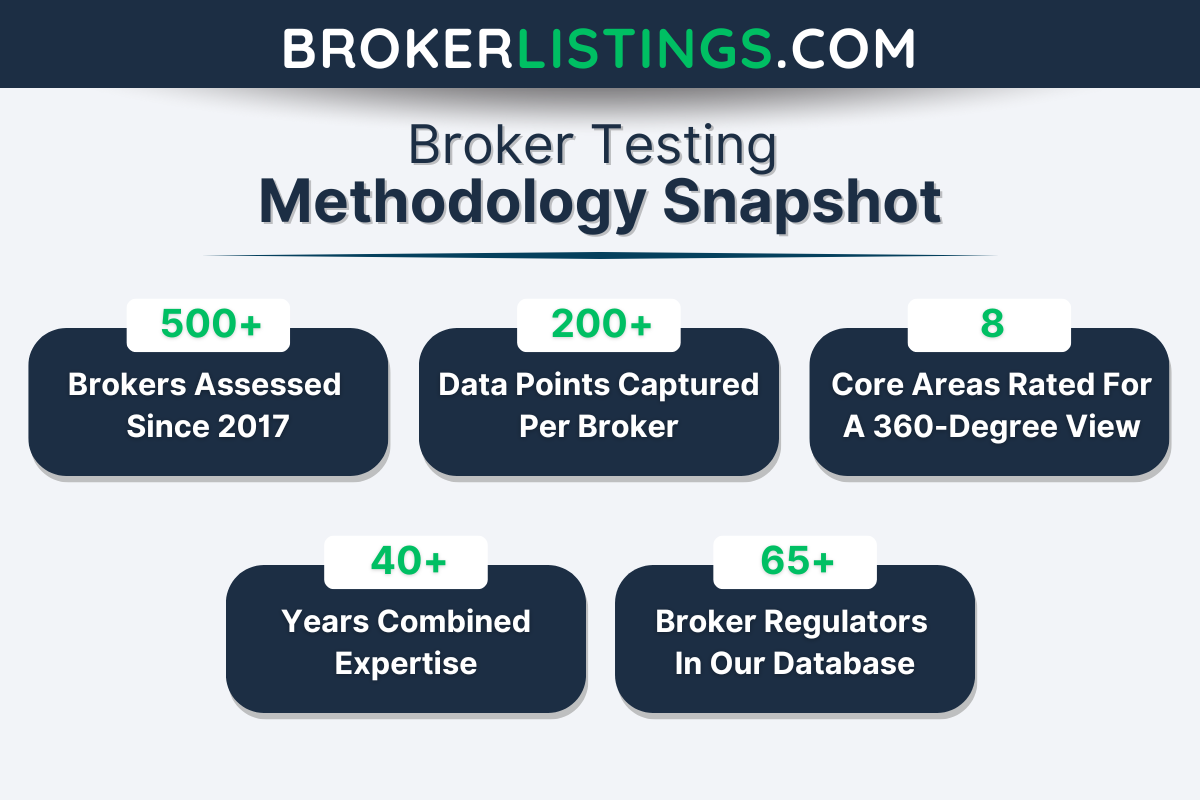
- Comprehensive Broker Analysis – Using our proprietary rating framework, we assessed over 200 data points, covering platform stability, pricing, available trading tools, and quality of customer support.
- Hands-On Testing – We really tried each FINMA broker, ensuring it delivers not only strong regulatory safeguards, but also the execution speed, reliability, and features active traders expect.
What Is FINMA?
Switzerland’s financial markets industry is closely monitored by the Financial Market Supervisory Authority (FINMA). Set up in 2009, it establishes the regulations that sector participants must adhere to, and supervises behavior by brokerages, banks, insurance providers, stock exchanges and financial intermediaries.
According to its website, the authority “is mandated to protect financial market clients – creditors, investors and policyholders – and is responsible for ensuring that Switzerland’s financial markets function effectively.”
FINMA will carry out enforcement actions when it deems that regulations have been breached. It is also responsible for issuing licenses allowing individuals and companies to offer financial services.
Investors can expect high levels of protection when using FINMA-authorized brokerages. This is reflected by its Category A status under BrokerListings’ broker regulator classification system.
What Powers Does FINMA Have?
Using powers granted under legislation including the Financial Market Supervision Act (FINMASA), the authority “investigates irregularities and information it receives about violations and, if necessary, initiates enforcement proceedings in accordance with the Administrative Procedure Act (APA).”
It works with other Swiss and overseas authorities to enforce violations of financial market laws. Its powers include:
- Implementing precautionary measures, such as appointing investigating agents, preventing individuals from buying more shares or exercising voting rights, and allowing companies in danger of insolvency to continue.
- Withdrawing the authorization of individuals and companies to do business.
- Confiscating profits that have been earned unlawfully.
- Restricting a firm’s business activities either permanently or temporarily.
- Issuing ‘cease and desist’ orders banning individuals and legal entities for serious violations.
- Ordering companies to change the members of its management team.
- Forcing unauthorized companies to liquidate.
Tip: Unlike most regulators, FINMA does not have the power to issue financial penalties. Instead, its enforcement framework is designed to prevent breaches of regulations and to ensure that the country’s laws are being followed.
In one high profile case in September 2024, FINMA found that Mirabaud & Cie had breached anti-money laundering rules by “[failing] to review and document sufficiently the economic background of client relationships and transactions.”
The regulator confiscated 12.7 million Swiss francs (CHF) of what it deemed to be “unlawfully generated profits,” and banned the bank from accepting new clients with increased money-laundering risks until it became compliant with the law.
FINMA also opened enforcement proceedings against three individuals connected to the case.
What Rules Must A FINMA Broker Follow?
The rules that securities firms must follow are laid out across a wide range of laws. These include the Financial Services Act (FinSA), the Financial Institutions Act (FinIA), the Swiss Banking Act (BA), and the Anti-Money Laundering Act (AMLA).
Among the many requirements imposed by these laws, brokers must:
- Execute trades in a fair and transparent manner, and in a way that strives for the best possible result for the client.
- Collect enough information to ensure that the products and services they offer are appropriate and suitable for the customer.
- Fully disclose the risks associated with the securities discussed.
- Establish procedures to avoid conflicts of interest. If such conflicts cannot be averted, the broker must advise the customer of the risks involved.
- Hold sufficient starting capital (i.e. a minimum of CHF 1.5 million).
- Be based and managed in Switzerland.
- Implement effective internal controls and separate different business units (like asset management, trading and settlement).
- Adhere to anti-money laundering rules. These include preventative measures like verifying clients’ identities, conducting staff training and reporting suspicious activity.
How Can I Check If A Brokerage Is FINMA Regulated?
The regulator helpfully provides a directory that allows individuals to check whether a financial services provider is licensed to trade.
Let’s say I wish to check the regulatory status of IG. I can head over to the ‘Authorized companies’ page on its website, where I can type the company’s name into the search bar.
My search reveals where the company is registered, and confirms that it is authorized. This directory is regularly updated, meaning I can rely on timely, accurate information.
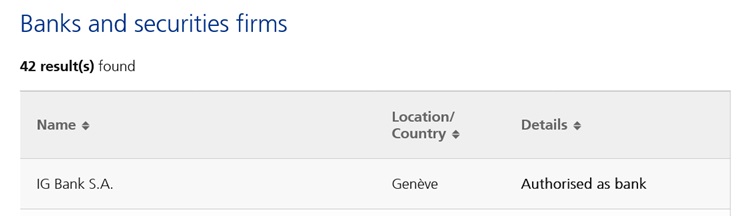
IG’s entry on FINMA’s database. Source: FINMA
Tip: Alongside its directory of authorized firms, FINMA keeps a ‘Warnings’ page updated on its website. Here I can check to see if the brokerage I’m considering using is conducting unauthorized services and if it has regulatory approval to trade.
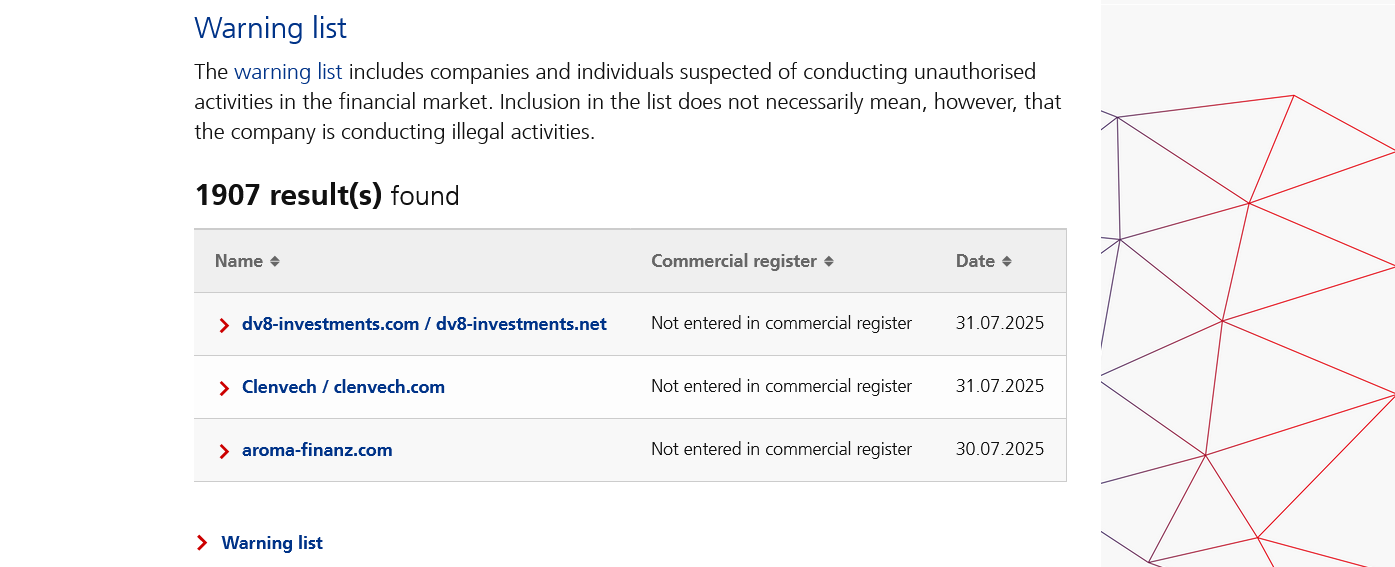
The warnings page on the FINMA website. Source: FINMA
Bottom Line
Protected by a broad range of Swiss laws, individuals who use FINMA-authorized brokers can expect excellent levels of service.
The first port of call for any investor should be to verify that the company they’re considering is listed in the regulator’s online directory of authorized securities firms.
Article Sources
Financial Market Supervisory Authority (FINMA)
Questions and Answers (FAQ) – esisuisse
Swiss watchdog seizes £11m from Mirabaud in laundering case – Sharecast
Authorisation requirements for securities firms – FINMA
Authorisation – gaining entry to the financial market – FINMA