
Best Brokers With NGN Accounts 2026
Explore brokers with Nigerian naira (NGN) denominated accounts to enjoy lower conversion fees and smoother deposits, withdrawals and transactions for Nigerian traders.
 Written By
Royston Wild
Royston is a seasoned investor and financial writer with over a decade of experience analyzing brokers and investment markets. With a background in stocks, commodities, and forex reporting - he brings a fresh perspective to broker evaluations.
Royston Wild Profile Page Fact Checked By
James Barra
James is an experienced broker analyst with a background in financial services. He has spent 2,500+ hours testing brokers, used 35+ different platforms and apps, audited 120+ broker T&Cs, and verified 300+ regulatory licenses. James has also been on US and UK TV, and been a guest on finance podcasts, discussing reports conducted by BrokerListings.com and sharing his expertise.
James Barra Profile Page Edited By
Tobias Robinson
Tobias is committed to helping traders find the right brokerage for their needs. He has tested 200+ brokers, spent 2,600+ hours using different platforms, and placed 2,100+ trades.
Tobias Robinson Profile PageJuly 11, 2026
Filters
How We Choose The Top NGN Brokers
Our extensive testing process involves:
- Opening an account with each broker in our expanding database, then recording which ones permit trading using the Nigerian naira as the base currency.
- Verifying that each brokerage has obtained authorization from a top-tier regulator, as categorised under BrokerListings.com’s regulator ranking system. Given the limited protections afforded by Nigeria’s Securities and Exchange Commission (SEC), we prioritise brokers who have received approval from a top overseas regulator.
- Regularly re-checking that each broker retains their regulated status, as financial services watchdogs are able to suspend or revoke licenses when misconduct is identified.
- Scoring brokerages on multiple factors beyond NGN account availability. Trading costs, the functionality of the trading platform, range of tradeable assets, and the quality of the firm’s customer service are among other items we consider.
What Is An NGN Account?
An NGN trading account is one where all trading activity is denominated in the Nigerian naira. Deposits and withdrawals are made in the African currency, while profits and losses are calculated and displayed in naira.
The selection of brokerages offering NGN-based accounts is relatively limited today. But the number is rapidly growing as trading and investing activity takes off in Nigeria.
Using an NGN-denominated trading account can give you several advantages:
- Lower trading costs, as you avoid currency conversion fees when depositing or withdrawing funds from your account. This is especially important if you regularly transfer money in and out of your account.
- Reduced exposure to forex market volatility, which is extremely handy for individuals who earn and spend using the Nigerian naira.
- Speedier deposits and withdrawals, as brokers offering NGN accounts often support local payment transfers. These can include transactions involving Nigerian banks and payments from regional payment services providers like Flutterwave.
How Do I Open An NGN Account?
The range of brokers offering NGN trading accounts is limited today, meaning you may need to hunt around to find one.
Yet once you’ve found a service provider opening an account can take just a few minutes. To complete the process, you’ll need to follow these five steps:
1. Choose A Broker
Key things to consider during this part of the process include fees and charges, bid and ask spreads, trading platform features and the range of financial markets you can trade. For instance, if you plan to trade forex — and wish to trade a popular local currency pairing like the USD/NGN cross — you should check how wide the spreads are, as this can have a big impact on your trading profits.
Pro tip: The most important think to verify at this stage is that the broker you’re considering is licensed by a top-tier global regulator. This greatly reduces the risk you’ll be subjected to poor customer service, or – even worse – fall victim to a scam.
Financial markets and brokerages in Nigeria are regulated by the Securities and Exchange Commission (SEC). However, supervision and enforcement of local rules is fairly relaxed compared with how other global regulators police their own jurisdictions. This is why the SEC has been designated a lowly Category C classification under BrokerListings.com’s regulator trust rating.
We recommend individuals use a broker that’s licensed by a Category A regulator under our system. Examples include the US Securities and Exchange Commission (SEC) and the UK’s Financial Conduct Authority (FCA).
2. Open An Account
Registering with a broker follows a fairly generic framework, and requires you to submit certain information.
You may not need to disclose sensitive details (like telephone number, postal address, and proof of identification and address) until later on in the process, like when you’re ready to deposit funds or begin live trading.
3. Select The NGN As Your Base Currency
The broker may automatically set up a USD trading account for your trading activity, which will use the US dollar as its base currency. In this event, you’ll need to manually choose an NGN-denominated account by going through some additional menus.
4. Make An Account Deposit
Deposit funds into your account by, for example, using a:
- Bank transfer.
- Debit card (such as the Verve card).
- Digital wallet.
- Payment service provider (like OPay).
Be mindful that broker may have restrictions on payment methods, such as not permitting the use of particular digital wallets.
5. Begin Trading
With funds in your trading account, you’ll be able to begin trading global markets without the hassle and expense of forex-related disruption.
Example Of Opening An NGN Account
To demonstrate the ease of opening an NGN-denominated account, I registered my details with Exness, which has been offering financial services since 2008.
Though it offers services to citizens in Nigeria, Exness hasn’t actually received authorization from a Nigerian regulatory authority. Instead, it’s received approval from several bodies in other jurisdictions including the FCA and the Cyprus Securities and Exchange Commission (CySEC).
These two particular regulators have Category A status under BrokerListings.com’s ranking system, though this is related to the services they provide institutional clients and not retail clients. Still, these approvals underlines Exness’ status as a reputable company.
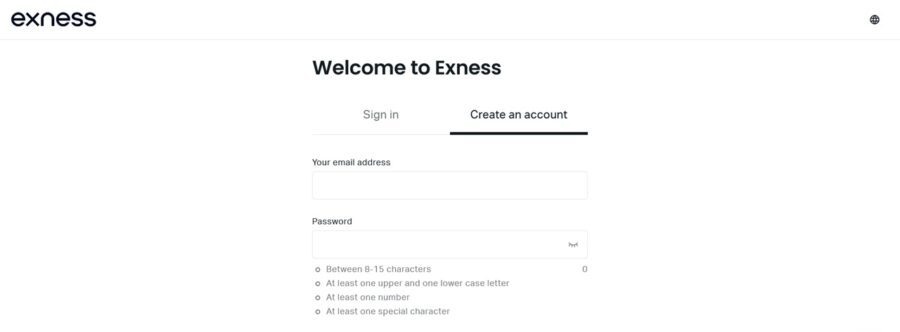
Signing up with Exness to open an NGN trading account
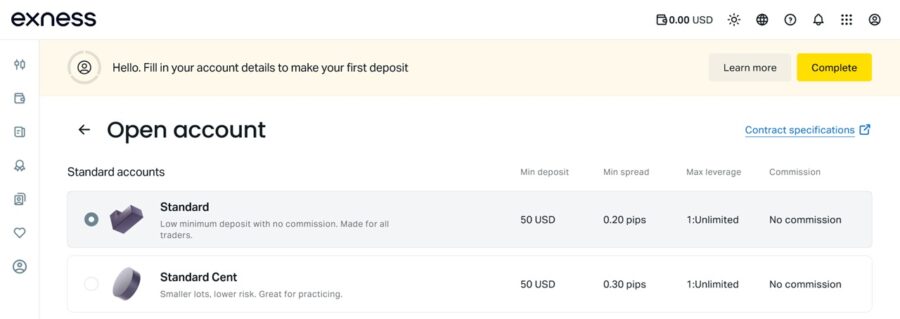
Beginning the process of opening an NGN trading account
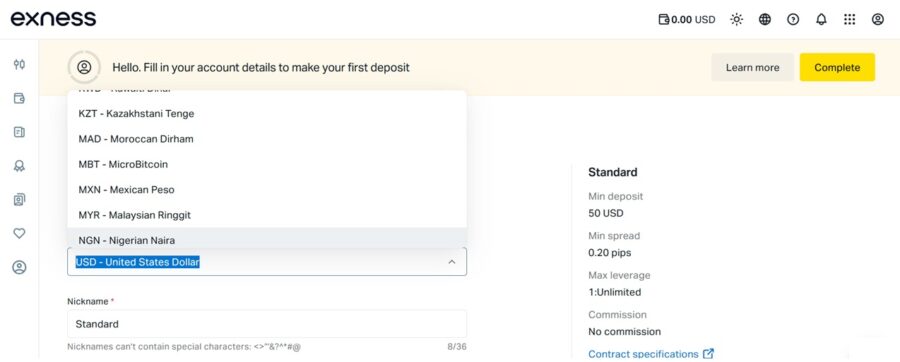
Selecting the NGN as my trading account’s base currency
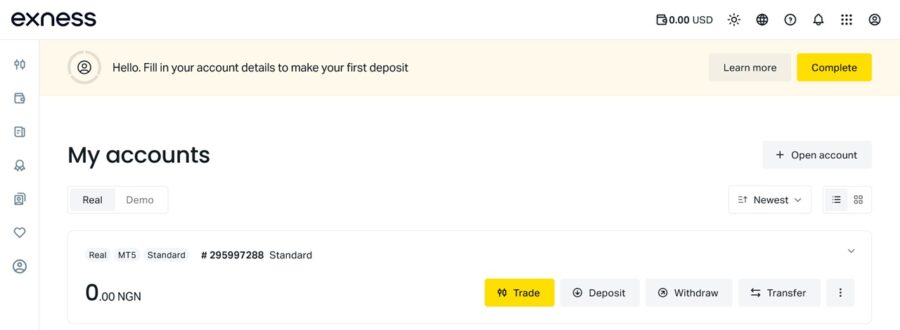
My new NGN-denominated Exness trading account
Should I Use An NGN Trading Account?
An NGN trading account may make sense for you if you fall into one or more of the following categories:
- You reside in Nigeria, so trading in the local currency makes sense.
- You want to make depositing and withdrawing cash simpler and cheaper by avoiding forex-conversion-related disruption.
- You want to use local payment methods to make transactions, such as a Nigerian payment service provider.
What Are the Drawbacks Of Using An NGN Account?
There are drawbacks to using the NGN as a base currency for your trading, however. These include:
- You will have a limited choice of brokers, as very few offer trading using the Nigerian naira – we record the account base currencies at every broker in our directory.
- You may face currency conversion costs when buying or selling financial securities that are not NGN denominated. This is a significant problem for those who predominantly don’t trade in naira-denominated securities, especially active traders making frequent trades, and thus incurring regular costs.