
Best Brokers With CNY Accounts 2026
Dig into our top brokers offering CNY accounts, based on thorough testing, designed to reduce conversion fees and optimize the trading experience for traders in China.
 Written By
Royston Wild
Royston is a seasoned investor and financial writer with over a decade of experience analyzing brokers and investment markets. With a background in stocks, commodities, and forex reporting - he brings a fresh perspective to broker evaluations.
Royston Wild Profile Page Fact Checked By
James Barra
James is an experienced broker analyst with a background in financial services. He has spent 2,500+ hours testing brokers, used 35+ different platforms and apps, audited 120+ broker T&Cs, and verified 300+ regulatory licenses. James has also been on US and UK TV, and been a guest on finance podcasts, discussing reports conducted by BrokerListings.com and sharing his expertise.
James Barra Profile Page Edited By
Tobias Robinson
Tobias is committed to helping traders find the right brokerage for their needs. He has tested 200+ brokers, spent 2,600+ hours using different platforms, and placed 2,100+ trades.
Tobias Robinson Profile PageJuly 17, 2026
-
1Moomoo is a regulated trading platform overseen by trusted regulators like the SEC. It provides a simple, cost-effective method to trade in stocks, ETFs, and various assets from China, Hong Kong, Singapore, the US, and Australia. They provide the option for margin trading, along with no minimum deposit requirement, and several bonus options.
Compare Brokers
| Broker |  |
Demo Account |
Minimum Deposit |
Minimum Trade |
Leverage |
Copy Trading |
Regulator |
Instruments |
Platforms |
Account Currencies |
Automated Trading |
AI |
Guaranteed Stop Loss |
|---|---|---|---|---|---|---|---|---|---|---|---|---|---|
 |
✓ | $0 | $0 | 1:2 | ✗ | SEC, FINRA, SIPC, MAS, SFC, ASIC, FMA, CIRO, CIPF, JFSA, SC | Stocks, Options, ETFs, ADRs, OTCs ,Futures | Desktop Platform, Mobile App | USD, CAD, AUD, JPY, MYR, HKD, SGD, CNY | Moomoo OpenAPI | ✓ | ✗ | |
| Broker | |
Demo Account |
Minimum Deposit |
Minimum Trade |
Leverage |
Copy Trading |
Regulator |
Instruments |
Platforms |
Account Currencies |
Automated Trading |
AI |
Guaranteed Stop Loss |
Safety Comparison
Compare how safe the Best Brokers With CNY Accounts 2026 are.
| Broker | Trust Rating |
Guaranteed Stop Loss |
Negative Balance Protection |
Segregated Accounts |
|---|---|---|---|---|
|
✗ | ✗ | ✓ | |
| Broker | Trust Rating |
Guaranteed Stop Loss |
Negative Balance Protection |
Segregated Accounts |
Mobile Trading Comparison
Compare the mobile trading features of the Best Brokers With CNY Accounts 2026.
| Broker | Mobile Apps |
iOS Rating |
Android Rating |
Smart Watch App |
|---|---|---|---|---|
|
Yes (iOS & Android) | ✗ | ||
| Broker | Mobile Apps |
iOS Rating |
Android Rating |
Smart Watch App |
Comparison for Beginners
Compare how suitable the Best Brokers With CNY Accounts 2026 are for beginners.
| Broker | Demo Account |
Minimum Deposit |
Minimum Trade |
Education Rating |
Support Rating |
Fractional Shares |
Demo Competitions |
|---|---|---|---|---|---|---|---|
|
✓ | $0 | $0 | ✓ | ✗ | ||
| Broker | Demo Account |
Minimum Deposit |
Minimum Trade |
Education Rating |
Support Rating |
Fractional Shares |
Demo Competitions |
Comparison for Advanced Traders
Compare how suitable the Best Brokers With CNY Accounts 2026 are for advanced or professional traders.
| Broker | Automated Trading |
VPS |
API |
AI |
Pro Account |
Leverage |
Low Latency |
Extended Hours |
|---|---|---|---|---|---|---|---|---|
|
Moomoo OpenAPI | ✗ | ✓ | ✓ | ✗ | 1:2 | ✓ | ✓ |
| Broker | Automated Trading |
VPS |
API |
AI |
Pro Account |
Leverage |
Low Latency |
Extended Hours |
Accounts Comparison
Compare the trading accounts offered by Best Brokers With CNY Accounts 2026.
| Broker | Demo Account |
Interest on Cash |
Islamic Account |
Joint Account |
Managed Account |
PAMM |
MAM |
LAMM |
Pro Account |
|---|---|---|---|---|---|---|---|---|---|
|
✓ | USD: 3.35% | ✗ | ✗ | ✗ | ✗ | ✗ | ✗ | ✗ |
| Broker | Demo Account |
Interest on Cash |
Islamic Account |
Joint Account |
Managed Account |
PAMM |
MAM |
LAMM |
Pro Account |
Detailed Rating Comparison
Compare how we rated the Best Brokers With CNY Accounts 2026 in key areas.
| Broker | Trust |
Platforms |
Assets |
Mobile |
Fees |
Accounts |
Research |
Education |
Support |
|---|---|---|---|---|---|---|---|---|---|
|
|||||||||
| Broker | Trust |
Platforms |
Assets |
Mobile |
Fees |
Accounts |
Research |
Education |
Support |
Fee and Cost Comparison
Compare the cost of trading with the Best Brokers With CNY Accounts 2026.
| Broker | Cost Rating |
Fixed Spreads |
Inactivity Fee |
EUR/USD Spread |
Crypto Spread |
|---|---|---|---|---|---|
|
✗ | $0 | ✗ | 0.49% per spot Bitcoin trade (US), 0.3% to 0.39% (Singapore) | |
| Broker | Cost Rating |
Fixed Spreads |
Inactivity Fee |
EUR/USD Spread |
Crypto Spread |
Customer Ratings
Compare how customers of these brokers feel about them, with real user ratings from Trustpilot, the Apple App Store and Google Play.
| Broker | Customers |
Trustpilot Score |
Trustpilot Reviews |
Android App Rating |
iOS App Rating |
|---|---|---|---|---|---|
|
24,000,000 | 506 | |||
| Broker | Customers |
Trustpilot Score |
Trustpilot Reviews |
Android App Rating |
iOS App Rating |
Broker Popularity
See how popular the Best Brokers With CNY Accounts 2026 are in terms of number of clients.
| Broker | Popularity |
|---|---|
| Moomoo |
|
Why Trade With Moomoo?
Moomoo is a great option for beginner and intermediate traders aiming to diversify their investment portfolio. The brokerage's app is easily navigable and the trading fees are significantly low.
Pros
- The fees for options contracts have been lowered from $0.65 to $0.
- The broker provides early access to trading hours before the market opens.
- Moomoo is a FINRA and SIPC member, providing additional security for potential clients interested in trading.
Cons
- The account options are limited compared to similar brokerages, with no managed portfolios or robo-advisor solutions.
- No negative balance protection, a standard safety feature at top-tier regulated brokers.
- Moomoo has received several regulatory penalties lately, including fines and orders in 2026 that temporarily halted the acceptance of some Japanese and Chinese clients.
Filters
How We Choose The Top CNY Brokers
Our extensive testing process comprises four steps:
- Opening a trading account with every broker in our expanding database, then recording which service providers permit trading using the Chinese yuan (CNY) as the base currency.
- Verifying that each broker is licensed by a reputable financial regulator. BrokerListings.com has created its own ranking system to make finding respected regulators easier. These organizations usually maintain an online database that allows traders and investors to locate authorized brokers simply and quickly.
- Regularly checking that each company has maintained its license, as regulators can revoke a broker’s regulated status (temporarily or permanently) when they have identified rule breaches.
- Rating brokerages on other factors like trading costs, bid and ask spreads, the range of financial markets customers can trade in, the quality of the trading platform, and the availability of demo accounts.
What Is A CNY Account?
China is home to a huge and vibrant community of active traders. According to official statistics, there are currently 250 million retail investors in the Asian country.
This growth has been driven by increasing wealth levels in China, the rise of online trading platforms and a booming financial technology ecosystem. Traders typically focus their attention on trading equities on the Shanghai Stock Exchange (SSE) or the Shenzhen Stock Exchange (SZSE).
Domestic brokers almost always operate CNY-based trading accounts, while international service providers tend to offer reduced yuan support due to regulatory restrictions, capital controls and fewer international payment channels.
Using a yuan-based account carries a number of benefits for traders, such as:
- Averting currency conversion charges when depositing and withdrawing funds, especially when trading CNY-based securities.
- Reducing exposure to volatile FX markets when trading Chinese securities. The People’s Bank of China helps limit yuan volatility through its managed exchange rate system. However, the currency can still experience bouts of choppiness, for example when key economic data is released or interest rates in other major economies (like the US) move.
- Transferring money into and out of your account can be simpler. Brokerages offering CNY-based accounts typically support local payment methods, including bank wire transfers and debit card payments.
- Avoiding foreign exchange administration issues. This is because Chinese traders face restrictions on converting yuan into overseas currencies and moving funds overseas. Citizens converting yuan into foreign currencies are typically limited to purchasing USD$50,000 (or equivalent) worth of currencies per person per year.
How Do I Open A CNY Account?
Investors seeking to open a yuan-based account must follow these five steps:
1. Locate A Broker
Finding a brokerage in China that offers CNY-denominated accounts is relatively simple. This is because the country’s securities markets chiefly operate in yuan, and the vast majority of domestic investors trade local assets. It’s important to take the time to find the best service provider that works for you.
Consider things like overall trading costs, the number of tradeable markets, how user friendly and sophisticated the trading platform is, the provision of additional resources like educational material, and the quality of customer service.
Pro tip: China’s financial markets are regulated by the China Securities Regulatory Commission (CSRC). This provides traders and investors with safeguards from bad business practices and scams, though the level of protection is weaker compared to that offered in some parts of Asia, North America and Europe.
As a consequence, the CSRC has been designated a Category B watchdog under BrokerListings.com’s regulator database. In our view, traders should consider using a broker that’s been given the green light by a Category A regulator under our rankings system.
Examples include the Monetary Authority of Singapore (MAS), Japan’s Financial Services Agency (FSA) and the US Securities and Exchange Commission (SEC).
2. Opening An Account
You’ll need to provide a selection of personal information for the broker to process your application and meet their regulatory requirements.
Examples include your:
- Name.
- Address
- Telephone number.
- Email address.
- Employment status.
- Nationality.
- Investing experience.
- Trading objectives.
- Source of funds.
At some stage, you’ll also be required to provide proof of identification and address. This may be at the sign-up stage or later on (such as when you’re preparing to deposit funds).
3. Selecting CNY As Your Base Currency
Once you’ve opened your account, the broker may have automatically opened an account for you using a major currency (like the US dollar (USD)). This is less likely to occur in China than in some other parts of the world, though it is a possibility.
If this happens, you’ll need to navigate the trading platform to manually choose a yuan-based account. This process should take just a couple of minutes or less.
4. Depositing Money
Brokers usually allow traders to deposit cash through:
- Bank wire transfer (for instance, from the China Construction Bank (CCB)).
- Debit card.
Capital controls in China mean that — outside of bank transfers and debit card transactions — the choice of depositing and withdrawing is far more limited than in many other regions. However, some brokers do allow customers to transfer cash in other ways, including with digital wallets (like WeChat Pay).
5. Start Trading
You’ll be able to start building your portfolio as soon as your deposit hits your account.
Example Of Opening A CNY Trading Account
Exness — which has been offering financial services since 2008 — is licensed by several global regulators. These include the UK’s Financial Conduct Authority (FCA) and the Cyprus Securities and Exchange Commission (CySEC).
Both of these regulators have been designated Category A status by BrokerListings.com, albeit for institutional rather than retail traders. Still, it means customers in China can be confident that they’re dealing with a reputable company and not one where bad customer service is a significant risk.
Here is the process I followed to set up an Exness account:
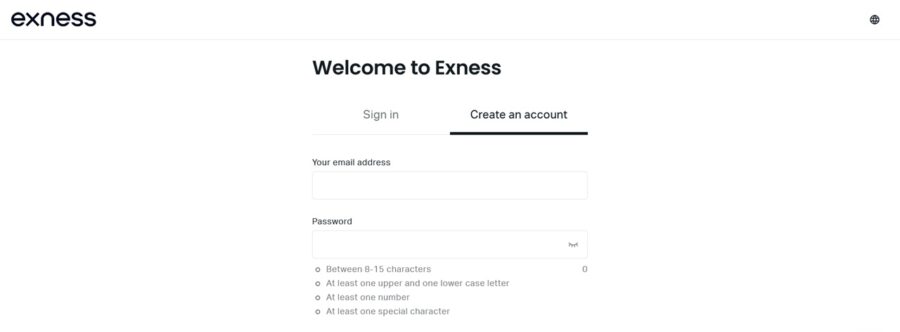
Registering with Exness for a new CNY account
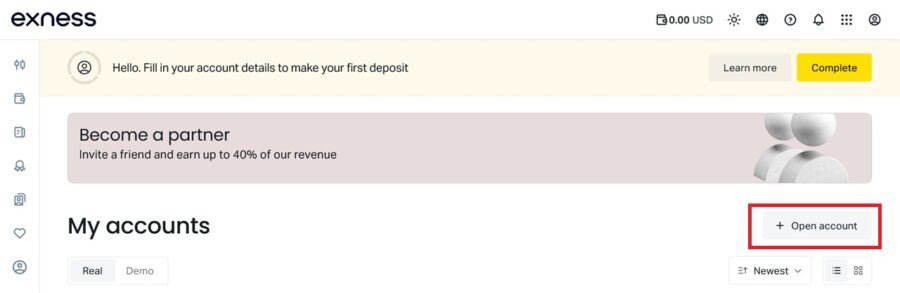
Opening an account
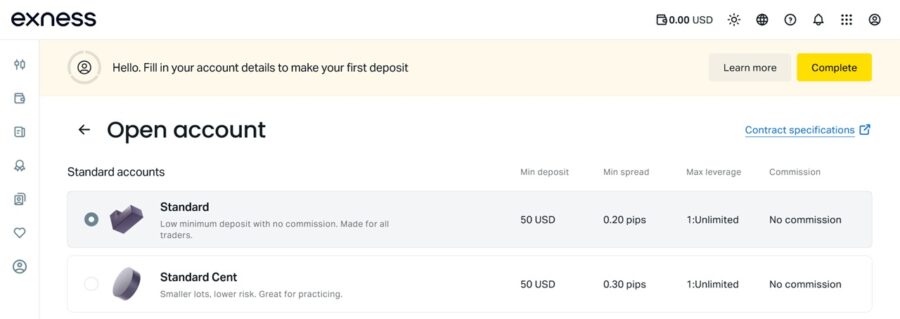
Various Exness trading accounts
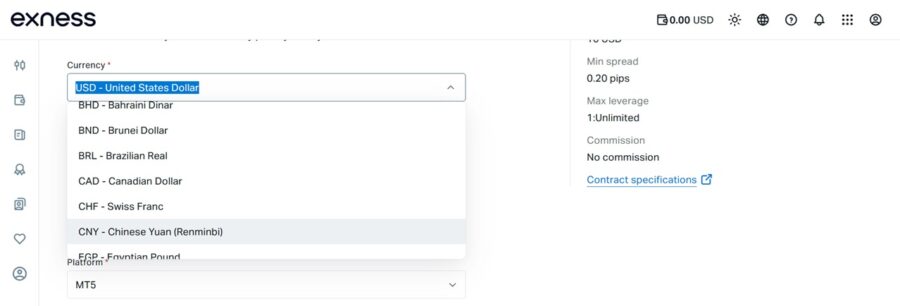
Creating a CNY based account
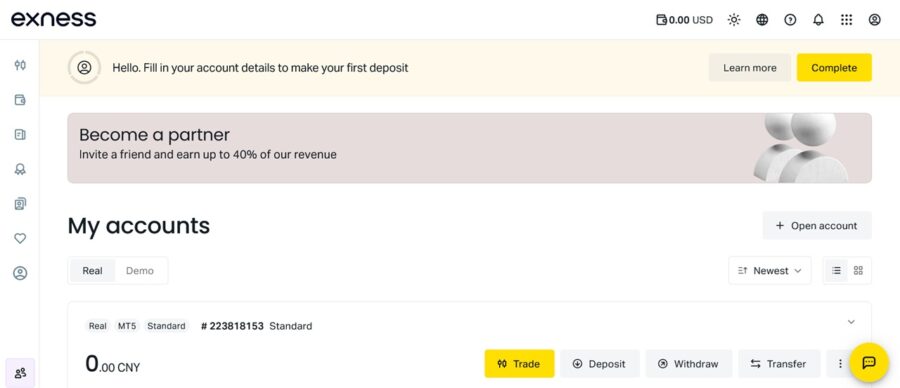
My CNY account is open and ready to go
Should I Use A CNY Trading Account?
Some of the benefits of using CNY-based accounts in China include:
- Bank wire transfers involving local banks (such as China Merchants Bank (CMB)) can often be processed more quickly. This is because account deposits and withdrawals don’t require foreign exchange conversions, nor are they transmitted through international banking channels.
- Trading and portfolio management are more straightforward if you use the yuan for everyday purposes.
- Avoidance of currency conversion charges, which can be a particular problem for high-frequency traders.
What Are The Problems Of Using A CNY Account?
That said, using a CNY-denominated account does come with problems, like:
- You’ll have a smaller selection of brokerages to choose from. The result? You may have to compromise in other areas to trade in CNY, like having to use a trading platform you’re not as comfortable with.
- You’ll still incur FX-related costs if you’re trading assets that are denominated in overseas currencies. This would be the case if you buy US tech stocks on the Nasdaq where trading is executed using the USD.