 Top Lists for USA
Best Airtel Brokers 2026
Airtel Money is a mobile money service that lets users send, receive, store and spend funds through an Airtel wallet. It can be a convenient payment method for funding a brokerage account without relying on a debit card, credit card or traditional bank wire. Discover the best brokers with Airtel deposits from our tests.
 Written By
Michael MacKenzie
Michael is an analyst and editor with over 10 years experience in publishing. He has investigated many of the industry's best-known brokers. His eye for detail helps ensure BrokerListings.com's resources are accurate and reflect the latest developments.
Michael MacKenzie Profile Page Fact Checked By
William Berg
William Berg combines his expertise in law and finance to analyze trading brokers. He has checked 3,250+ regulatory licenses, investigated 2,365+ broker clones and trading scams, and placed 3,500+ trades.
William Berg Profile Page Edited By
James Barra
James is an experienced broker analyst with a background in financial services. He has spent 2,500+ hours testing brokers, used 35+ different platforms and apps, audited 120+ broker T&Cs, and verified 300+ regulatory licenses. James has also been on US and UK TV, and been a guest on finance podcasts, discussing reports conducted by BrokerListings.com and sharing his expertise.
James Barra Profile PageSeptember 14, 2026
While the brokers below accept Airtel, it may only be available in some regions like Africa.
Filters
How We Selected The Best Airtel Brokers
To list the top trading brokers that support Airtel payments, we:
- Identified every broker in our database that supports Airtel Money. We did this by reviewing broker payment pages and, where possible, testing the cashier area to confirm that Airtel is still offered.
- Sorted the brokers by their total ratings. We tally this score by compiling over 200 data entries, from Airtel availability and transfer speeds through to regulatory licenses and account features, while also factoring in the firsthand impressions of our expert reviewers.
Should I Use Airtel To Fund My Brokerage Account?
Transaction Speeds
Airtel Money is a fast payment method that works through a mobile wallet and you can expect transactions to be near instantaneous. In practice, we usually expect Airtel deposits to appear in a trading account within minutes once the payment has been approved, though some brokers may still carry out manual checks if a large or unusual payment is flagged.
What’s noteworthy about this mobile-money payment method is that withdrawals can be similarly rapid with brokers that offer instant withdrawals. This makes Airtel a much faster option for withdrawals than most other payment methods, though some brokers will still keep you waiting while they approve the transaction.
Average Fee Structure
Airtel Money users often have to pay relatively high fees to fund their broker accounts because there are charges built into this payment method, on top of brokers fees or any other charges such as for currency conversion.
The fees you’ll pay vary by country, as well as service, but you should expect charges for sending money from Airtel to a bank account, for withdrawing from your Airtel account, and for any international transfers. Airtel to Airtel transfers are free in some, but not all countries.
For example, we found that withdrawing cash from your Airtel account in Uganda will cost a steep 330 Ugandan shillings (UGX) for withdrawals up to UGX2,500, plus tax, though this gets relatively cheaper with larger withdrawals. Fees for Airtel payments in Uganda range between UGX190 for payments up to UGX2,500 and UGX6,200 if you make a payment of over UGX4 million.
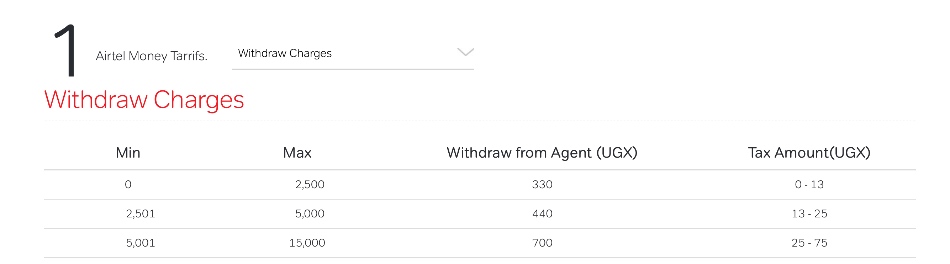
We checked the fees in other countries and found similar fees in Malawi, for example, the withdrawal fee starts at 50 kwachas for withdrawals up to MWK999, with the rate dropping to MWK11,500 for the highest threshold of transactions above 400,000.
This means that while Airtel can be useful for traders who need a mobile money solution, it may well come with higher costs than other transfer methods like debit cards, PayPal and even the classic wire transfer. If you do plan to use Airtel, make sure you’re familiar with the fee structure in your country, and try to limit the number of transactions you make to keep costs down.
Tech Compatibility In 2026
Airtel Money fits well with mobile-first trading because the payment is usually linked to your phone number and wallet rather than a full bank account. It harnesses a number of tech innovations to power its instant transfers:
- E-Wallet Architecture: This is central to Airtels functionality because accounts function as prepaid e-wallets that are linked directly to the user’s mobile number. This architecture operates according to the local electronic banking infrastructure in the jurisdiction where the trader and broker are located.
- APIs: Airtel uses APIs to link its services directly with brokers payment portals. These can also be used to generate virtual payment cards for global online payments to Airtel brokers.
- Cryptography & Authentication: Traders who deposit with Airtel can use M-PIN or biometric identification like fingerprint or FaceID for secure transfers.
- International Remittance Protocols: Airtel leverages international payment protocols like pawaPay when traders need to connect to a global payment network to deposit to an international broker. It also uses the Mastercard network for international wallet-to-wallet transfers.
Return-To-Source Policy
Regulatory rules commonly require brokers to return withdrawals through the same route used for the original deposit. This can matter with Airtel because your broker may only allow withdrawals back to the same Airtel Money wallet used to fund the account. Crucially, these rules often state that brokers can only refund payment methods like mobile money or e-wallets up to the amount thats initially deposited. That means you may need to use a bank or wire transfer if you need to withdraw profits that exceed your initial deposit amount.
How To Deposit & Withdraw Using Airtel
Airtel is usually straightforward to use for trading once your wallet is active and verified. You will typically need your Airtel Money number, enough wallet balance to cover the payment, and access to your phone to approve the transaction.
Here’s how you usually put through Airtel payments to online brokerage accounts:
Step-By-Step Deposit
- I open the broker’s funding section
- I choose Airtel from the list of available payment methods
- I enter the deposit amount and confirm the account currency. If the trading account is in a different currency from my Airtel wallet, I check the exchange rate and any conversion fee before continuing
- I enter my Airtel Money phone number and follow the on-screen instructions
- I approve the payment on my phone, often through a wallet prompt or PIN confirmation
- Once Ive confirmed the payment, it usually appears in my broker account within minutes
Step-By-Step Withdrawal
- I return to the broker’s wallet or withdrawal page
- I choose Airtel Money as the withdrawal method, if it is available for payouts
- I select the same verified Airtel Money wallet used for the deposit, or enter my Airtel Money number if the broker requires it again
- I enter the amount I want to withdraw and review any fees, exchange-rate details or minimum withdrawal limits
- I confirm the request and wait for the broker to approve the payout
- Once processed, the money should arrive in my Airtel Money wallet, though the exact timing depends on the broker and local payment processor.
Pros & Cons: Is Airtel Right For You?
| Pros | Cons |
|---|---|
| Fast transfers: Airtel Money deposits often process near instantly, and withdrawals can be similarly fast depending on the broker. | Regional availability: Airtel is mainly a regional payment method and is only widely accepted in countries where mobile money is popular. |
| Mobile-first: You can usually fund your account from a phone-linked wallet without entering full card or bank details. | Fees can be high: Costs depend on your country, wallet rules, broker charges, payment gateway and currency conversion, but often deposits and withdrawals cost more than alternatives because you need to pay additional fees to Airtel. |
| Simple repeat payments: Once your Airtel Money wallet is verified, repeat deposits can be quick to complete. | Wallet and withdrawal limits may apply: Transfer limits can restrict larger trading account payments, and in some cases you may need to use a different method to withdraw your money even if Airtel deposits are accepted. |
Security & Regulatory Compliance In 2026
Airtel payments rely on the Airtel Money wallet ecosystem and the brokers’ own payment controls. The main security checks you encounter are likely to come from account verification, anti-money-laundering rules and the brokers need to confirm that the wallet belongs to you.
The exact rules you’ll need to comply with depend on the jurisdiction and regulator you’re dealing with, so check what applies in your country.
- KYC & AML checks: Brokers normally require the name on your Airtel Money wallet and trading account to match. Third-party Airtel payments may be rejected or delayed.
- Wallet verification: You may need a verified Airtel Money account before making larger deposits or withdrawals.
- Source-of-funds checks: Larger payments, frequent transfers or unusual account activity may lead the broker to ask for supporting documents.
- Payment reversals or failures: Airtel deposits can fail if your wallet has insufficient balance, the phone number is incorrect, the payment is not approved in time or the brokers payment gateway cannot process the transaction.
Safety Tip: Only use an Airtel Money wallet registered in your own name, check the phone number carefully before confirming the payment, and avoid sending funds through a friend, relative or agent account. Third-party payments are one of the easiest ways to trigger broker payment reviews.
Using Airtel Vs Other Payment Methods
| Method | Deposit Speed | Withdrawl Speed | Typical Fees | Limits | Best For |
|---|---|---|---|---|---|
| Airtel Money | Often instant or within minutes once approved | Usually minutes to 1-2 business days after broker approval | Varies by broker, country, wallet and currency conversion | Depends on Airtel wallet tier, broker limits and local rules | Mobile-first traders in supported Airtel Money markets |
| Bank Wire | Funds usually reach broker same day to 3 days | Usually 1-5 days | Often high, especially for transfers to international brokers | Usually high | Large deposits, large withdrawals and profit taking where return-to-source rules apply |
| Debit Card | Instant or near-instant broker account deposits | Usually 1-5 days | Low, though FX fees may apply | Varies by broker, bank and card issuer | Fast, simple everyday deposits where cards are widely supported |
| Credit Card | Instant or near-instant broker account deposits | Usually 3-5 days | Low, but cash advance or high-risk merchant fees may apply | Varies; some banks block trading payments to brokers | Quick deposits where accepted |
| PayPal | Instant | Usually 1-4 days | Low, though FX fees may apply | Varies by broker and region | Fast e-wallet deposits without sharing bank details directly |
| Crypto | Minutes to hours | Minutes to hours once broker verifies withdrawal | Network fees; exchange fees may apply | Varies by coin, broker and wallet | Fast deposits and crypto-native users |
| Skrill/Neteller | Instant or near-instant deposits to broker accounts | Usually 1-3 days | Low to medium; FX fees may apply | Varies by broker, wallet status and region | E-wallet alternatives for faster funding |
Troubleshooting: Why Your Airtel Payment Might Fail
Airtel payments are usually simple, but failed deposits and delayed withdrawals can happen. I’ve summarised a few common causes below:
Incorrect Name Or Airtel Money Number
The broker or payment gateway needs the correct details, including an accurate wallet number and a matching name, to process the transaction. If the number is mistyped or no longer active, the payment may fail or be delayed. Likewise, the name on your brokerage account and on the Airtel wallet usually need to match, so if you use someone else’s wallet or you spell your name differently across your accounts, the transfer may fail.
Quick Fix: Make sure you use an account with an exactly matching name and check your Airtel Money number carefully before submitting the payment, especially if your broker asks you to enter it manually.
Insufficient Wallet Balance
Airtel deposits can fail if your wallet does not have enough balance to cover the deposit amount and any payment charges.
Quick Fix: Check your Airtel Money balance before starting the deposit, and leave enough extra to cover any wallet or transaction fees.
Wallet Or Transaction Limits
Airtel Money wallets may have daily, monthly or per-transaction limits. Brokers may also set their own minimum and maximum deposit or withdrawal amounts.
Quick Fix: Check both your Airtel Money wallet limit and the brokers cashier limits before making a larger transfer.
Payment Approval Timeout
Some Airtel payments require phone approval. If you miss the prompt, enter the wrong PIN or take too long to confirm, the transaction may expire.
Quick Fix: Keep your phone nearby, make sure you have network signal, and complete the wallet approval as soon as the prompt appears.
Final Verdict: Our Recommendation In 2026
Airtel Money can be a practical way to fund a trading account if you live in a supported market and already use an Airtel wallet. It is often faster and more convenient than a bank wire, especially for smaller deposits, and it suits traders who prefer mobile-first payments over card or bank-based transfers.
That said, Airtel is not as universally available as debit cards, bank transfers or some global e-wallets. Fees, limits and withdrawal support can also vary sharply by country and brokers, and we’ve often found them to be expensive compared to other payment methods you can use for trading. In our experience, Airtel works best as a convenient local funding method rather than a universal international payment solution.
Check out our list above to discover the best Airtel brokers in 2026.