

Best Brokers With QAR Accounts 2026
Dig into our top brokers offering Qatari riyal (QAR) based trading accounts, minimizing conversion fees and optimize the experience for traders in Qatar.
 Written By
Royston Wild
Royston is a seasoned investor and financial writer with over a decade of experience analyzing brokers and investment markets. With a background in stocks, commodities, and forex reporting - he brings a fresh perspective to broker evaluations.
Royston Wild Profile Page Fact Checked By
James Barra
James is an experienced broker analyst with a background in financial services. He has spent 2,500+ hours testing brokers, used 35+ different platforms and apps, audited 120+ broker T&Cs, and verified 300+ regulatory licenses. James has also been on US and UK TV, and been a guest on finance podcasts, discussing reports conducted by BrokerListings.com and sharing his expertise.
James Barra Profile Page Edited By
Tobias Robinson
Tobias is committed to helping traders find the right brokerage for their needs. He has tested 200+ brokers, spent 2,600+ hours using different platforms, and placed 2,100+ trades.
Tobias Robinson Profile PageJuly 17, 2026
Filters
How We Choose The Top QAR Brokers
Our exhaustive testing process involves four steps:
- Registering for a trading account with each broker in our evolving database, then filtering to find operators that permit trading using the Qatari riyal (QAR) as the base currency.
- Checking that each service provider is authorized by a reputable global regulator. BrokerListings.com has created its own ranking system to make finding respected regulators (and by extension reliable brokers) simpler.
- Regularly checking that each brokerage has retained their license. This is because regulators can suspend and withdraw licenses when they deem misconduct has occurred.
- Rating brokers on other factors like trading costs, the quality of the trading software, the availability of demo accounts, and the range of securities on offer to retail traders.
What Is A QAR Account?
The number of retail investors in Qatar is relatively small compared with neighboring countries like Saudi Arabia and the United Arab Emirates (UAE). However, in recent years the Qatar Stock Exchange (QSE) has taken measures – such as reducing trading commissions – to stimulate local trading activity.
Some brokers allow traders to use QAR-based accounts to trade securities like equities, forex and bonds. It’s a strategy that carries several advantages:
- Avoiding currency conversion costs when transferring money in and out of your trading account.
- Reduced exposure to currency market movements. The QAR is less volatile than many other exotic currencies, as its value is pegged to that of the US dollar (USD). However, choppiness is still a risk that investors who trade in foreign currencies must consider.
- Depositing and withdrawing money into your trading account is made simpler. Brokers providing QAR-based accounts often support local payment methods, including digital wallets (like Ooredoo Money) and online payment providers (including Qatar Mobile Payment (QMP)).
- Trading riyal-denominated securities is made simpler, as you don’t need to bother converting your money into other currencies. Qatari assets that are denominated in the local currency include shares and exchange-traded funds (ETFs) on the QSE.
How Do I Open A QAR Account?
You’ll need to follow these five steps if you wish to trade using the riyal:
1. Finding A Broker
It’s important not to just go with the first broker you find that offers QAR-based trading. The number that provide riyal-denominated accounts is limited, but it pays to shop around as the fees and quality of service can differ significantly among service providers.
Some of the things you may wish to consider include:
- Trading costs, including the size of bid and ask spreads.
- The availability of Islamic accounts.
- The functionality and security of the broker’s trading platform.
- The amount of leverage on offer.
- Minimum deposit requirements, and account funding methods.
- The range of risk management tools.
Pro tip: Capital markets in Qatar are regulated by the Qatar Financial Markets Authority (QFMA). But while it provides a good level of protection from scams and bad operators, the safeguards the organization provides are less comprehensive than those in many other global jurisdictions.
For this reason, we’d suggest investors in the Gulf state use a broker that’s authorized by a Category A regulator under BrokerListings.com’s classification system. These organizations typically provide an easy-to-navigate online resource traders can use to find brokers that are officially licensed.
So we’d suggest traders in Qatar search the broker databases of Category A regulators to avoid scammers and companies offering poor levels of service. Examples include the US Securities and Exchange Commission (SEC), the Monetary Authority of Singapore (MAS) and the Swiss Financial Market Supervisory Authority (FINMA).
2. Opening An Account
You’ll need to provide a range of personal details before you can start trading. This will include basic information like your name, date of birth, email address and place of residence. However, for regulatory purposes you’ll also be asked more specific trading-related questions, like how much market experience you have and what your investment objectives are.
You’ll also need to provide proof of address and identification, which you should be able to scan and send over or upload using a dedicated app.
3. Choosing QAR As Your Base Currency
After you’ve registered, the broker will probably open an account for you that uses a major global currency (such as USD). If this happens, you’ll need to navigate the trading platform to open a QAR-denominated account specifically.
Most service providers offer easy-to-follow guides to help you do this. If not, speak to the broker’s customer service team.
4. Depositing Some Cash
You can’t buy securities with zero balance, so you’ll need to transfer some cash into your account. Popular methods of payment include:
- Bank transfer (for instance, from the Qatar National Bank (QNB)).
- Debit card (such as a QNB Visa Debit card).
- Digital wallet.
- Online payment provider.
5. Start Trading
You’ll be able to begin building your trading portfolio once the funds reach your account.
Example Of Opening A QAR Trading Account
Exness has been offering financial services since 2008, and has gained authorization from multiple national regulators. These include the UK’s Financial Conduct Authority (FCA) and the Cyprus Securities and Exchange Commission (CySEC), both of which are classified as Category A by BrokerListings.com for the services Exness provides to institutional clients.
Here is the process I followed to open a new QAR-denominated account with Exness:
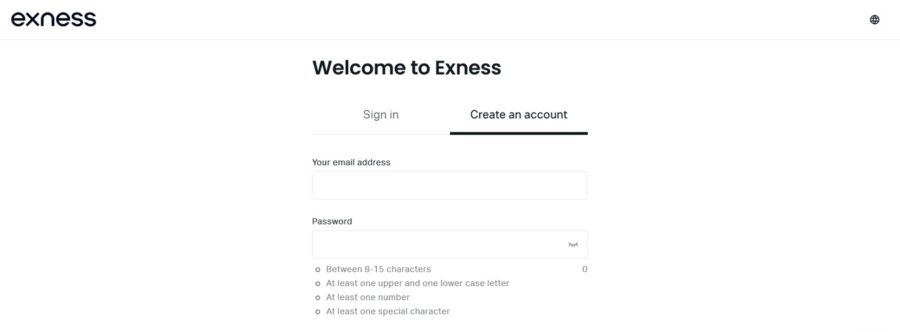
Registering with Exness to open a QAR account
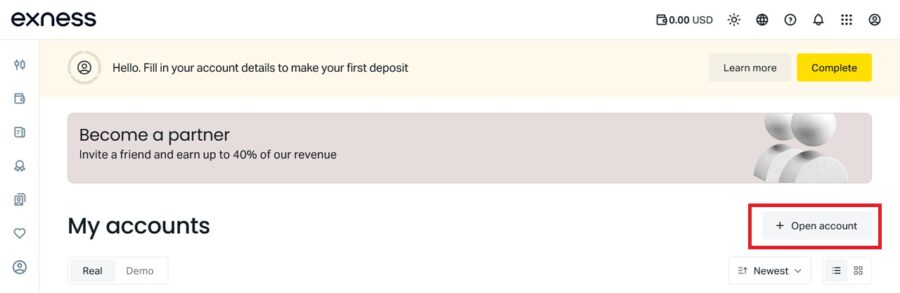
Creating a new Exness trading account
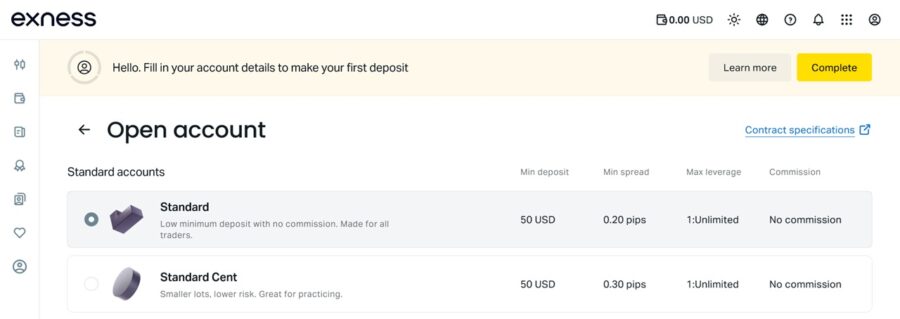
Various Exness accounts
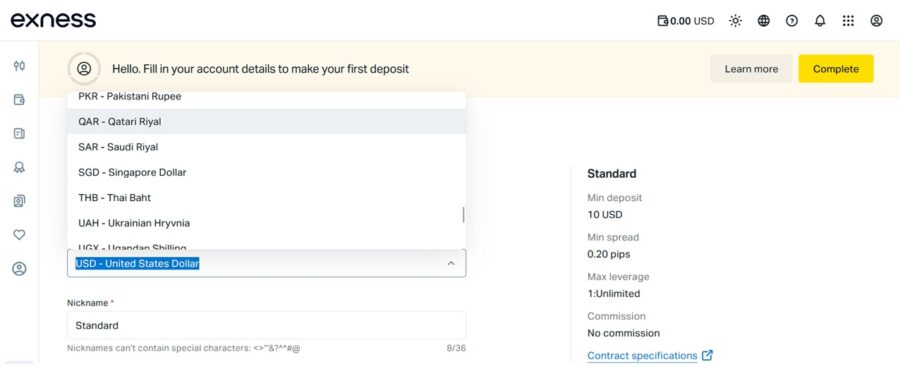
Choosing a QAR account
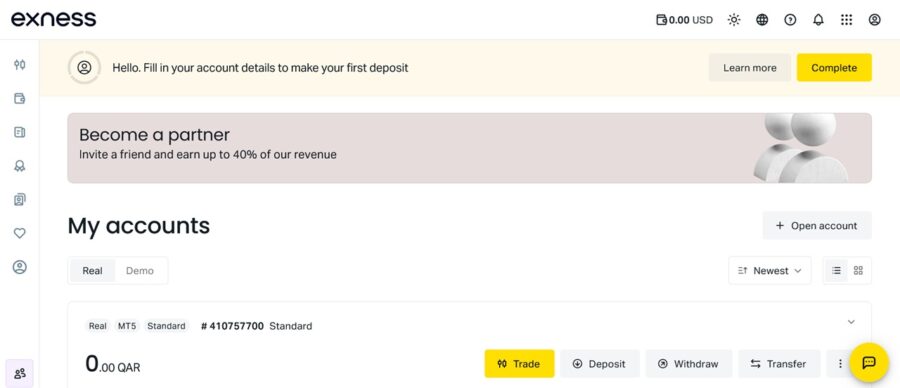
My QAR new account
Should I Use A QAR Trading Account?
QAR-based accounts can offer serious benefits for traders living in Qatar. These include:
- Bank transfers from local banks (such as the Commercial Bank of Qatar (CBQ)) can be completed more quickly. The reason? Deposits don’t pass through international banking channels, nor are they subject to forex conversions.
- Trading can be simpler and portfolio management easier to execute if you use a currency you’re used to using every day.
- Traders avoid forex conversion fees, which can be especially critical for high-volume traders.
What Are The Drawbacks Of Using A QAR Account?
Yet using the riyal as your base currency can also carry disadvantages. For example:
- You’ll have a smaller pool of brokers to choose from. As a result, you may have to compromise in areas like the quality of the trading platform or the range of markets you can trade.
- You’ll still pay currency conversion charges if you’re buying and selling securities that are priced in other currencies. This would be the case, for instance, if you deal in yen-denominated crude oil futures on the Tokyo Commodity Exchange (TOCOM).